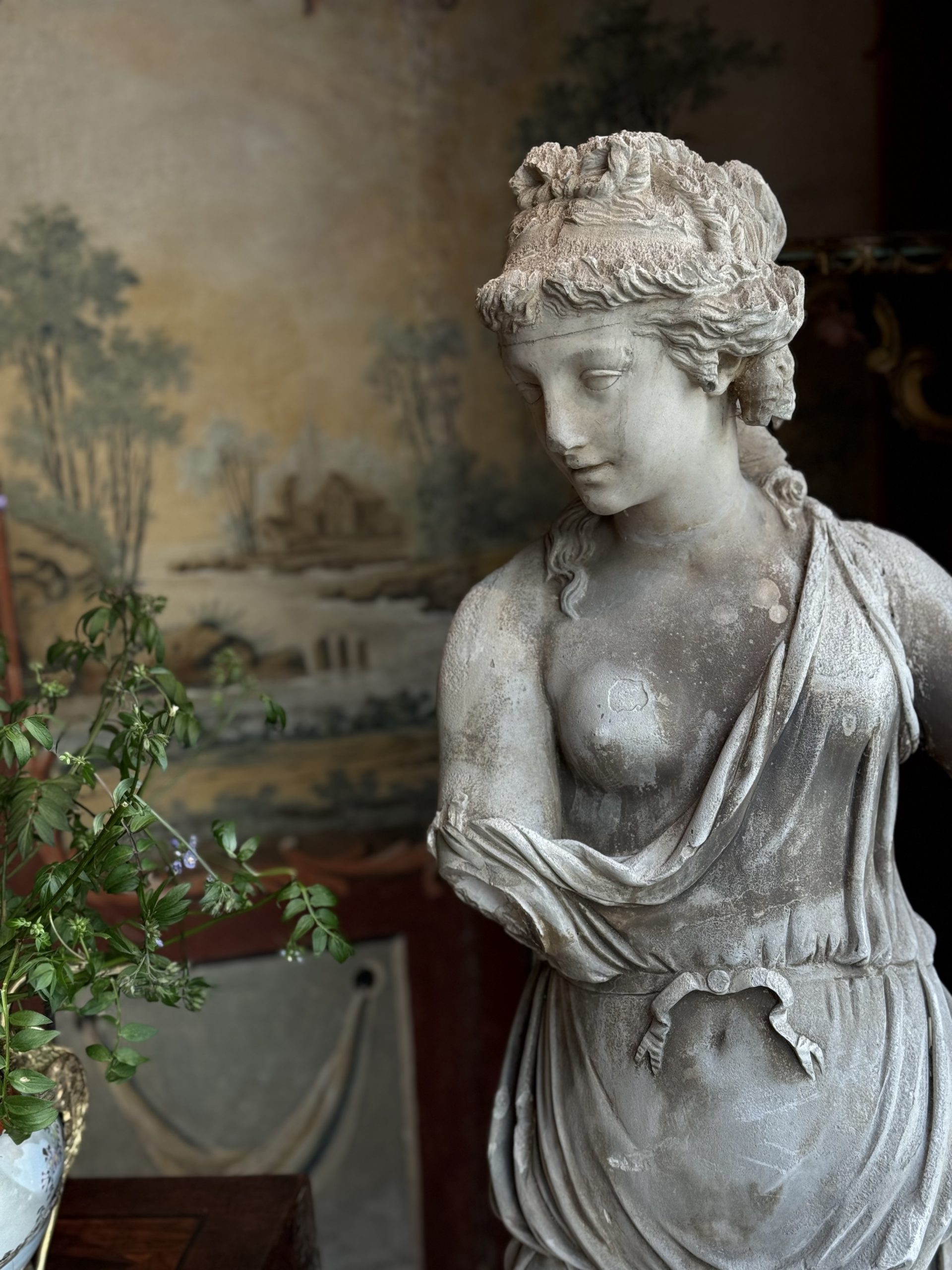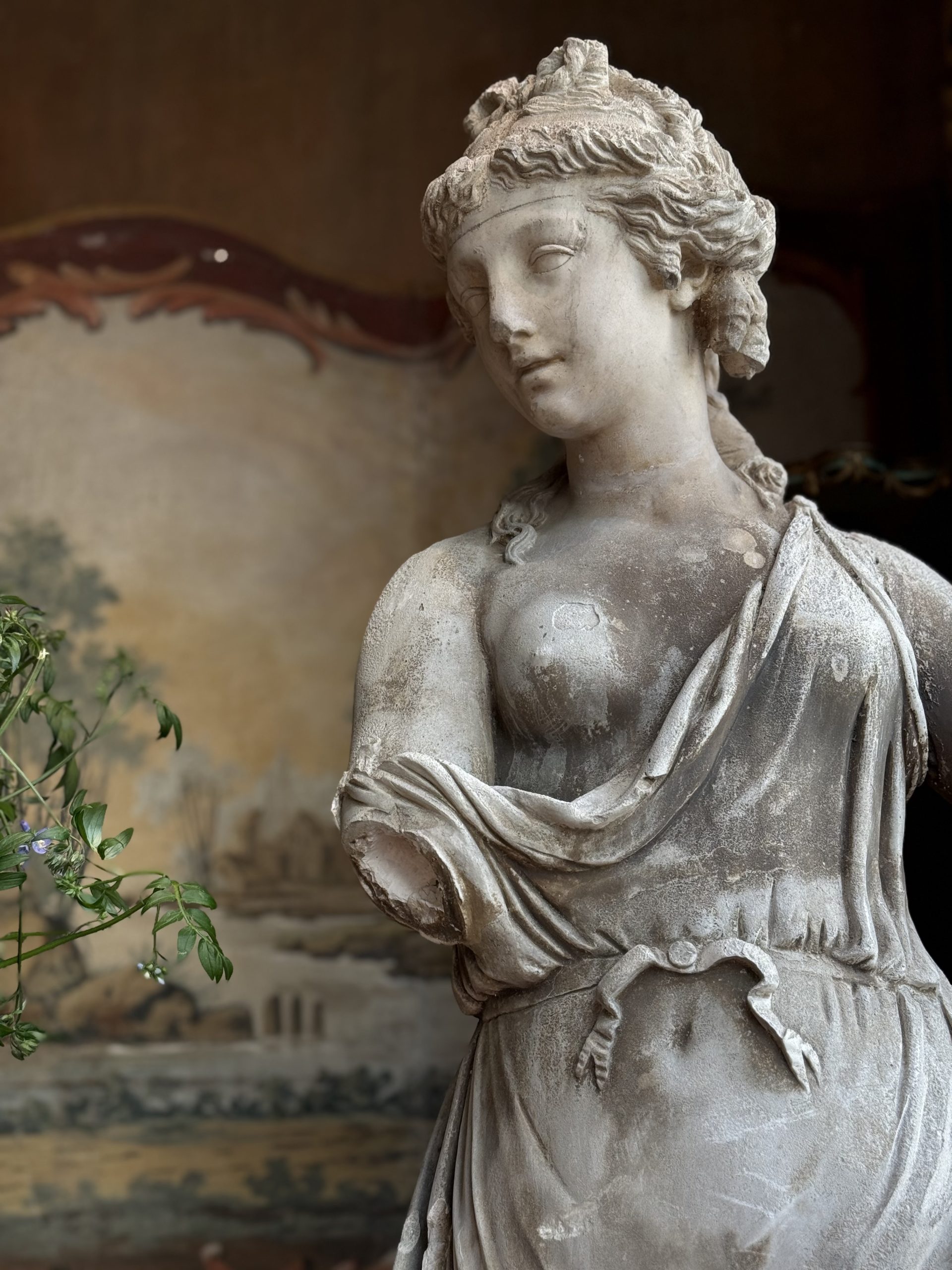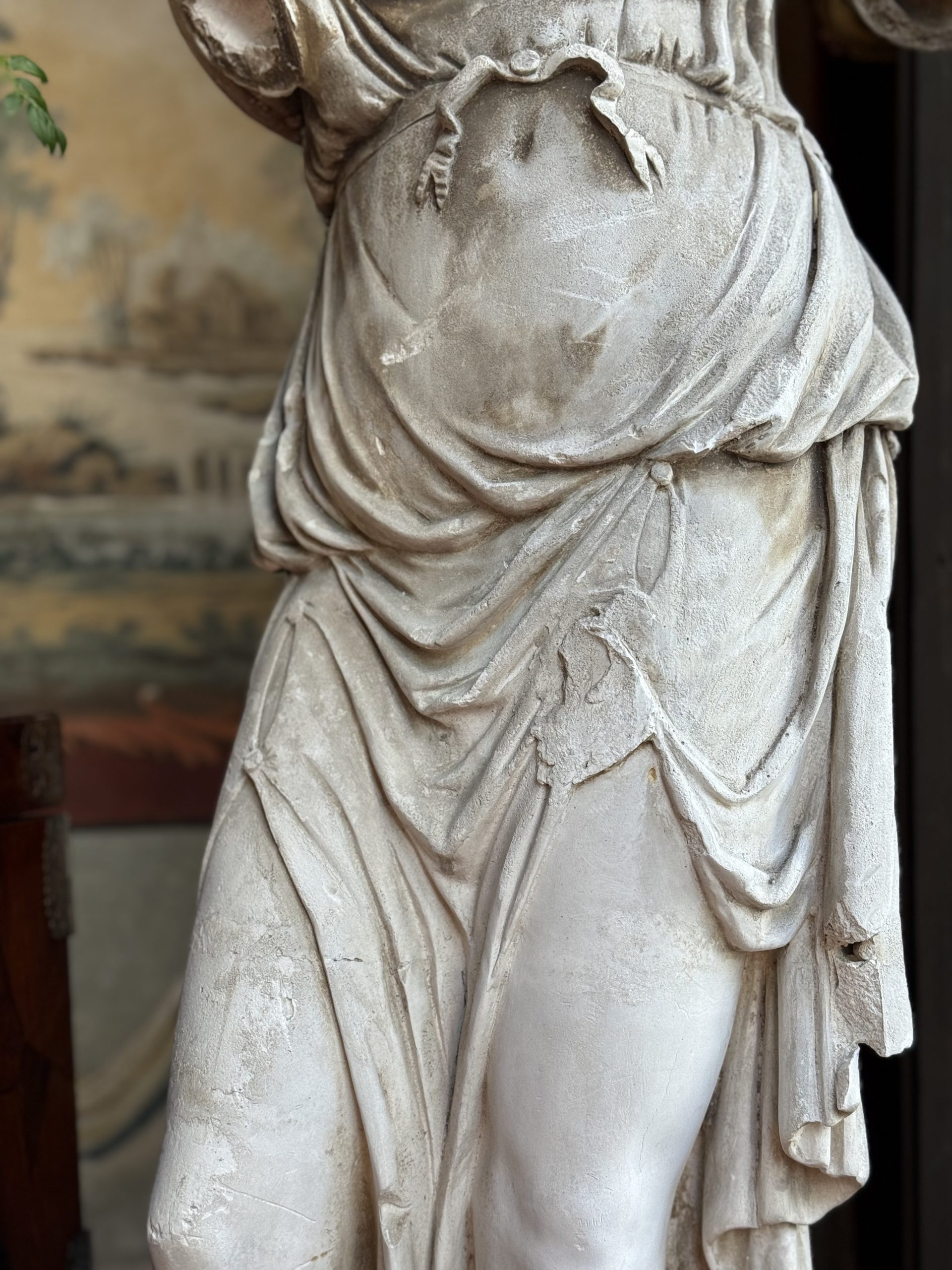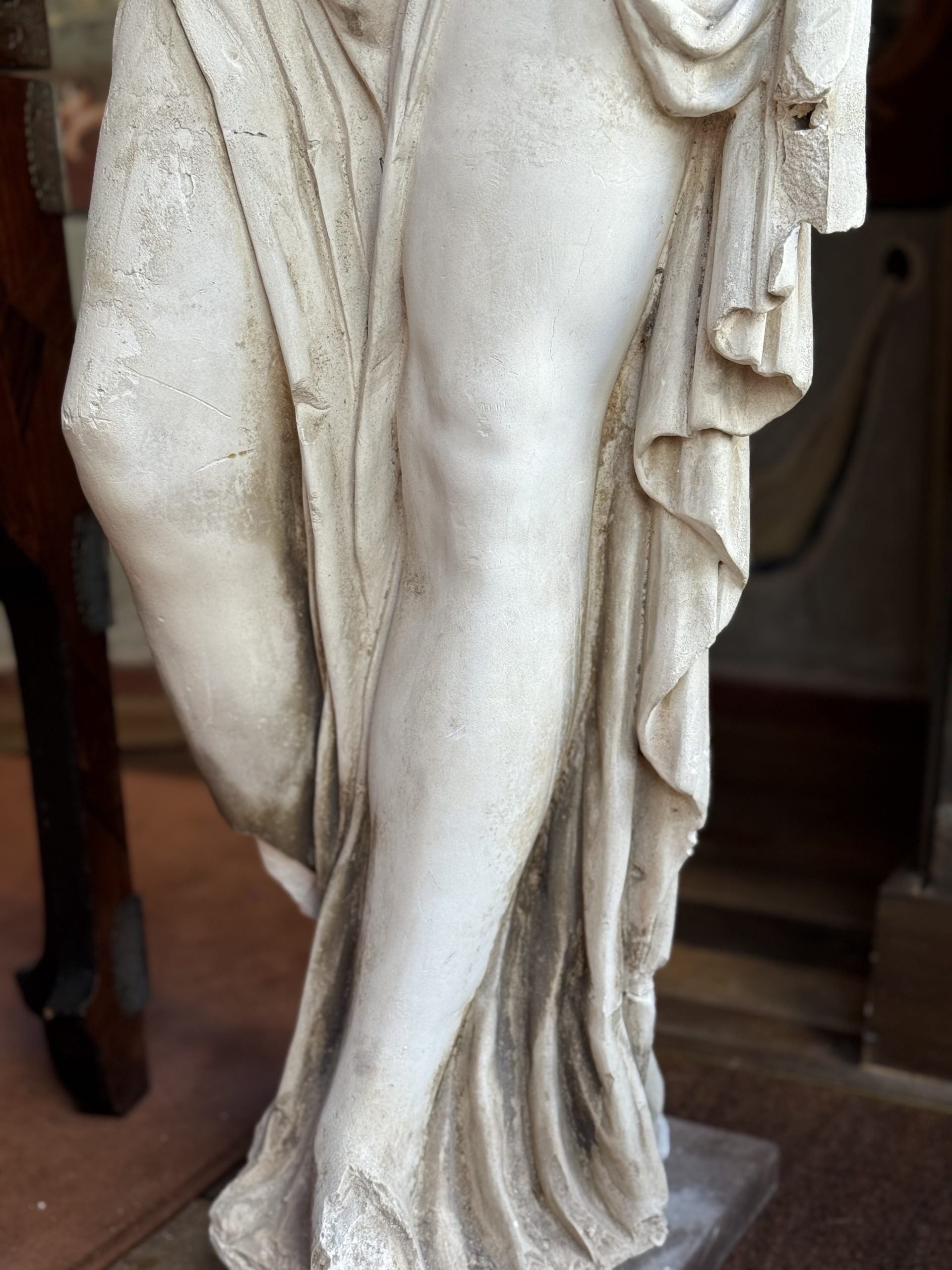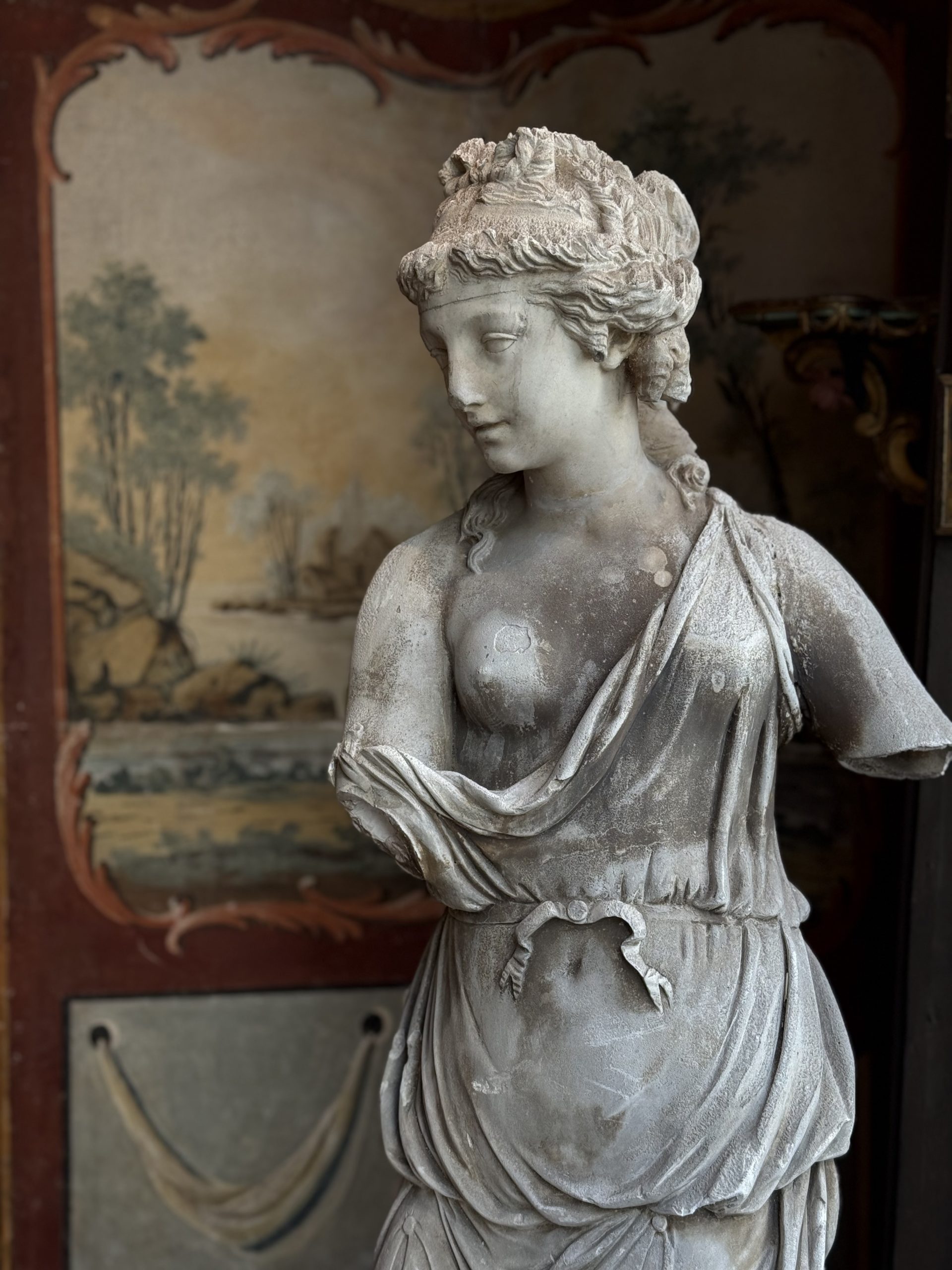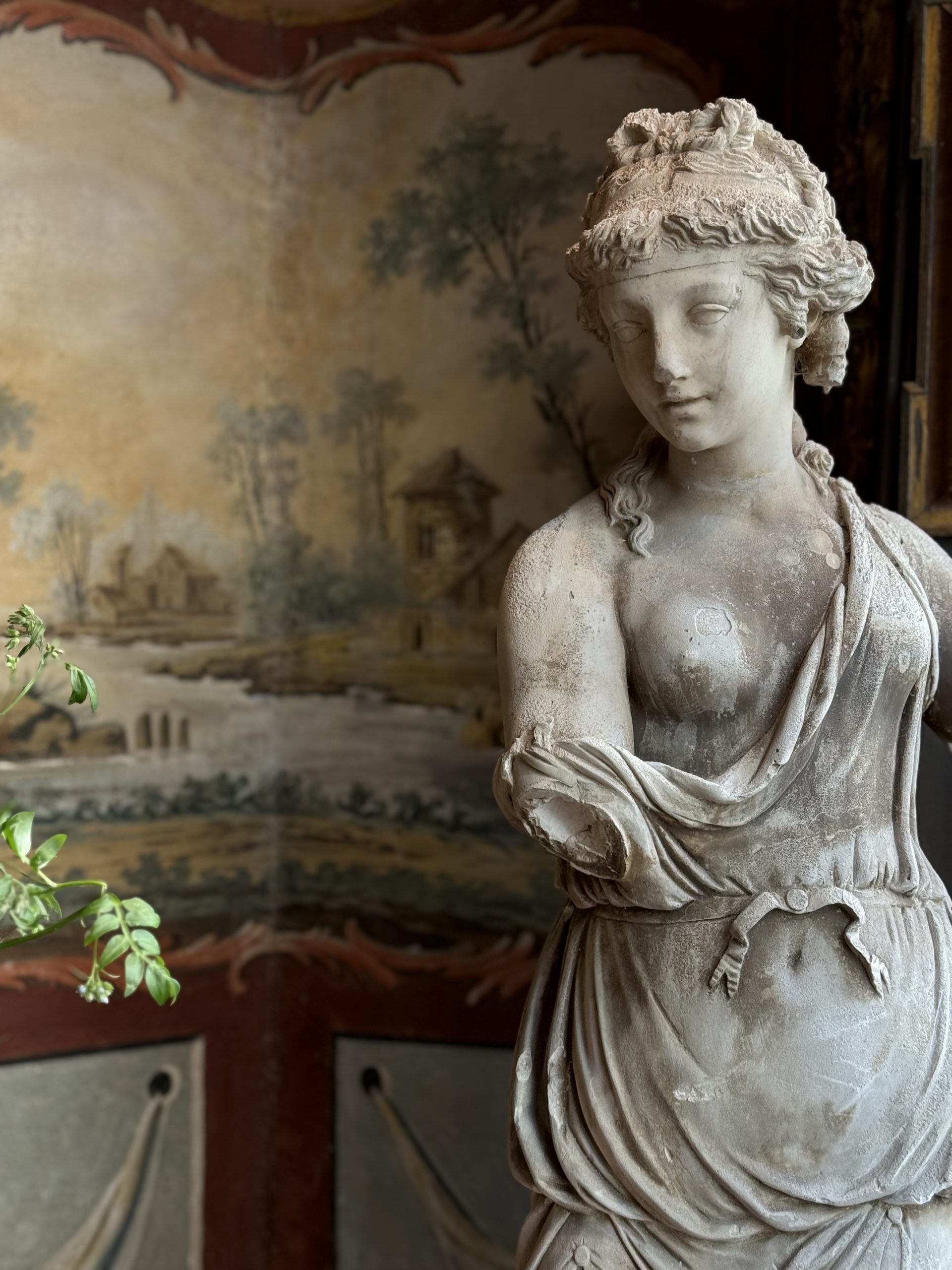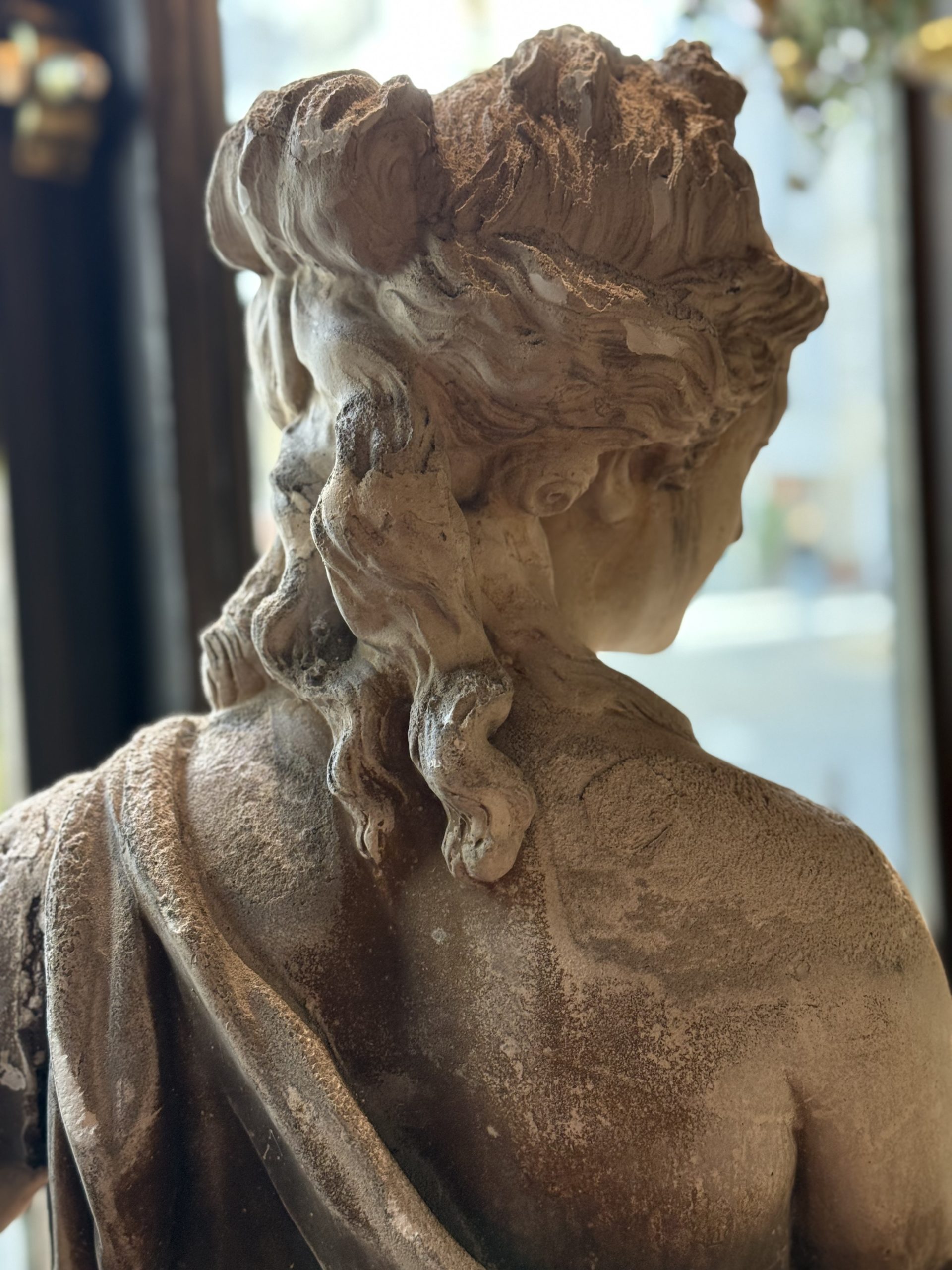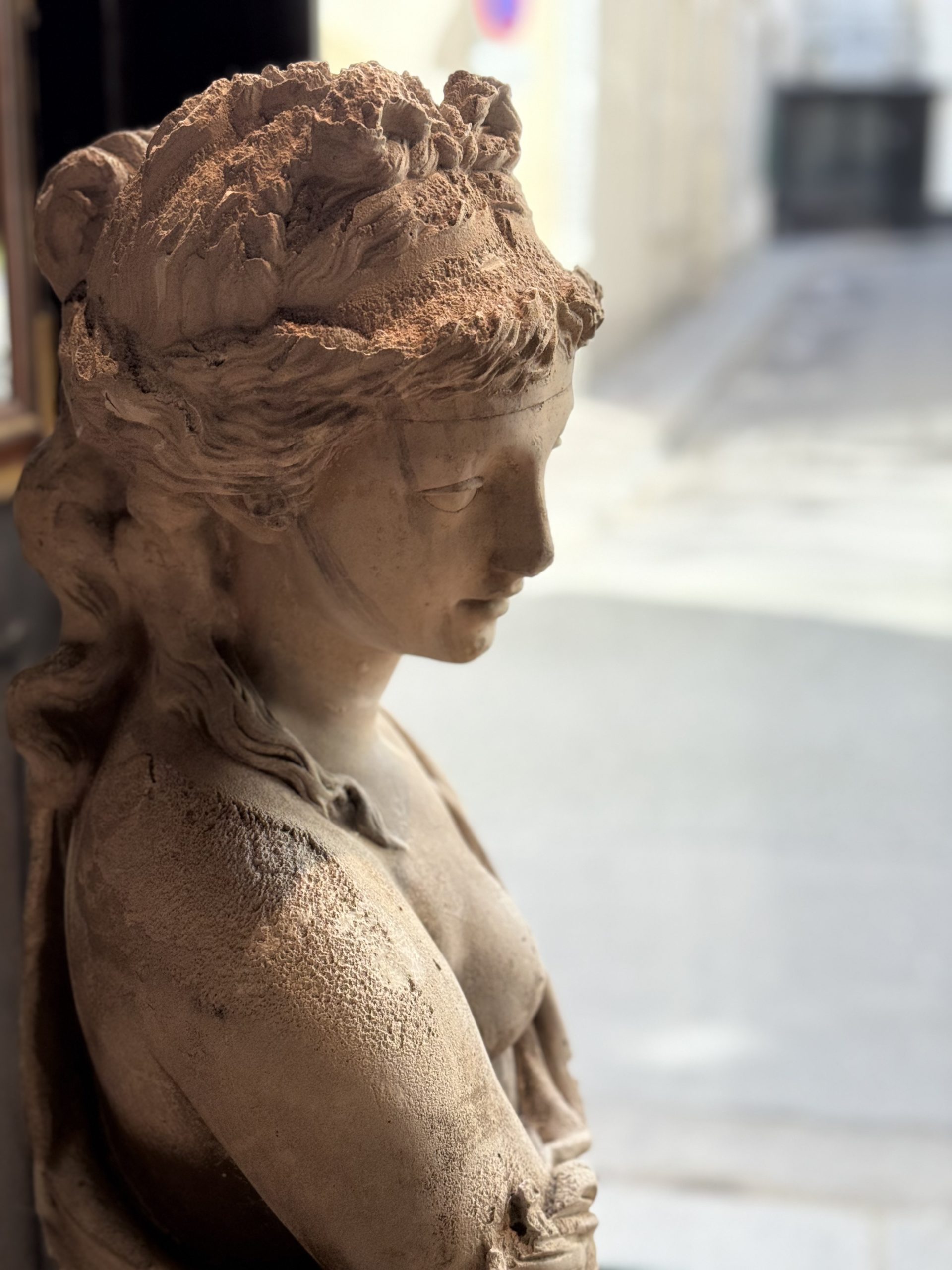
Venus Genetrix, 19th-century plaster cast
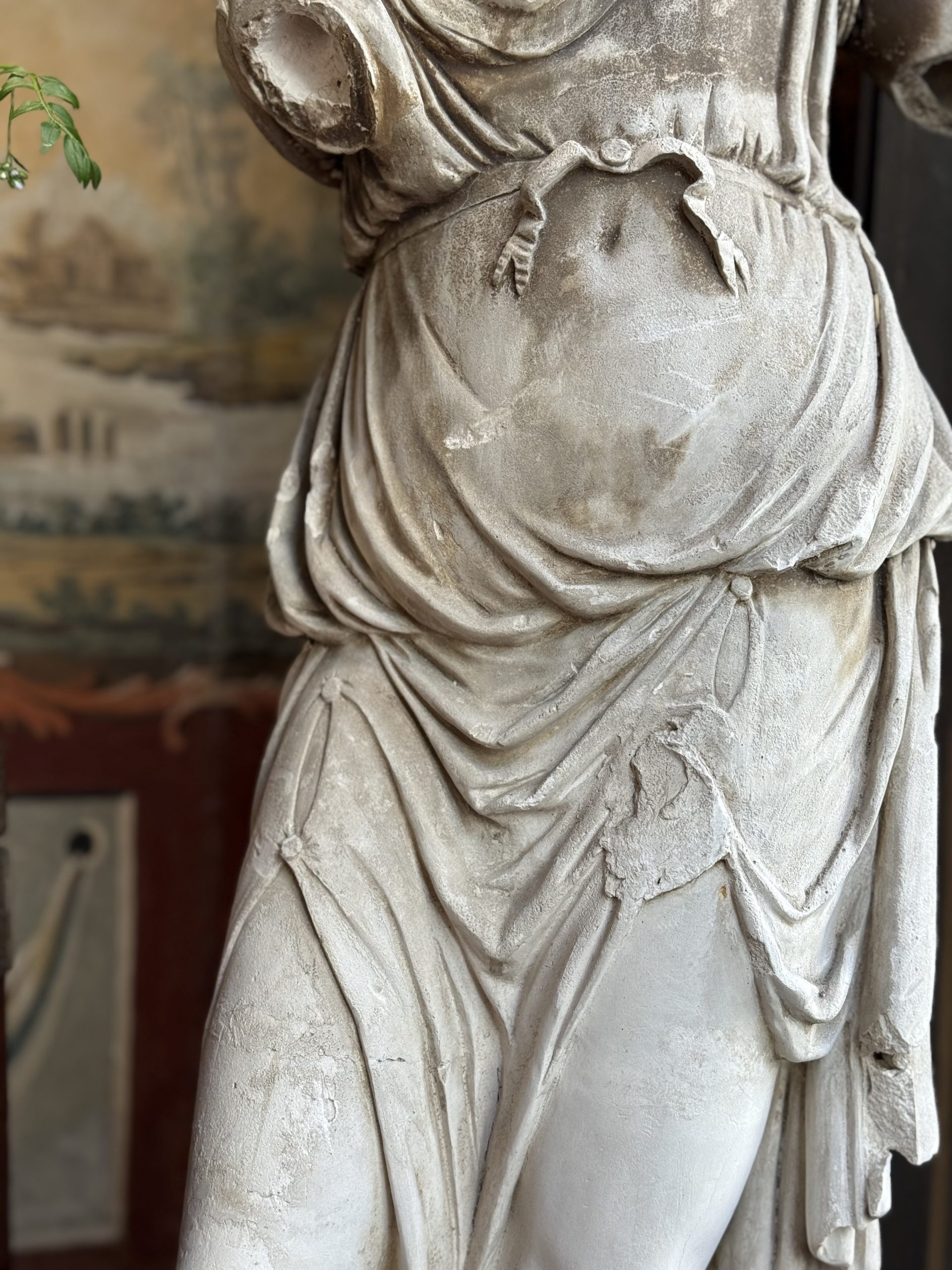
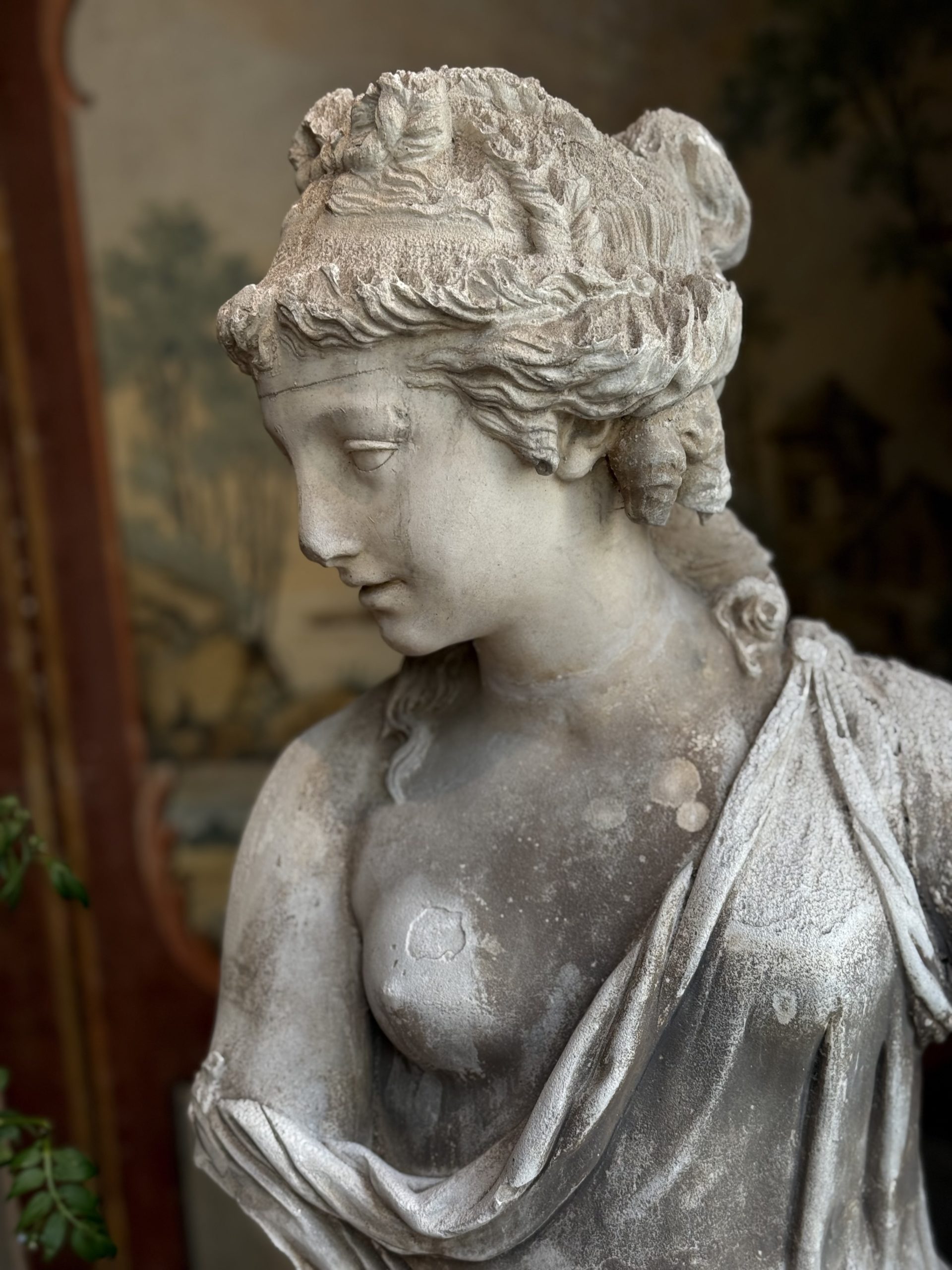
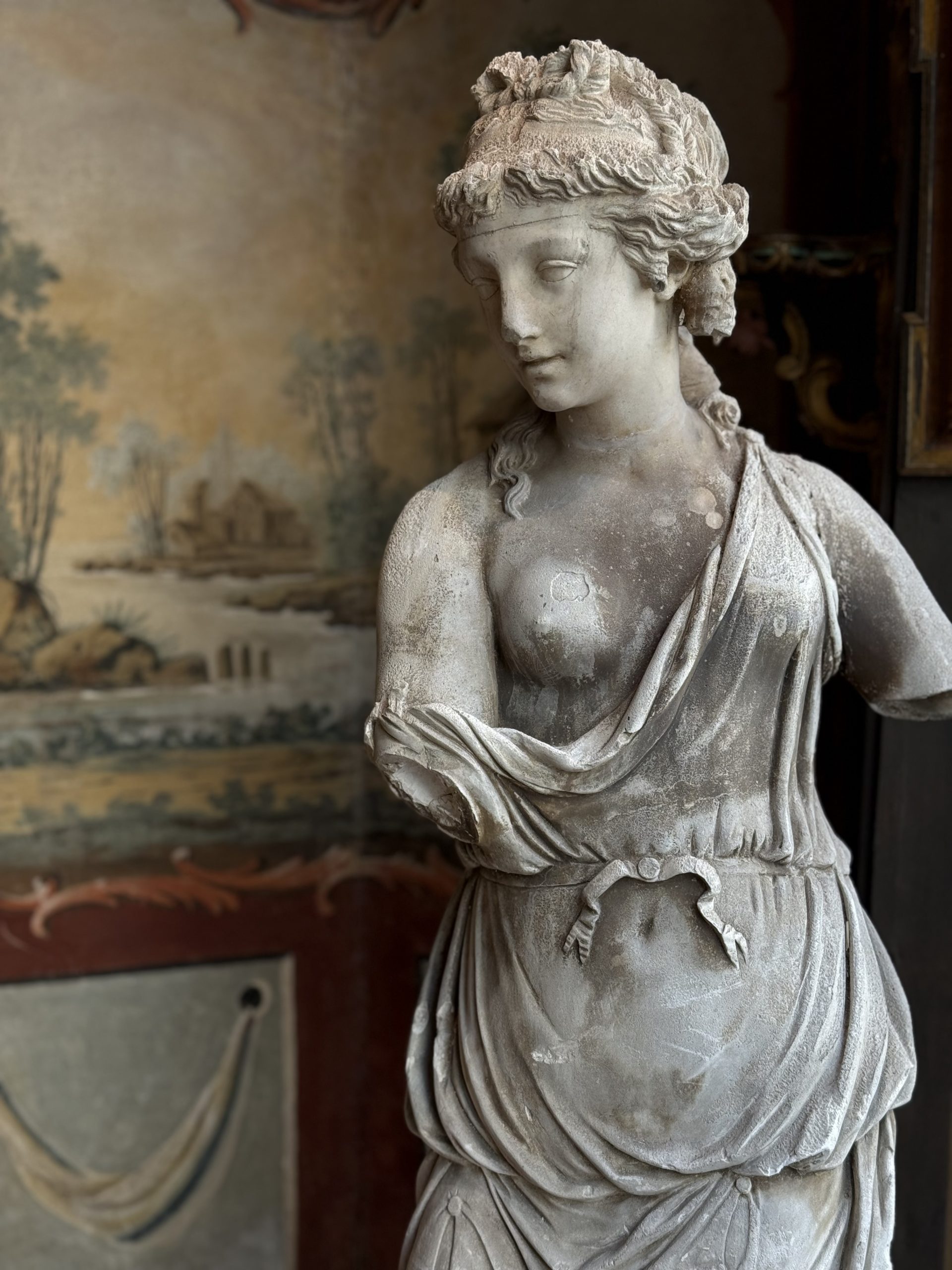
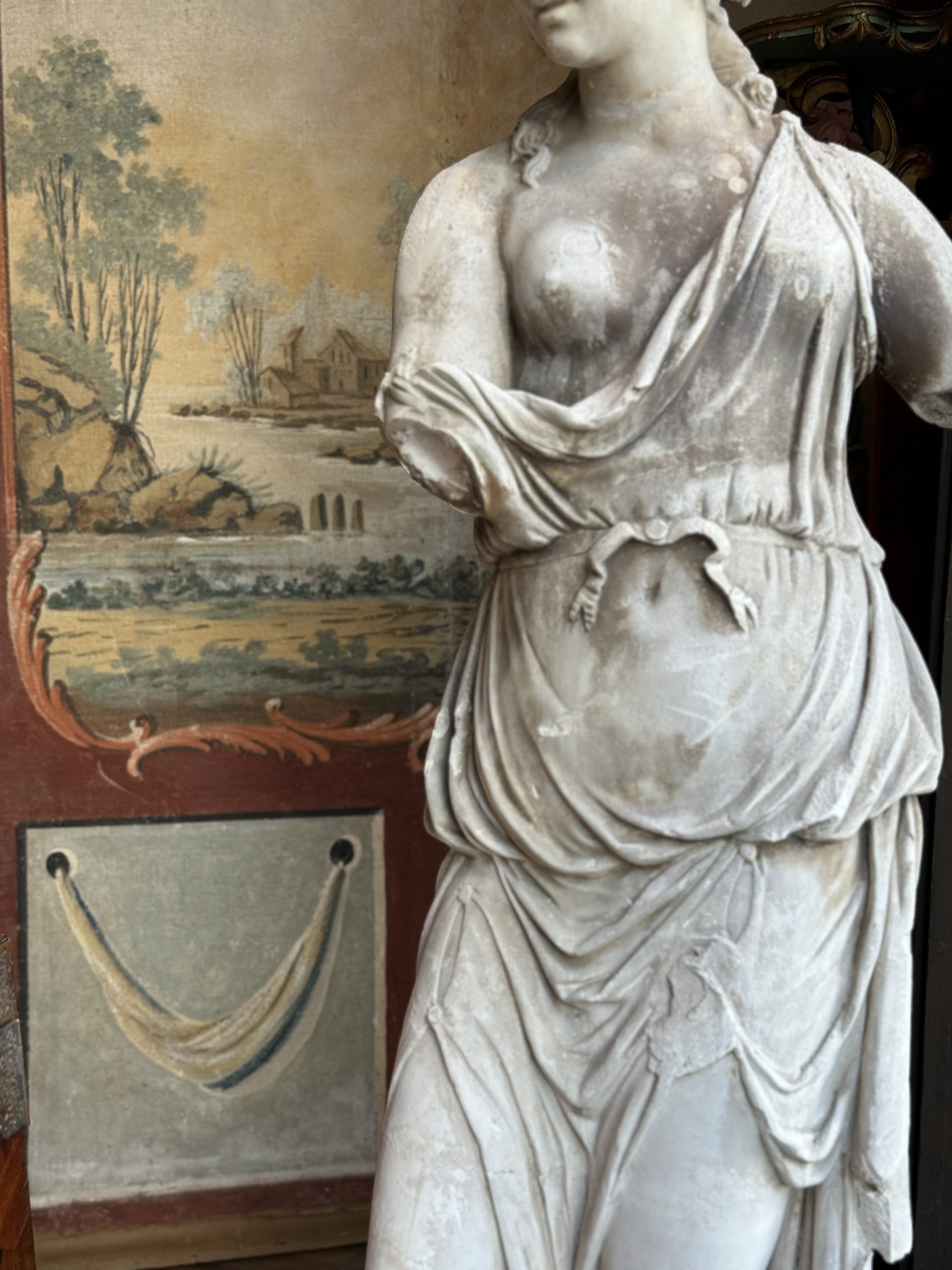
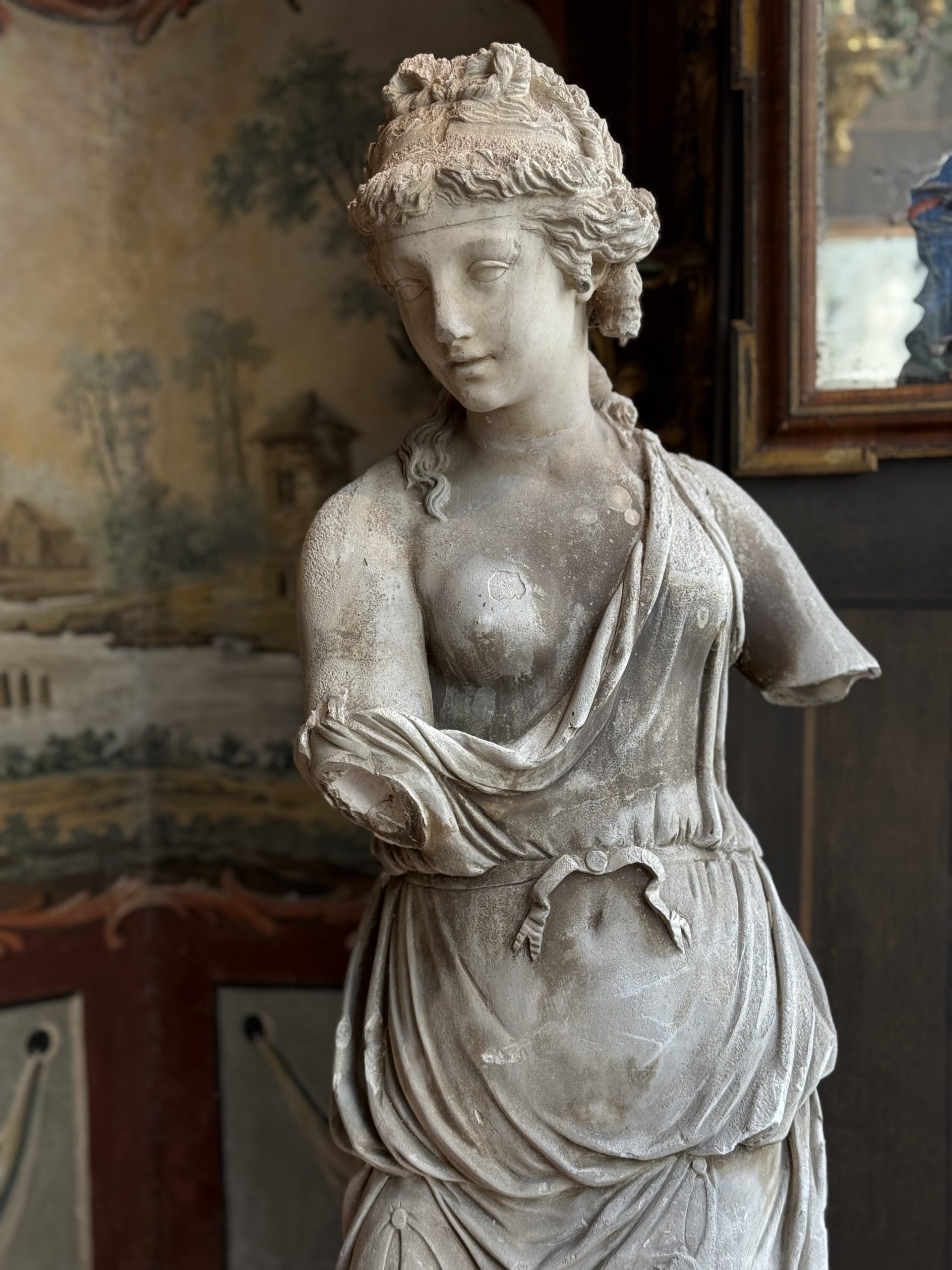
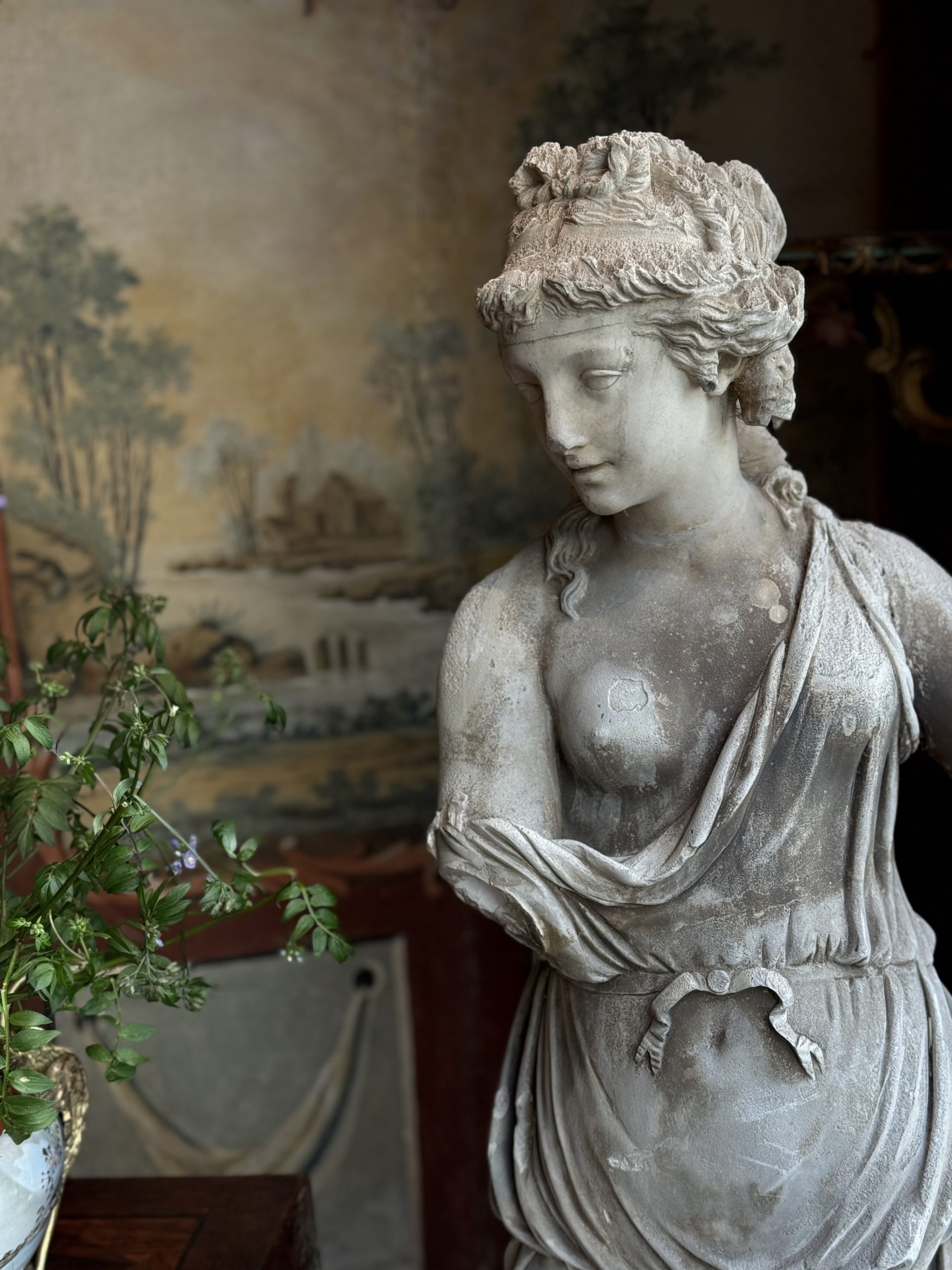
This 19th-century plaster sculpture depicts Venus Genetrix, the “Creative Mother.” Beyond simply being the goddess of beauty, Venus is celebrated here as the tutelary figure of the Roman lineage, the divine ancestor of the people and the imperial family. Her posture is that of a serene sovereign, combining the dignity of a matron with the eternal grace of an Olympian goddess.
The deity is crowned with the famous Apollo knot, a highly symbolic hairstyle in which the hair is gathered and tied at the crown of the head. This style, traditionally associated with her brother Apollo, emphasizes the divine androgyny and the nobility of her rank: it is the sign of a beauty that transcends mortality, reserved for beings of light and high distinction in classical antiquity.
The work is distinguished by its craftsmanship, notably the use of Panneggio Bagnato, or “wet draping.” This technique, attributed to the great Phidias, consists of sculpting the garment as if it had been soaked in water. Venus’s delicate tunic then becomes a second skin: it flows over the body, embracing every curve and revealing its anatomical form with a sensuality of rare elegance. The garment no longer conceals, but magnifies, creating a play of light and shadow between the prominent folds and the softness of the suggested flesh.
France
19th century
Dimensions:
Height: 152 cm
Width: 50 cm x 40 cm