Pair of Reliquaries in Paper Filigree and Spun Glass from Nevers, 18th Century
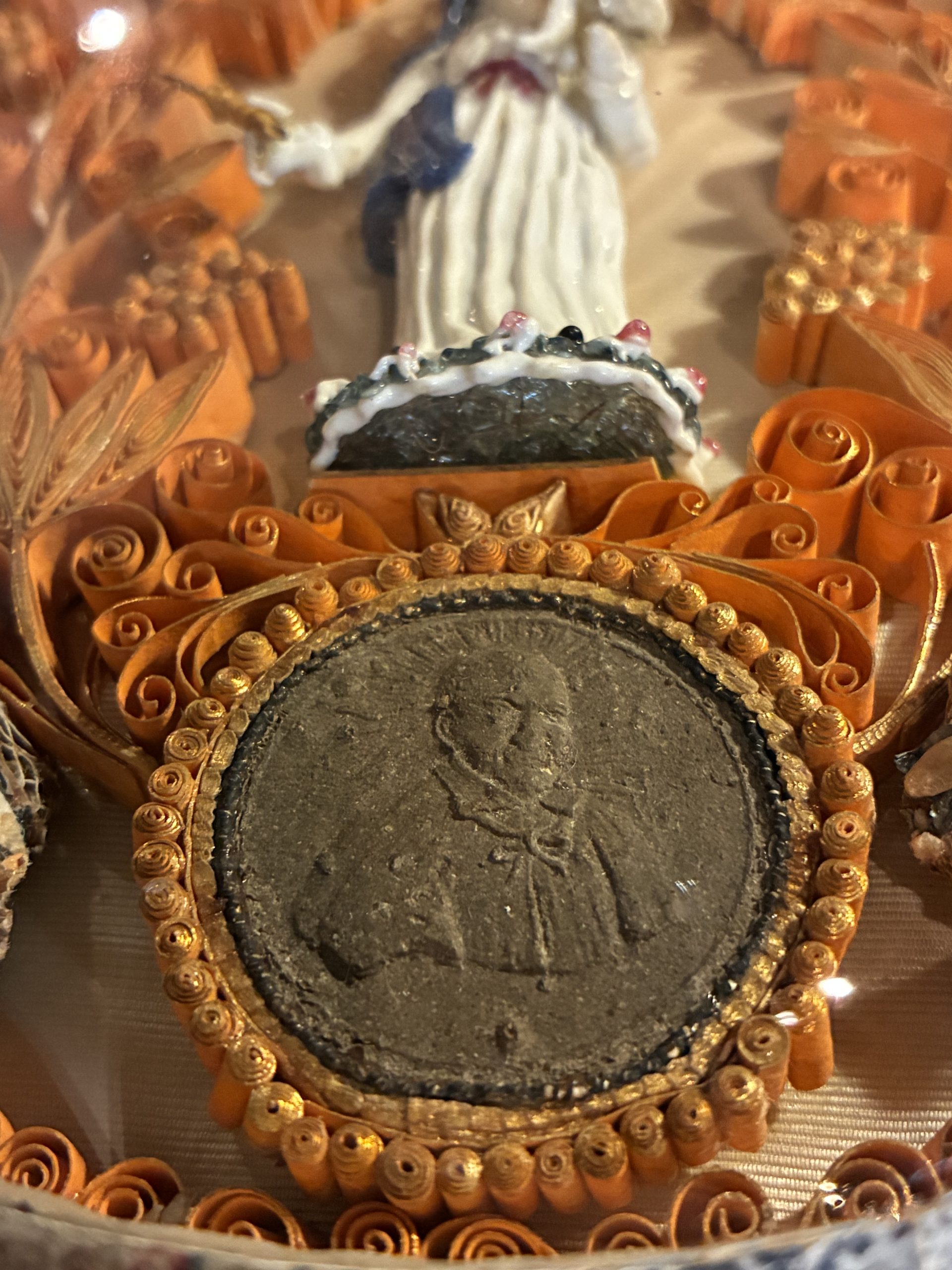
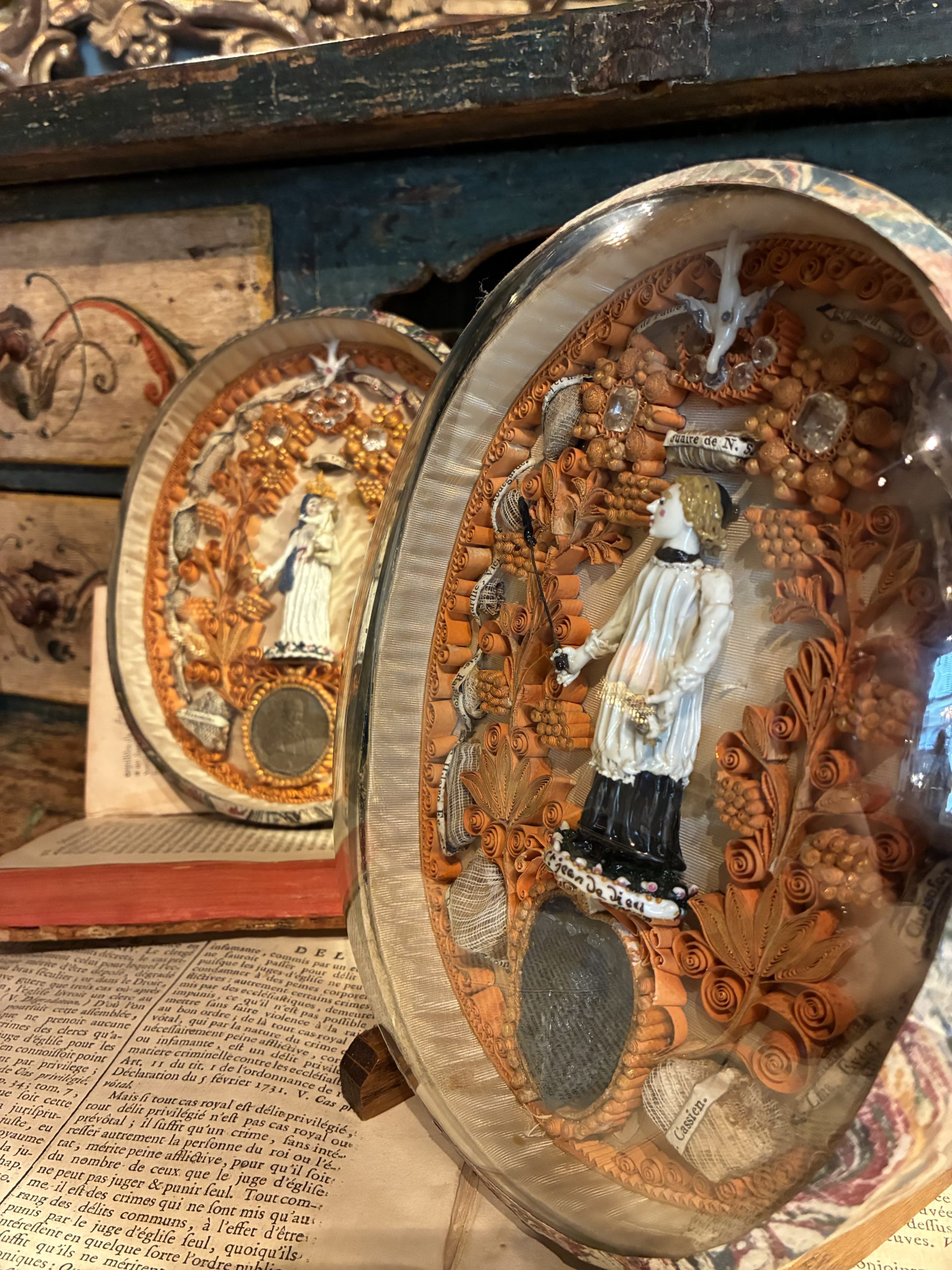
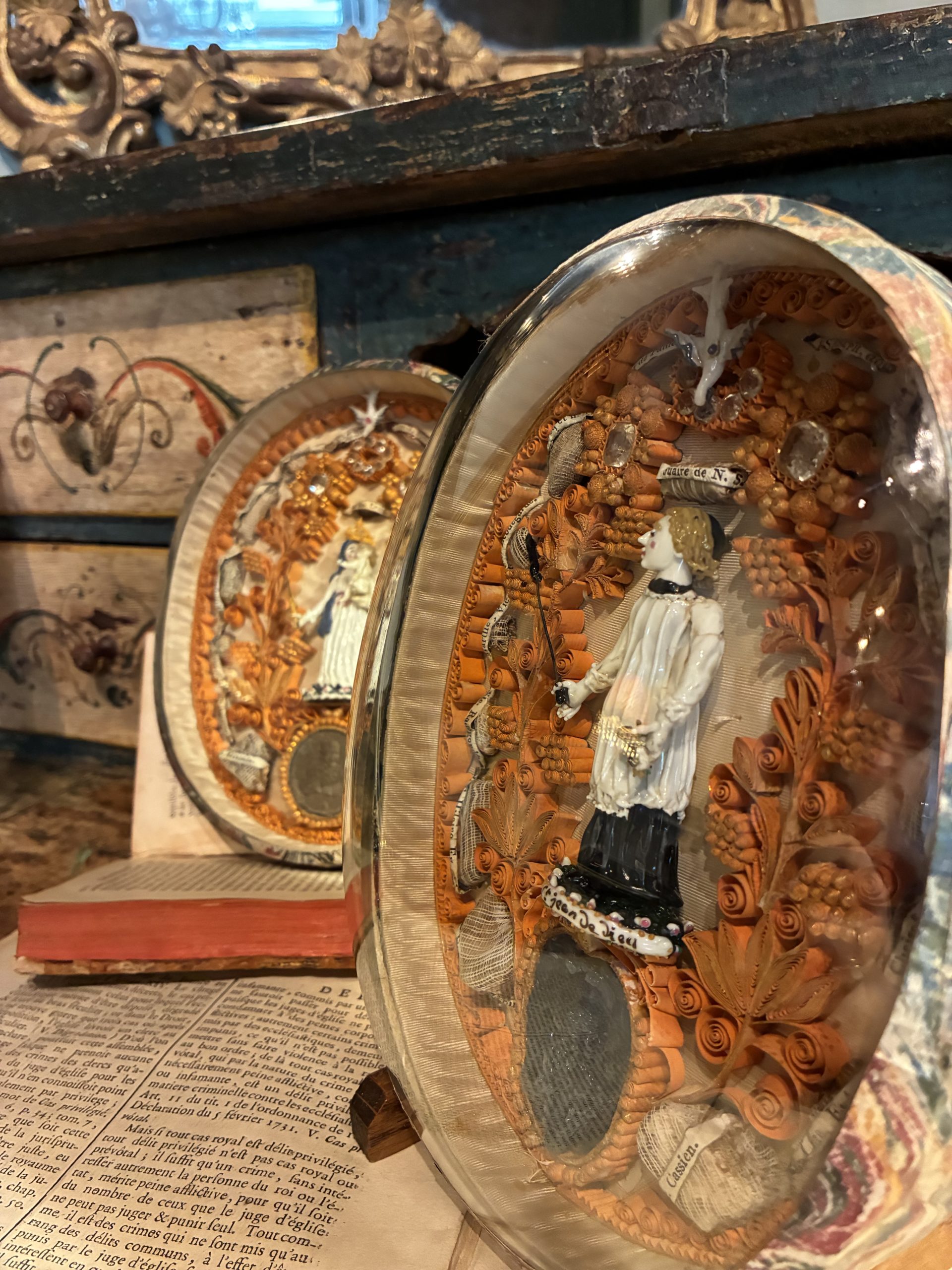
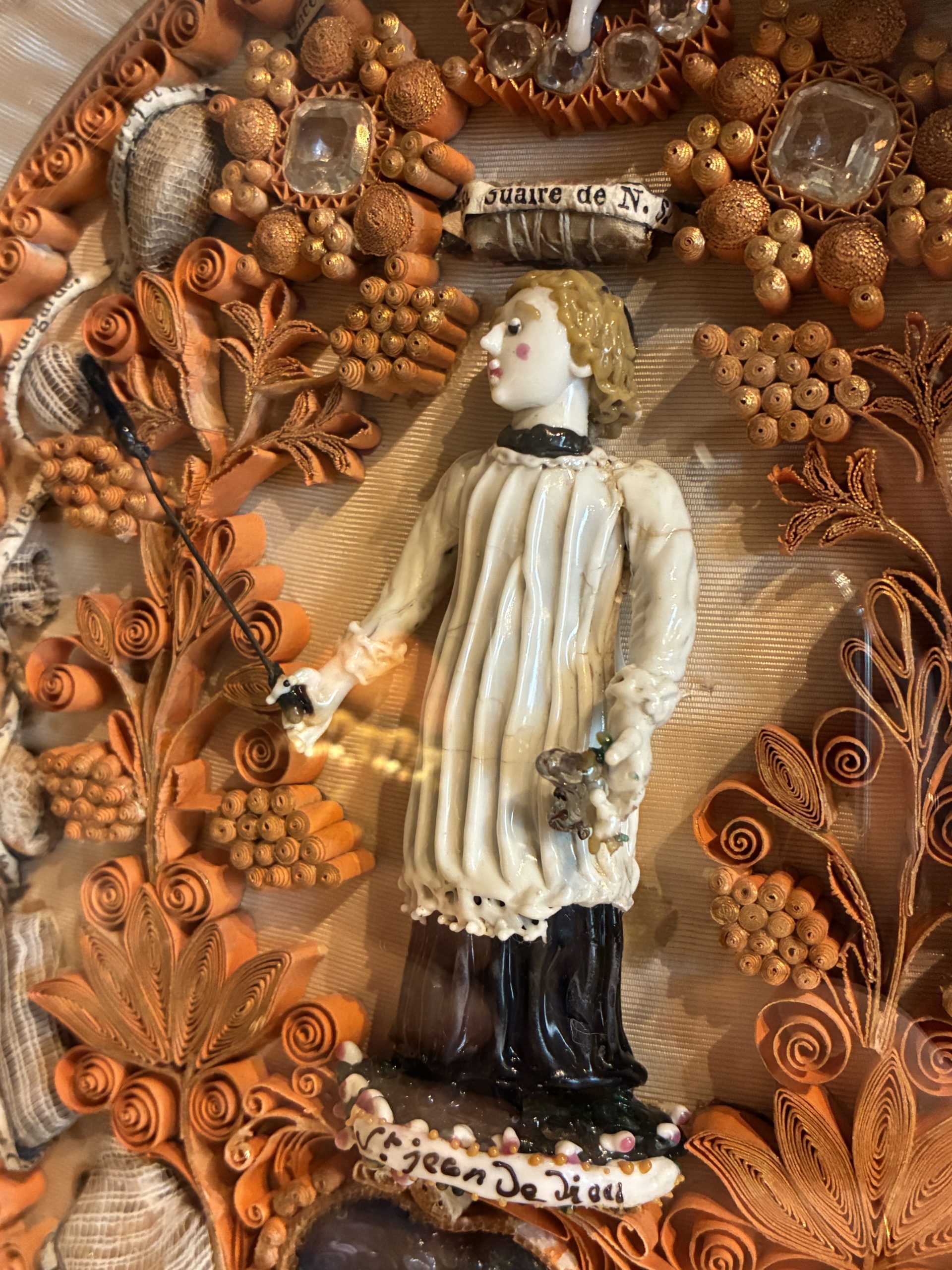
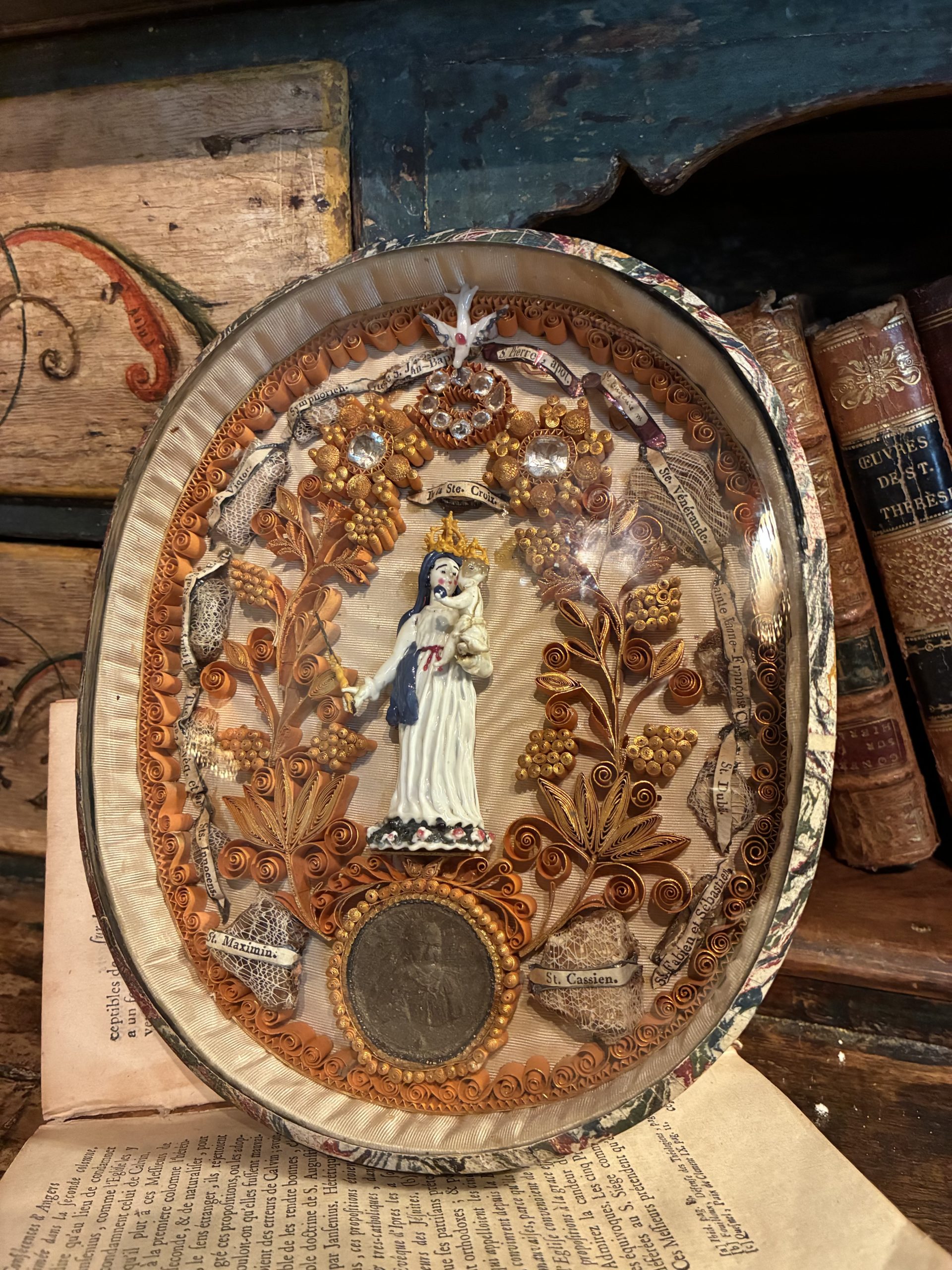
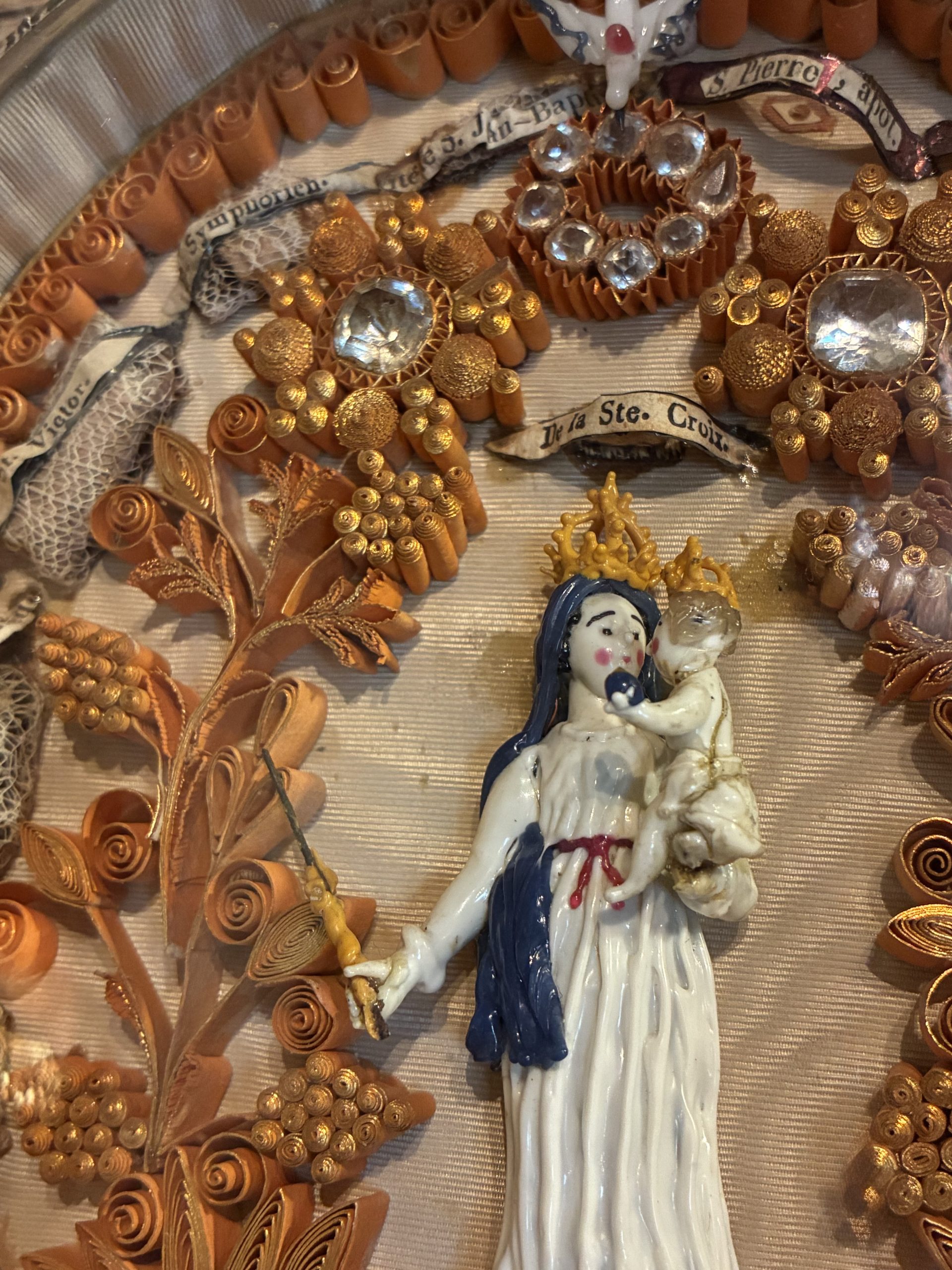
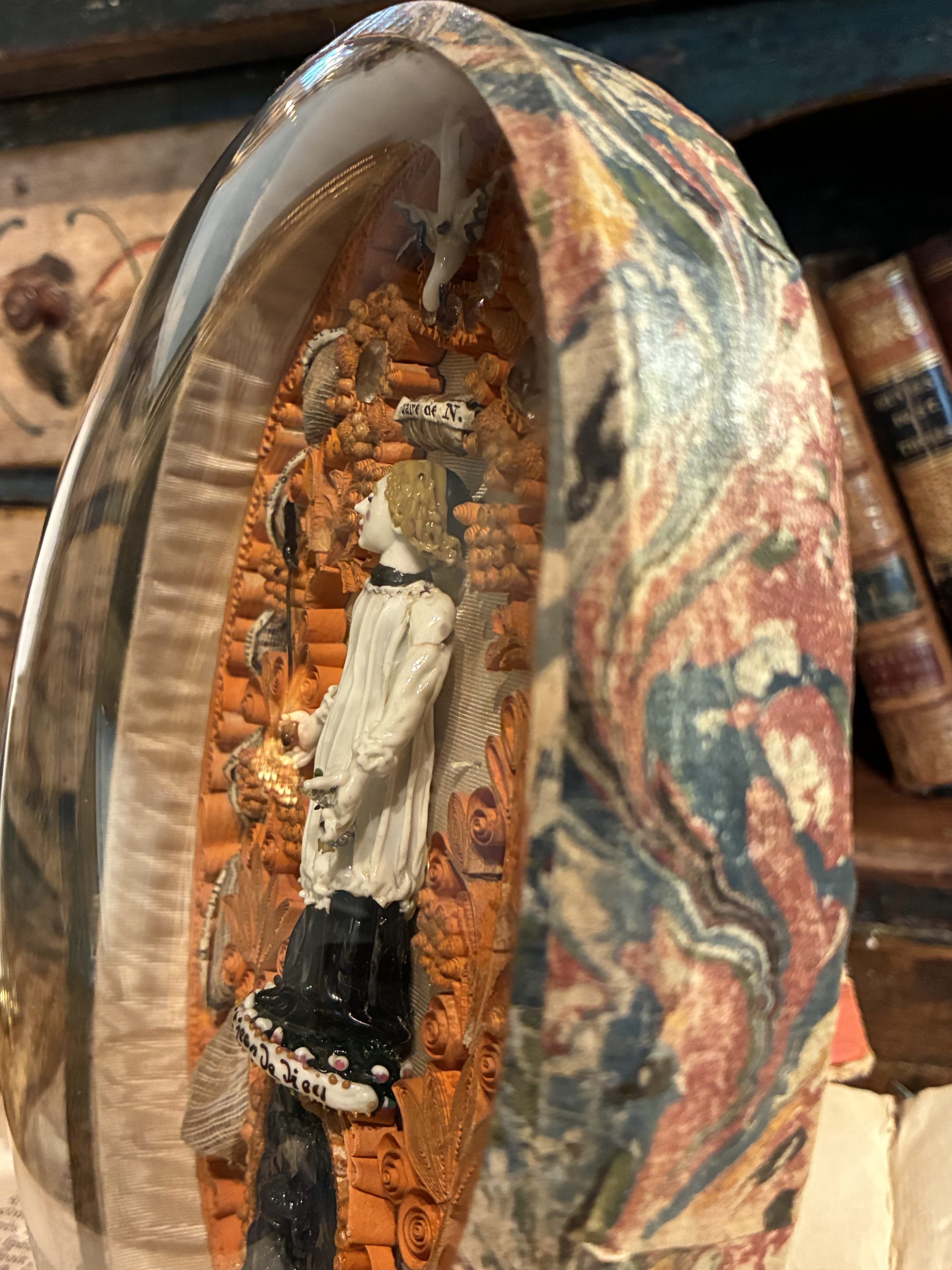
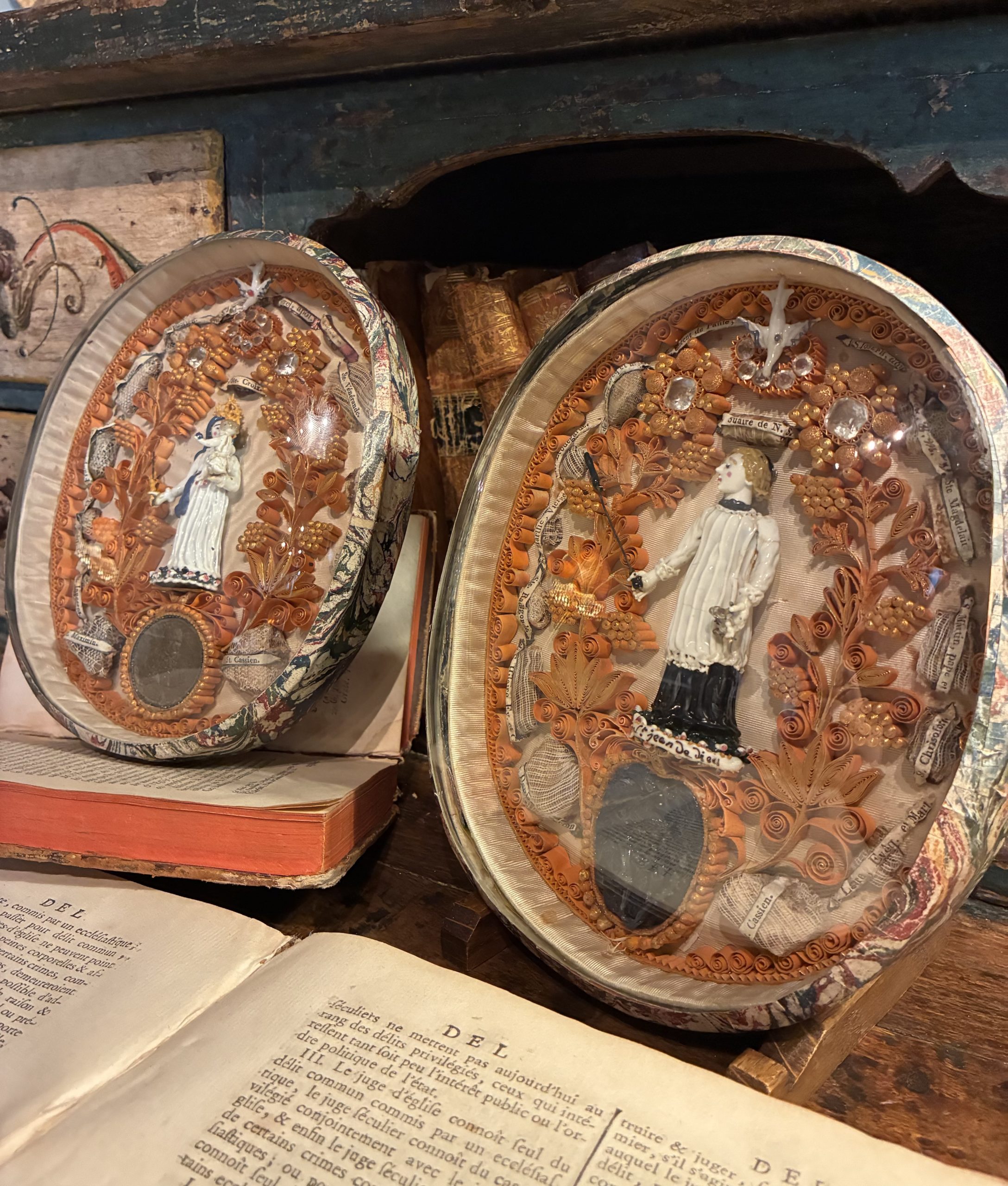
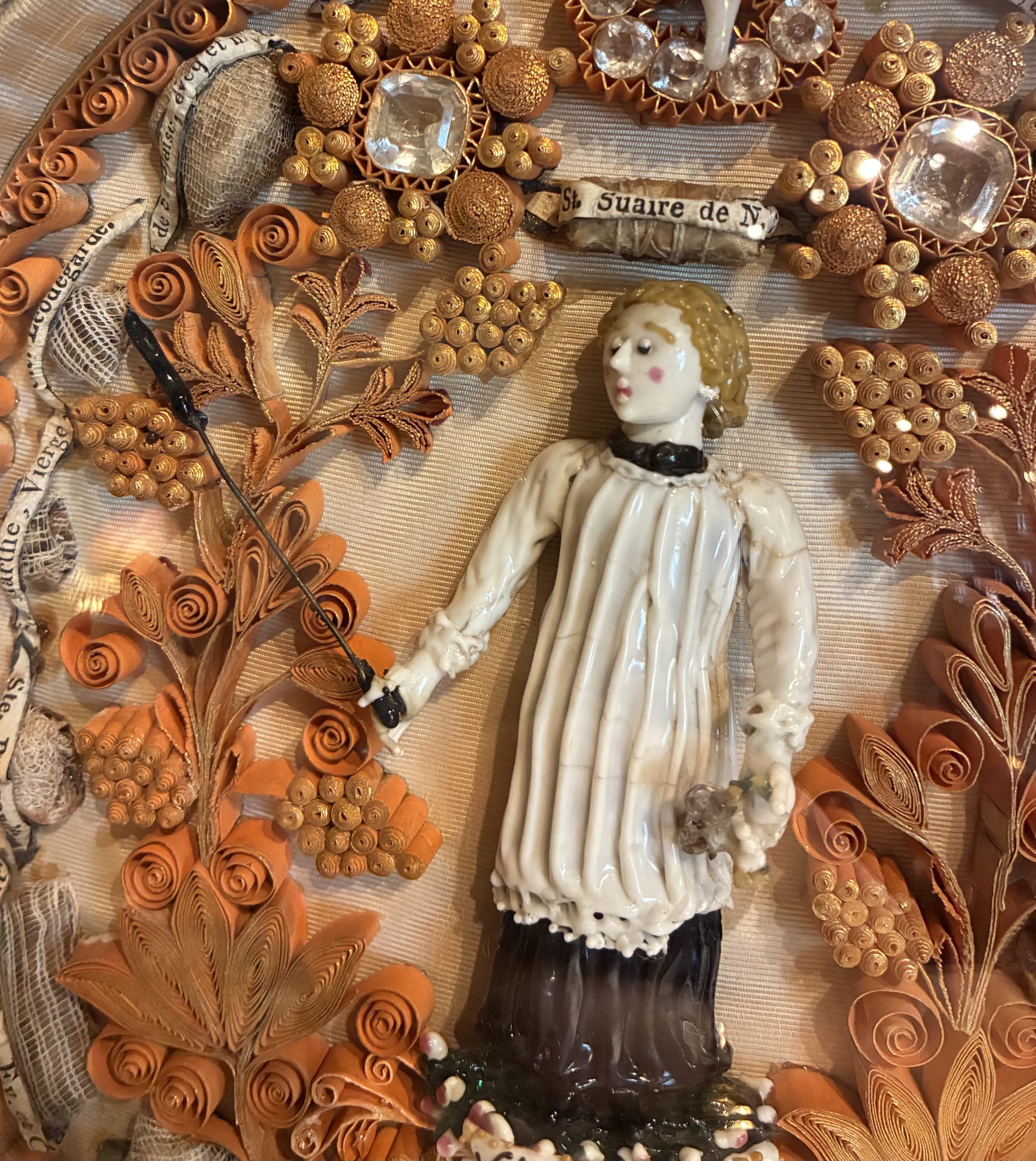
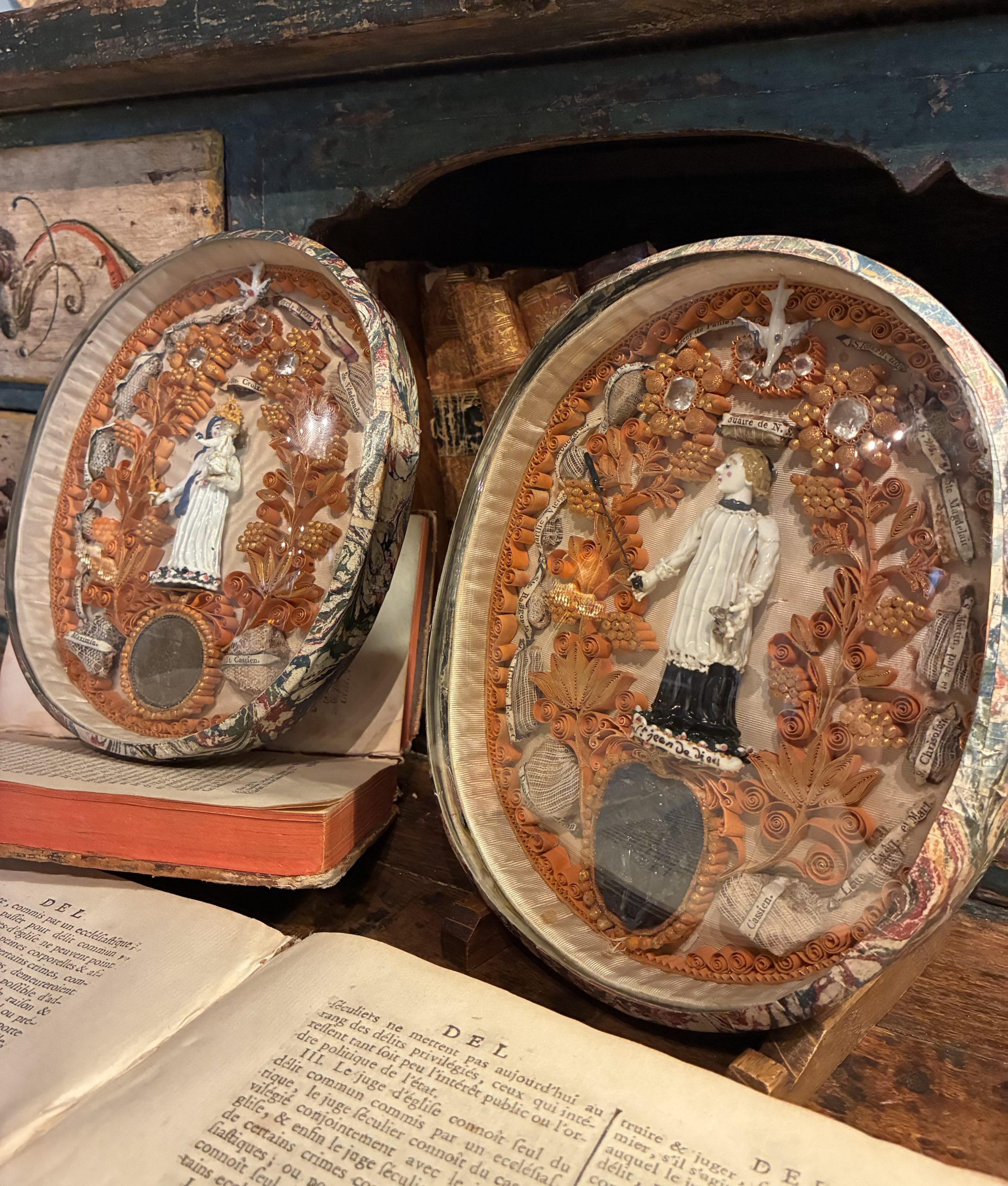
This pair of oval reliquaries constitutes an exceptional example of 18th-century sacred art, presented under antique domed glass. Each piece is centered around a spun glass figure from Nevers, representing, on one side, the Virgin and Child and, on the other, Saint John of God.
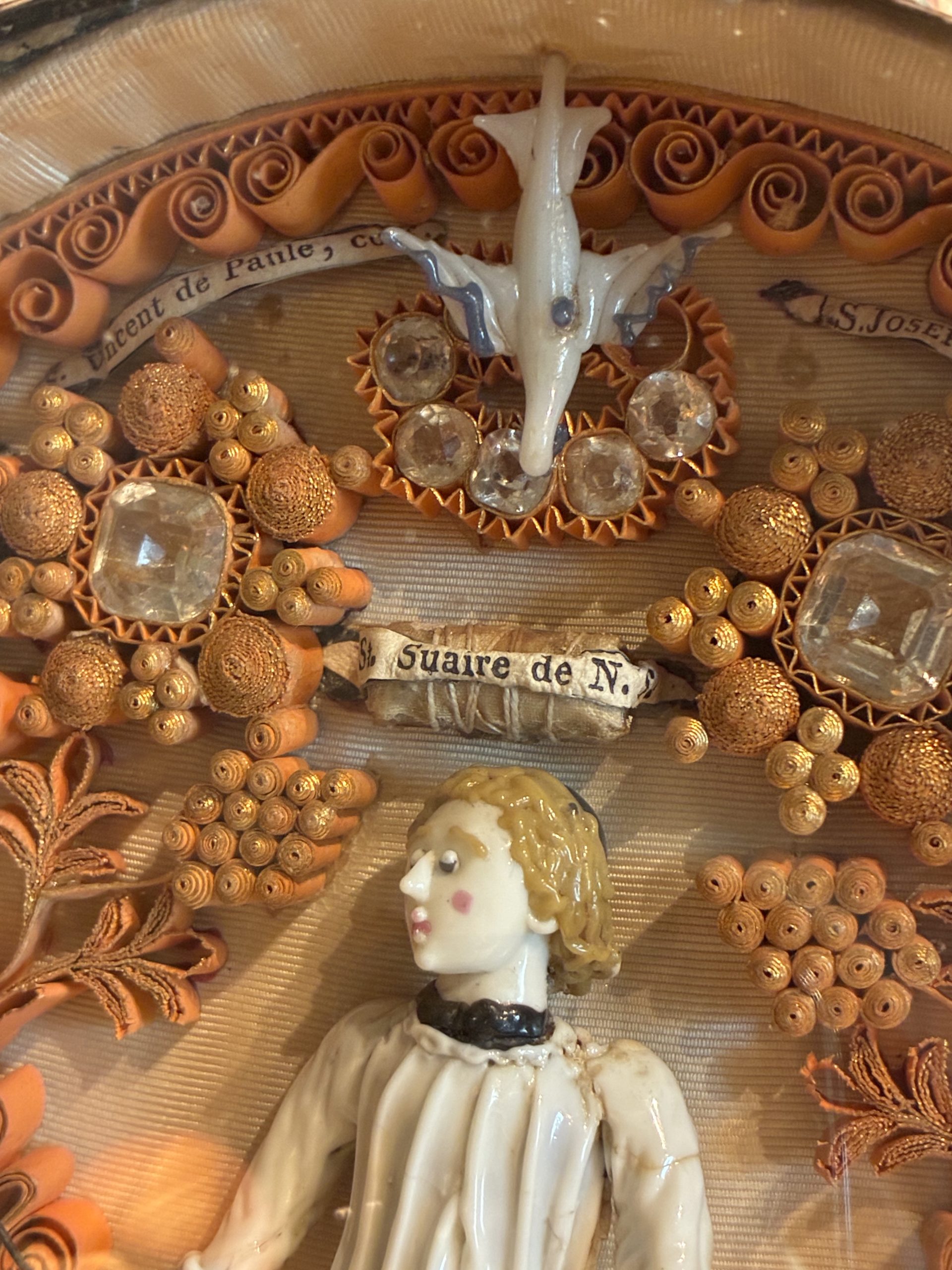
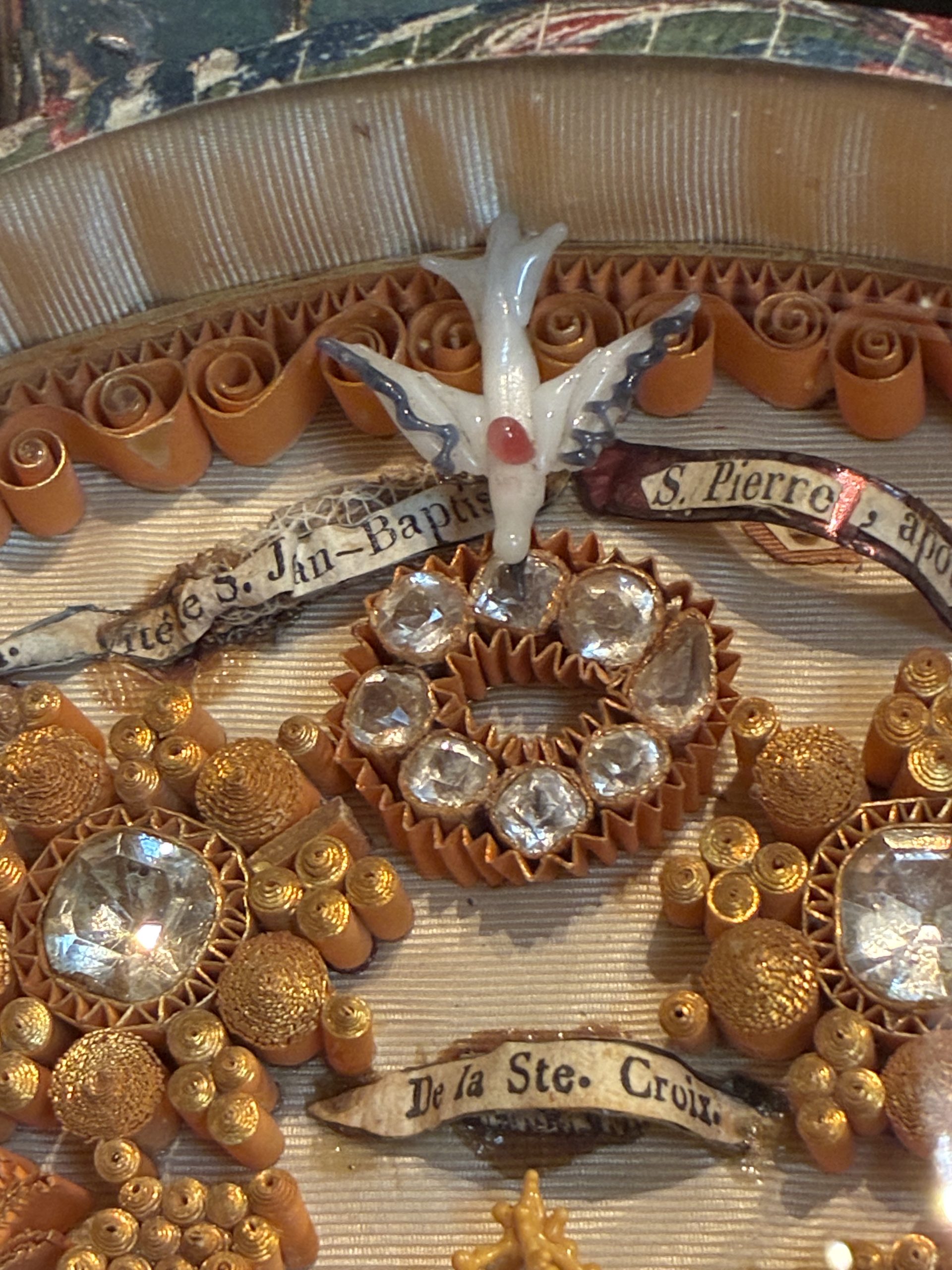
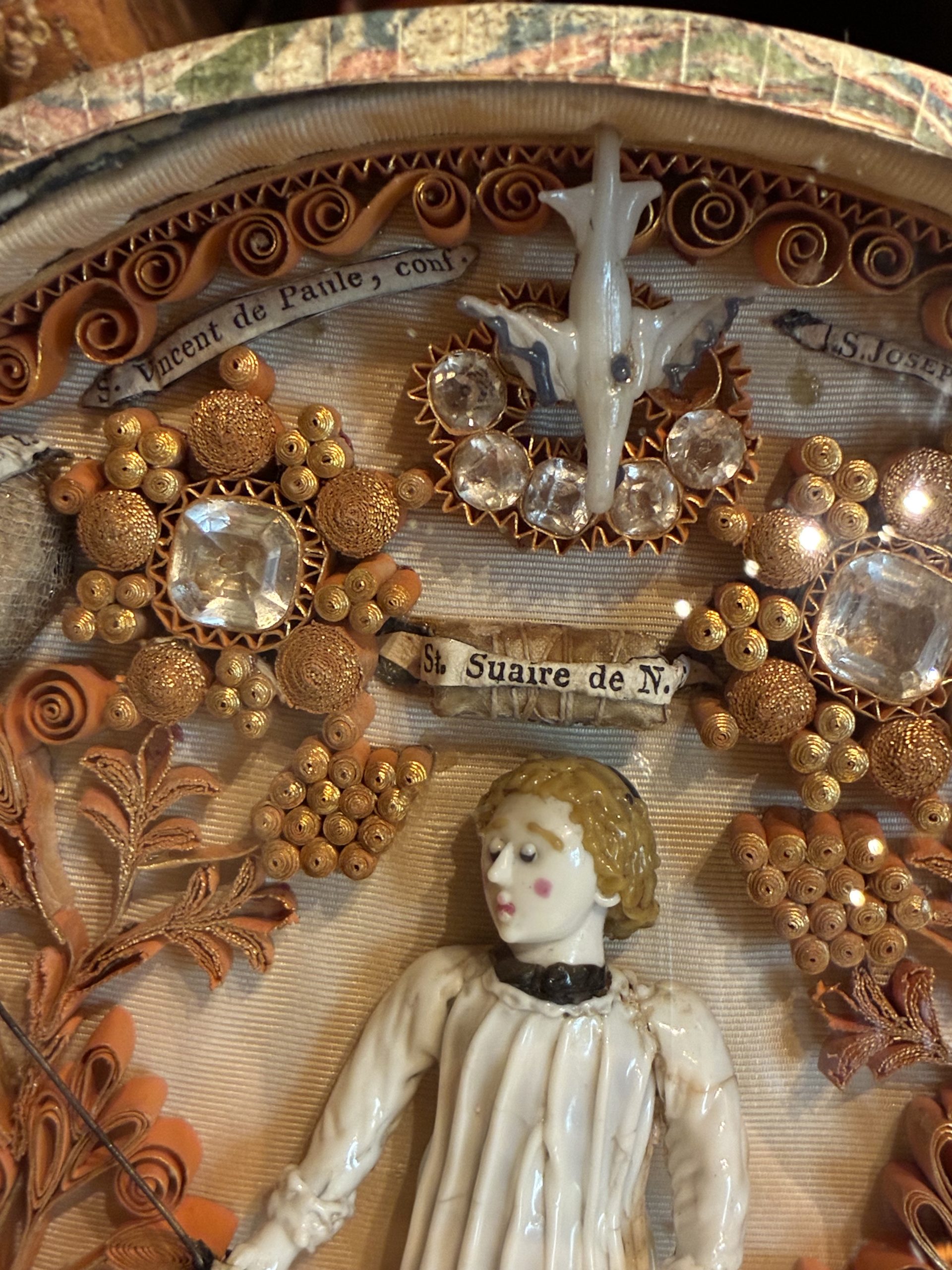
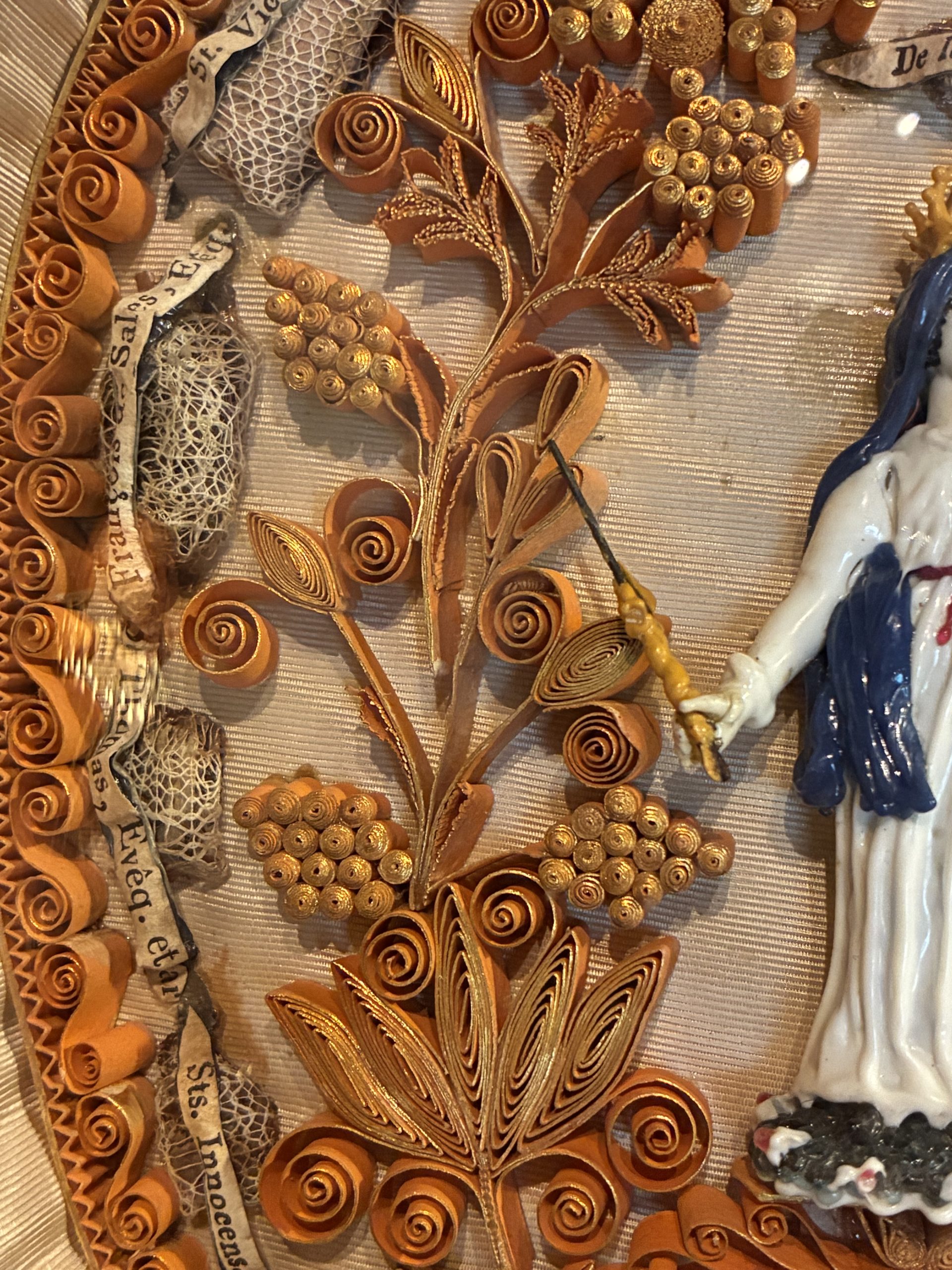
These reliquaries contain approximately thirty bone fragments identified by handwritten inscriptions. Among the saints depicted are Saint Joseph, Saint Martin, Saint Maximus, Saint Denis, Saint Vincent de Paul, Saint Peter the Apostle, Saint Victor, and Saint Cassian. These relics are carefully arranged among the paper scrolls and glass ornaments.
The paper filigree decoration consists of a complex arrangement of thin strips of gilded or colored paper, glued edge-to-edge to the support to form scrolls and raised plant motifs. This meticulous technique allows for the creation of paper architectures that mimic the finest goldsmithing. At the apex of these compositions, the radiant dove of the Holy Spirit can be seen above sacred scenes.
The art of paper filigree was practiced as early as the Renaissance, primarily in convents, by religious organizations to venerate God and embellish sacred messages. This work of extreme patience allowed for the promotion of beliefs by transforming humble materials into precious reliquaries for the remains of saints.
The history of spun glass in Nevers dates back to the late 16th century with the arrival of Italian glassmakers who imported this lampworking technique. Unlike blown glass, spun glass involves shaping glass rods directly over the flame of a blowpipe to create figurines of unparalleled delicacy. Highly fashionable in the 18th century, these Nevers figurines were renowned for their vibrant colors and precise details, making each one a unique work of art destined for cabinets of curiosities and private devotion.
France
18th century
Dimensions: 20 cm x 16 cm