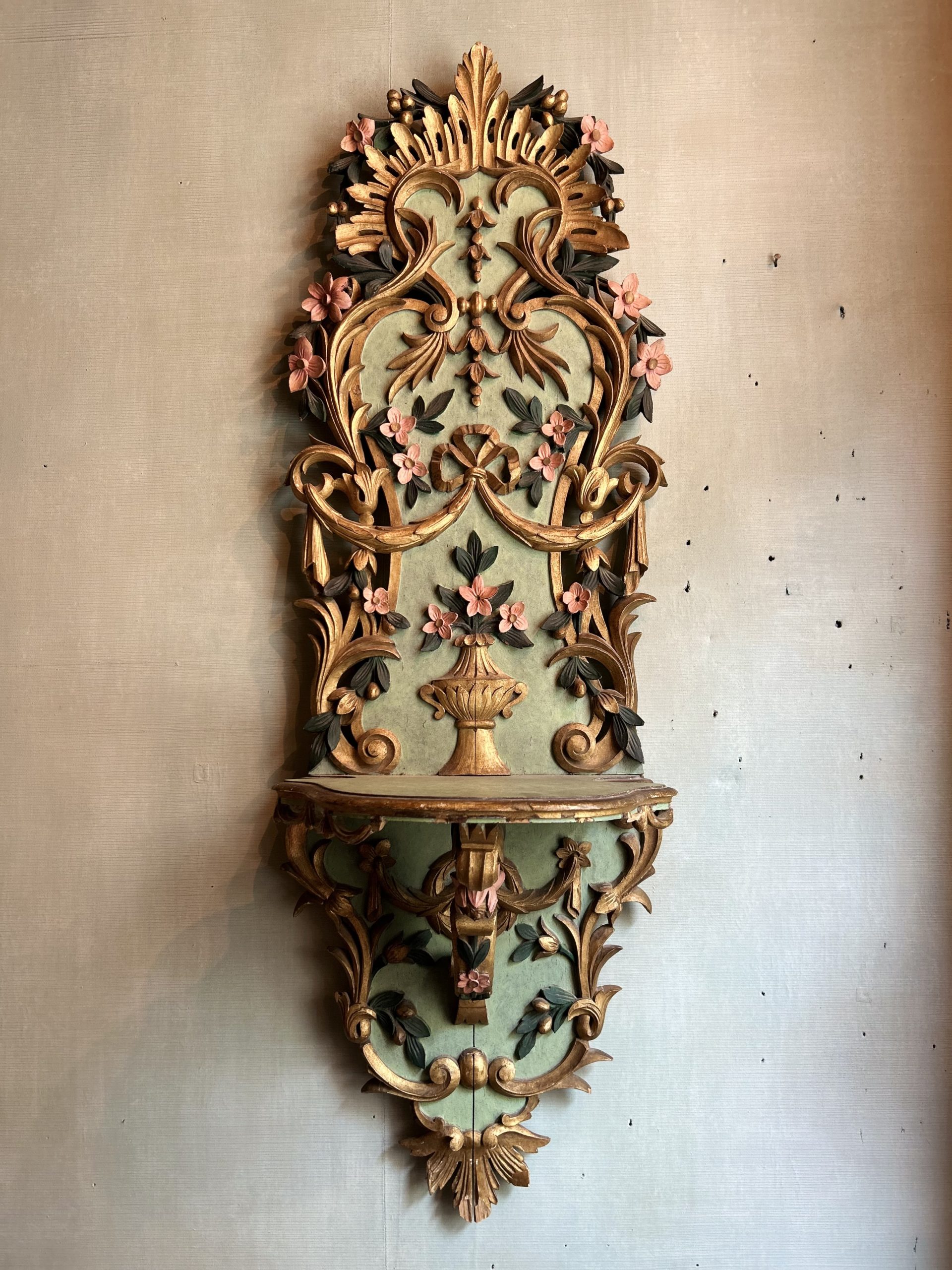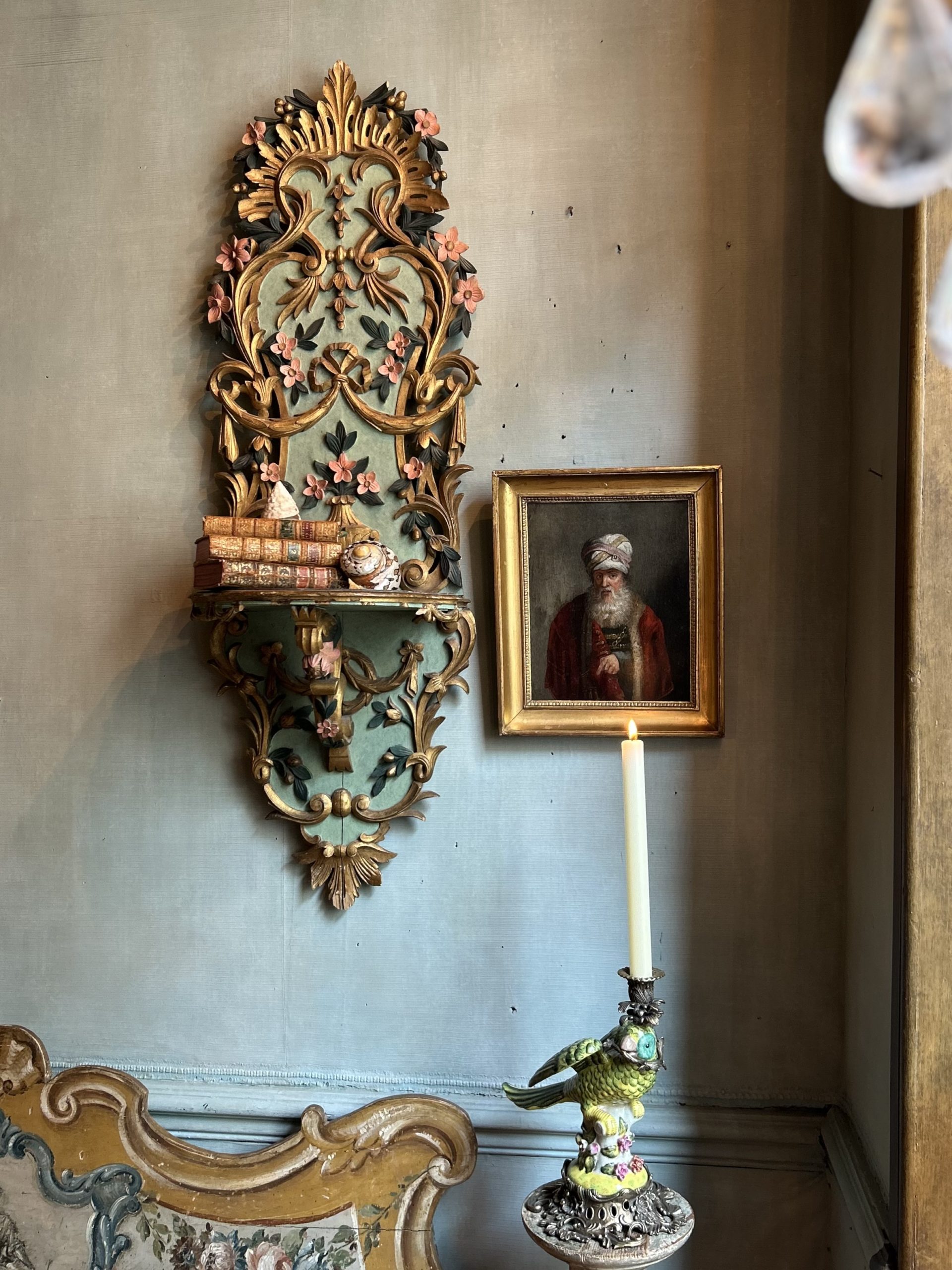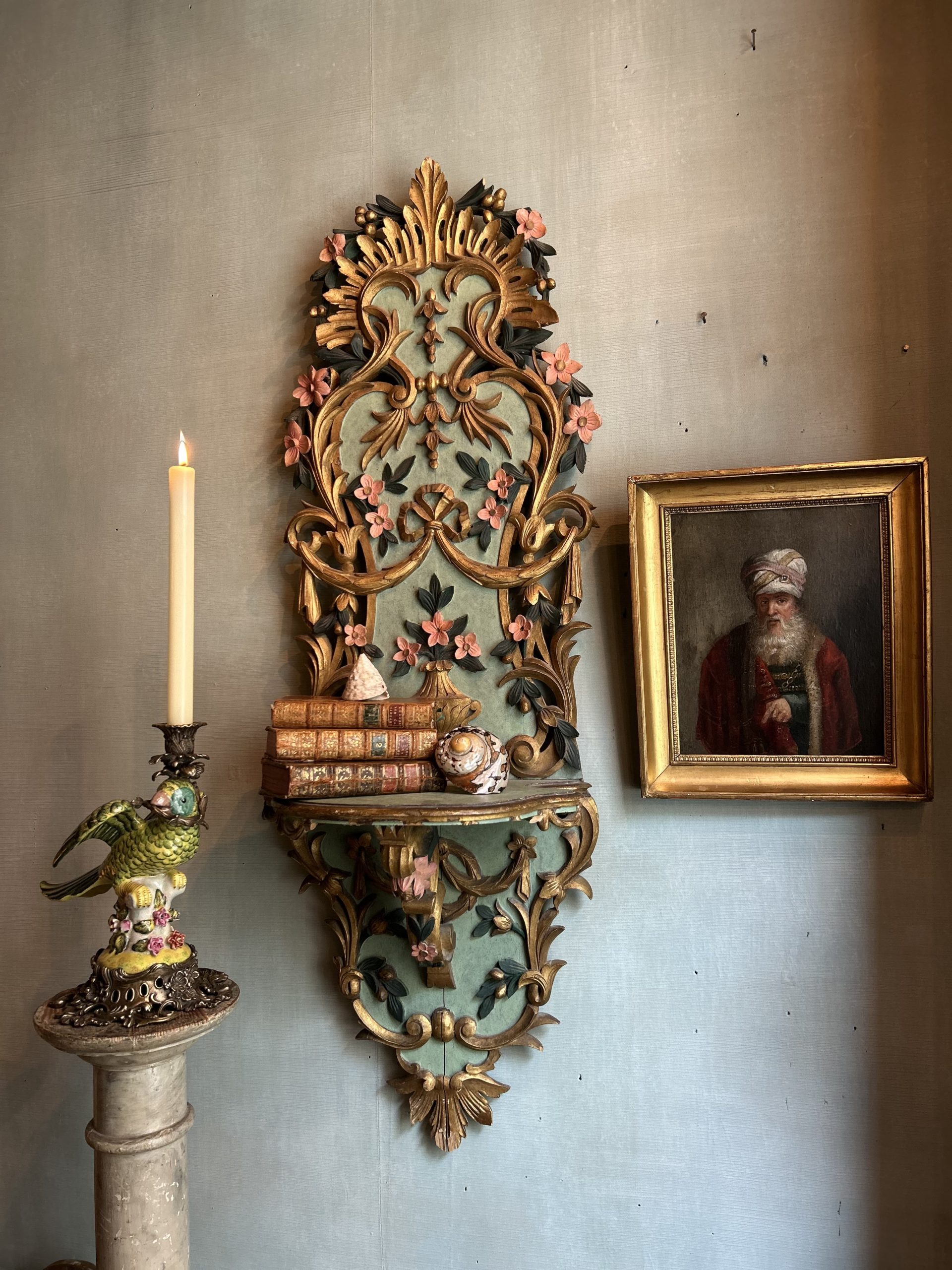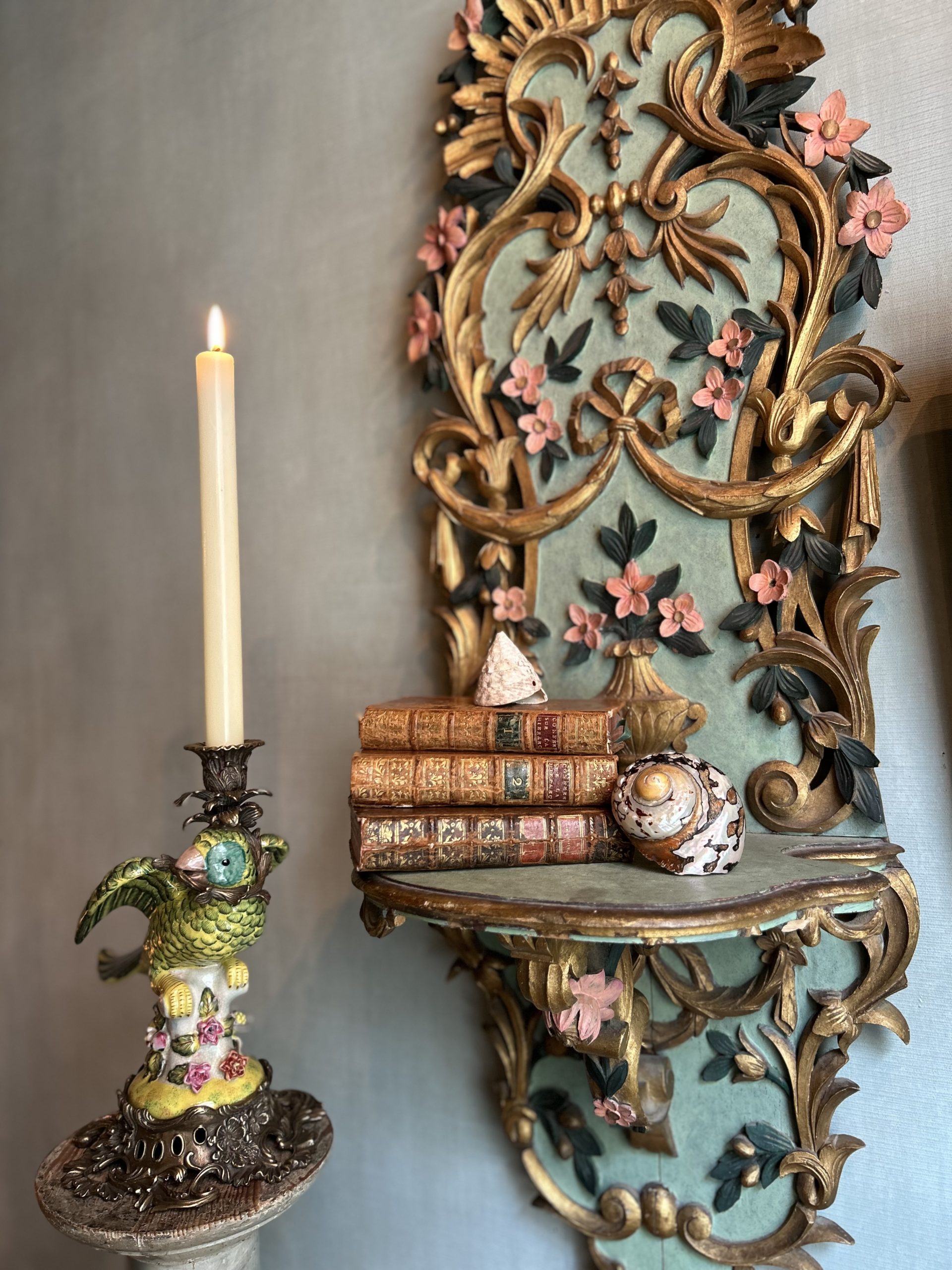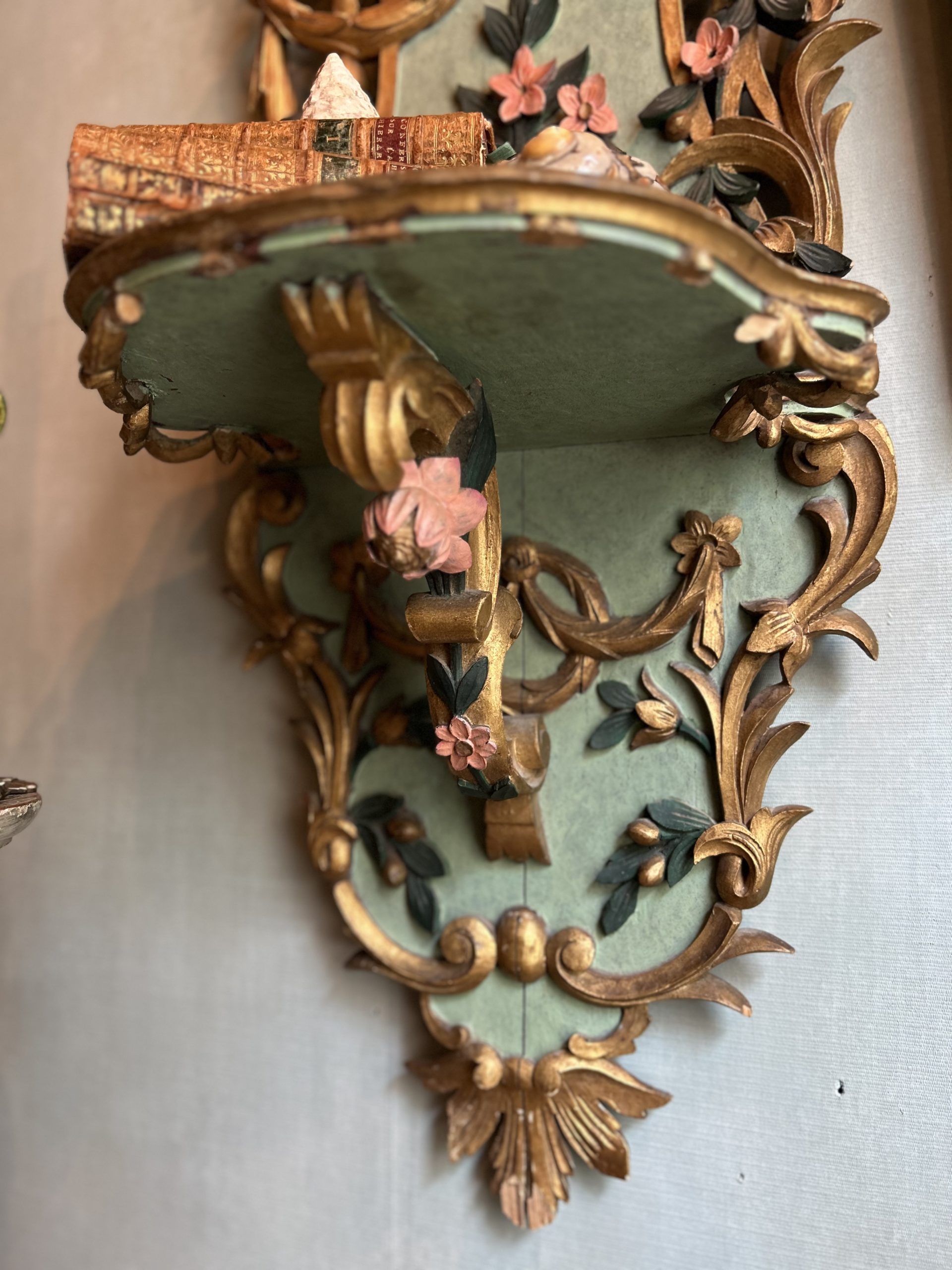
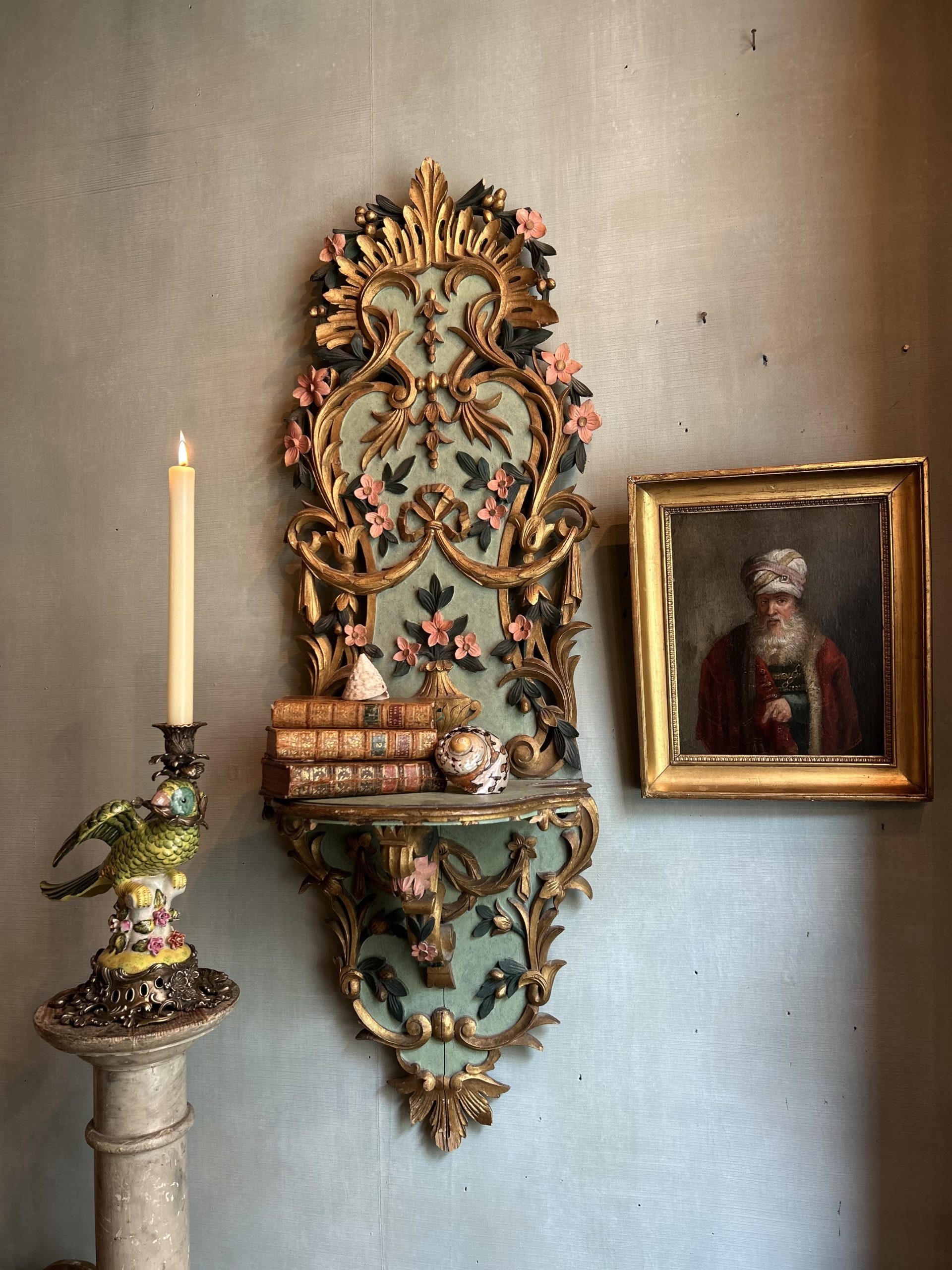
Turban stand “Kavukluk,” Ottoman Empire, Turkey, late 18th century
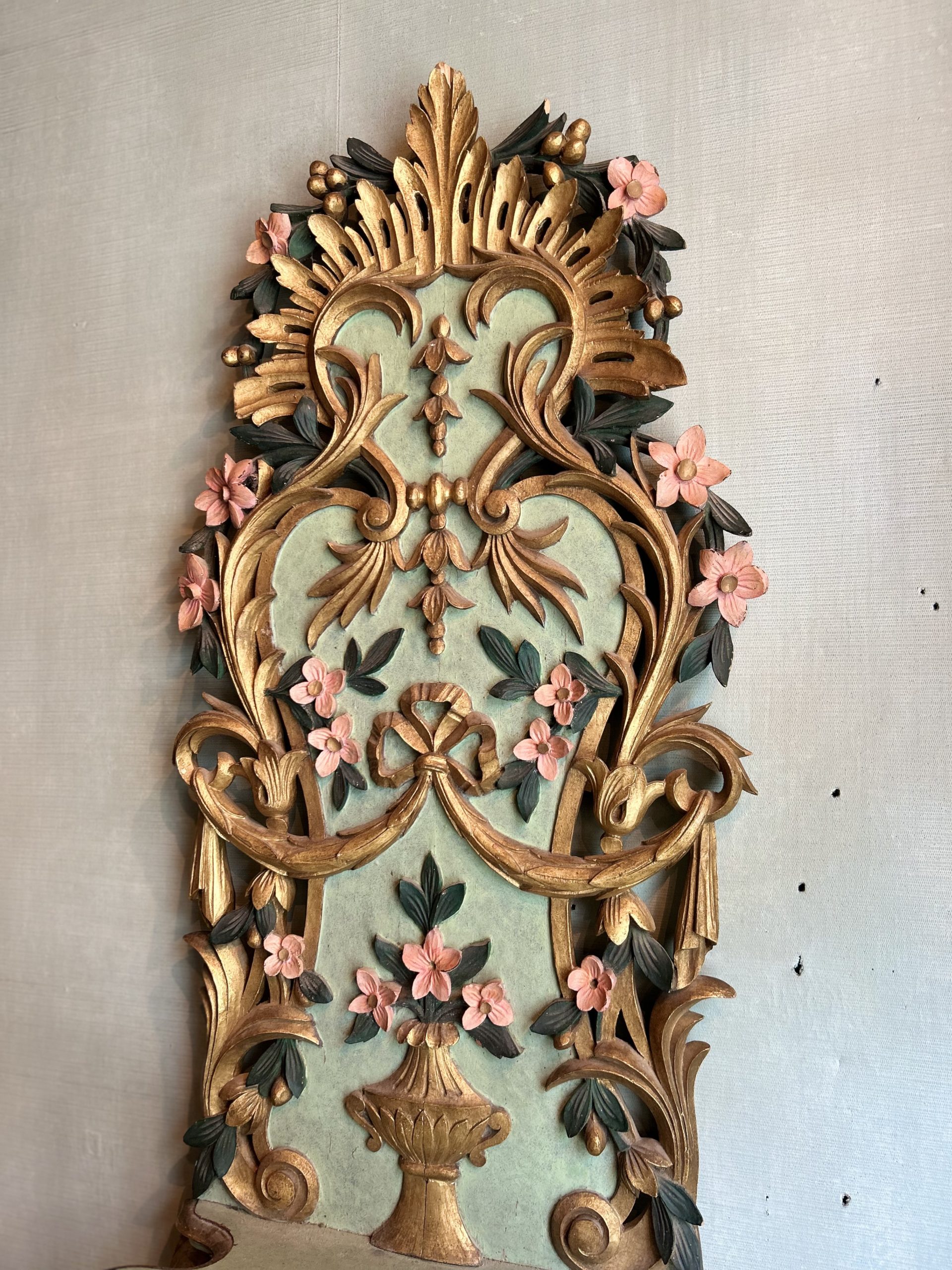
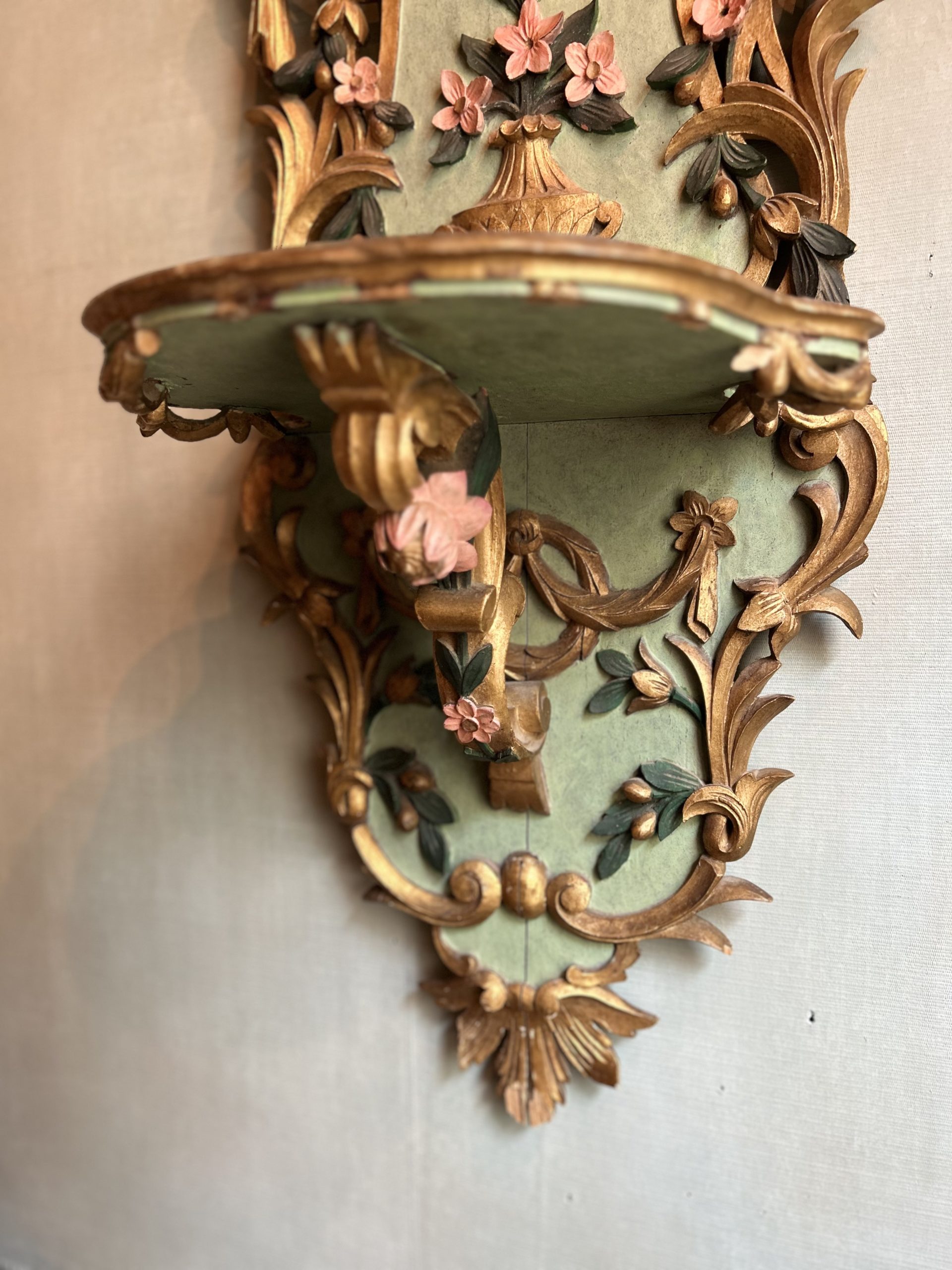
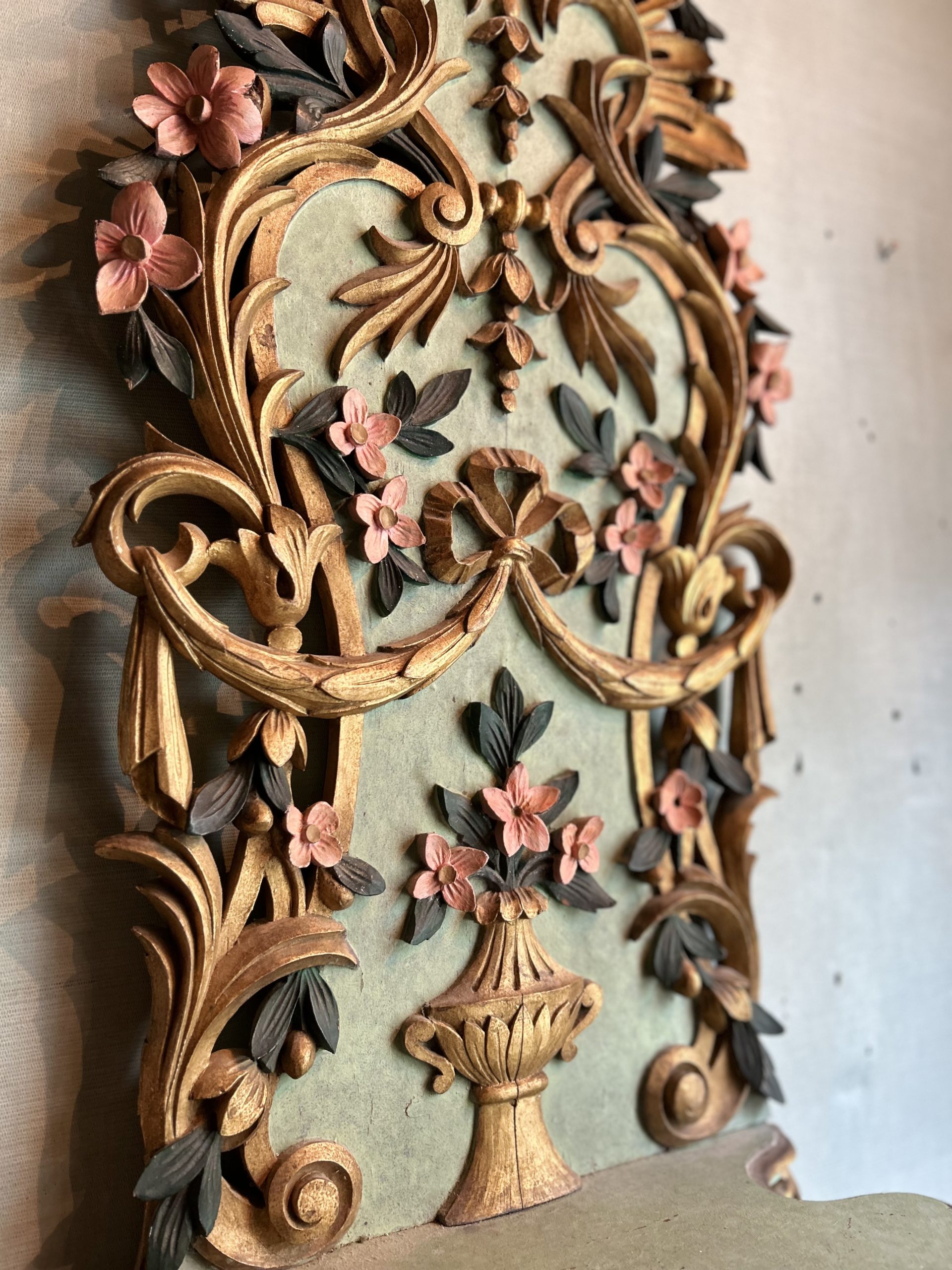
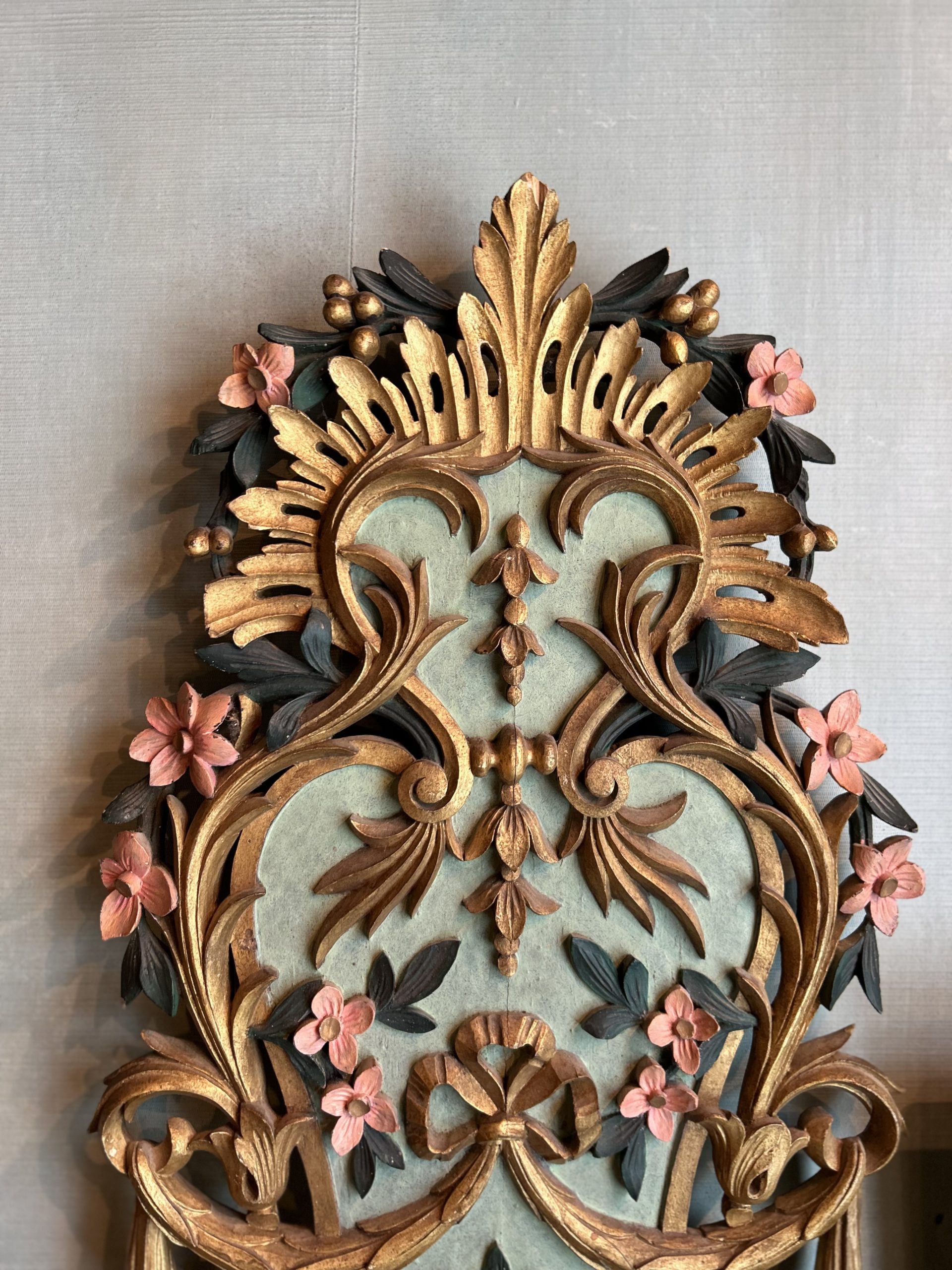
A carved, polychrome, and gilded wooden turban stand, known as a Kavukluk, designed to hold an Ottoman man’s turban. The piece features a vertical structure adorned with rocaille decoration composed of scrolls, gilded foliage, and polychrome flowers arranged around a blue-green background. A small projecting shelf, positioned in the center of the composition, allowed the turban to be placed on it when not being worn.
In the Ottoman Empire, the turban held an essential place in male appearance and constituted a social and religious marker. The legal code established under Sultan Mehmed II set precise rules regarding clothing according to rank, profession, or religion. The materials, colors, and complexity of the turban’s wrapping allowed for the immediate identification of an individual’s status. Its importance was such that male tombstones were often carved with a turban on top.
The decoration of this turban stand is characteristic of the Rococo style introduced to the Ottoman Empire during the Tulip Period, a time of openness to Western artistic influences in the 18th century. The decorative technique employed, known as Edirnekâri, refers to a tradition of sculpture and polychromy developed by artisans in the city of Edirne, in western Turkey.
Ottoman Empire, Turkey
Late 18th century
Dimensions:
Height: 117 cm
Width: 37 cm
Depth: 27 cm