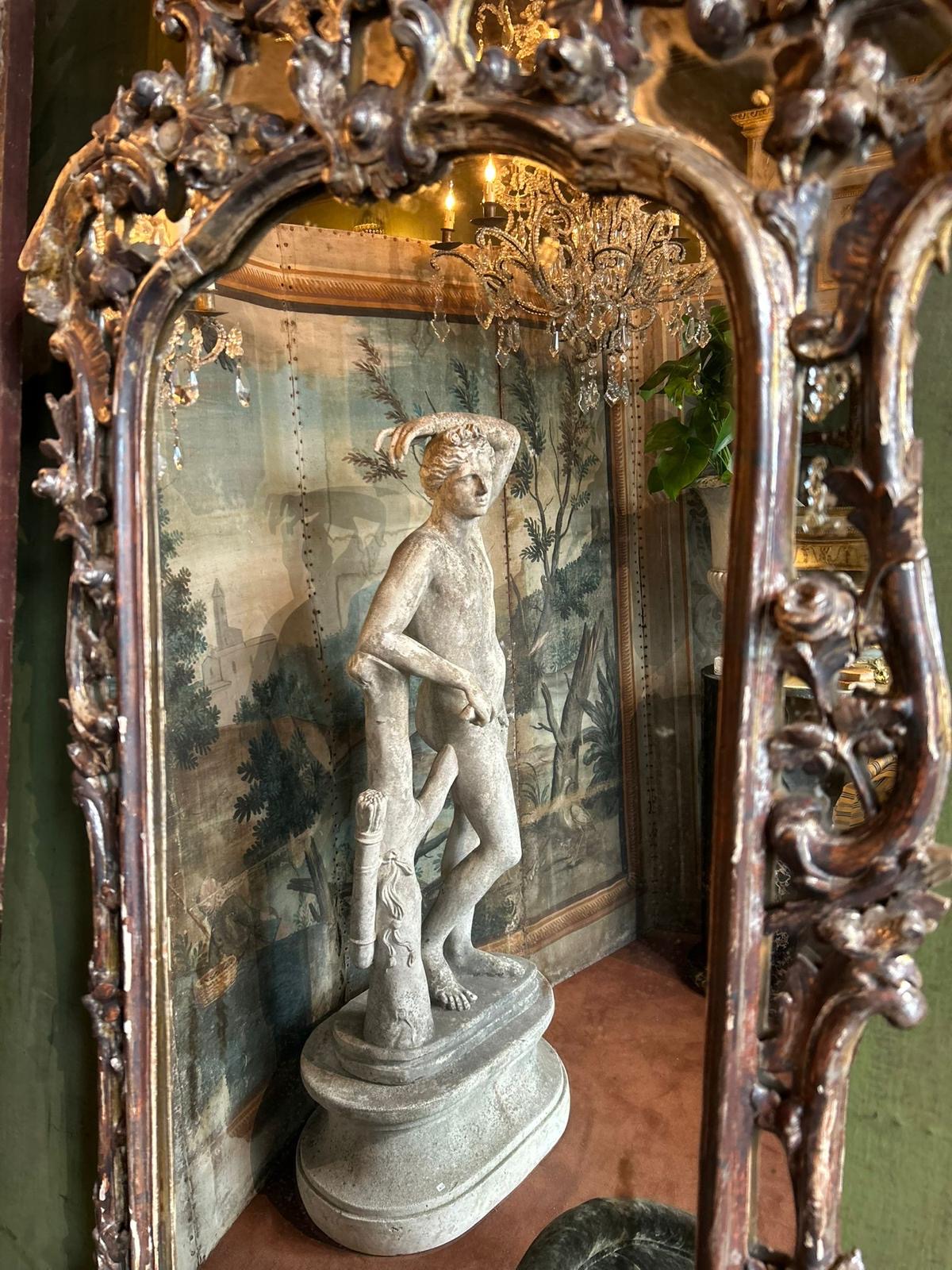

Apollo, a garden sculpture in reconstituted stone. The graceful nude male figure of the young god leans gently against a tree trunk, with his right hand resting on his head. This sculpture is a variation of the Lycian Apollo, also known as the Apollo of Florence or the Apollino, a work by the celebrated Greek sculptor Praxiteles (4th century BC), now housed in the Uffizi Gallery in Florence.
As for the original statue, the name “Lycian” is believed to derive from the fact that it may once have stood in the “Lyceum,” the school founded by Aristotle in Athens around 335 BC, near a sanctuary dedicated to Apollo. Owing to its fame, the statue was frequently copied throughout the centuries and was regarded as one of the finest examples of the ideal proportions of the human body.
Circa 1900, Italy
Base: 35 × 45 × 70 cm
Statue: 145 × 55 × 30 cm