Italian *Capipote*, early 19th century
Carved and polychromed wooden processional mannequin
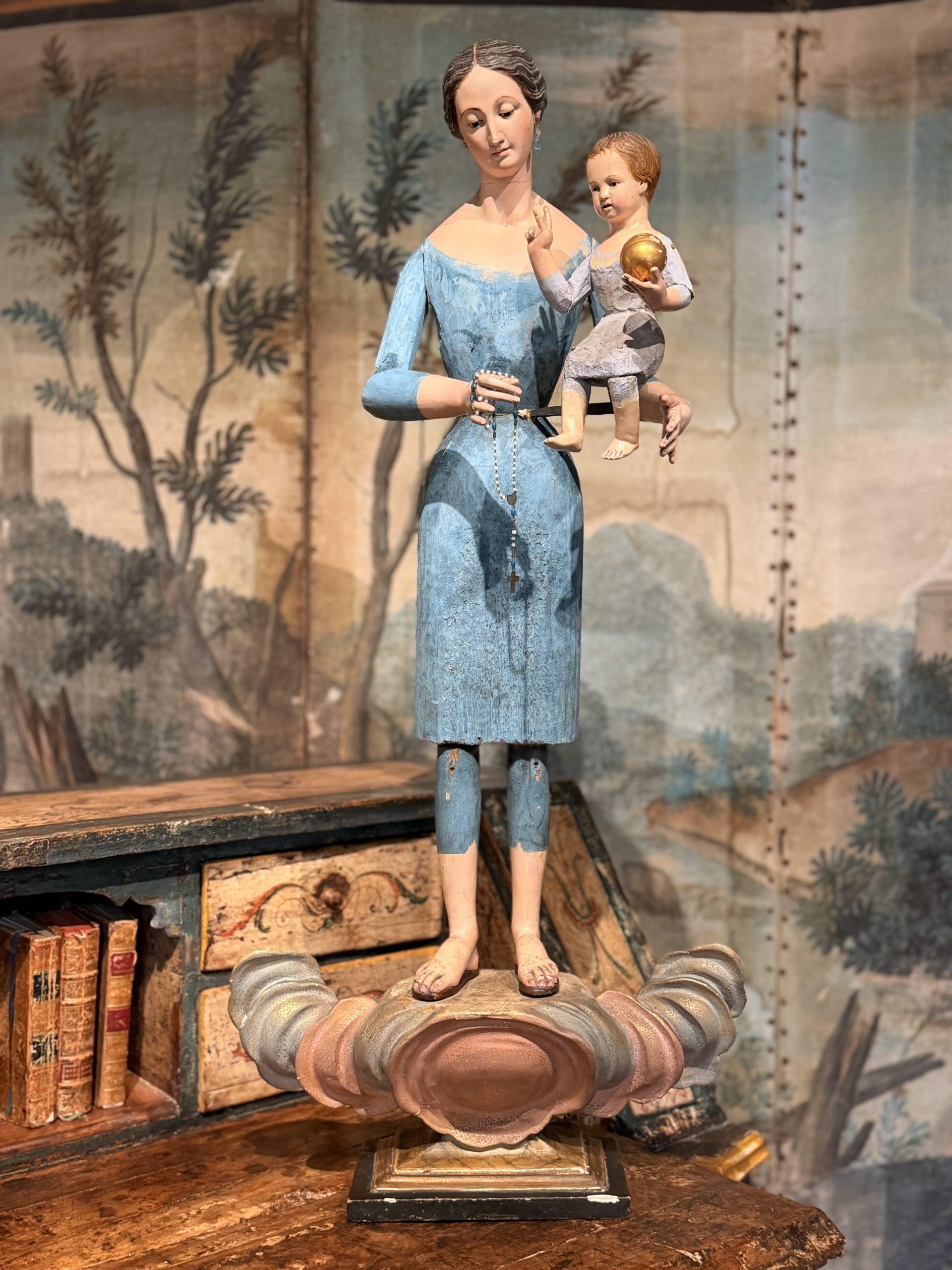
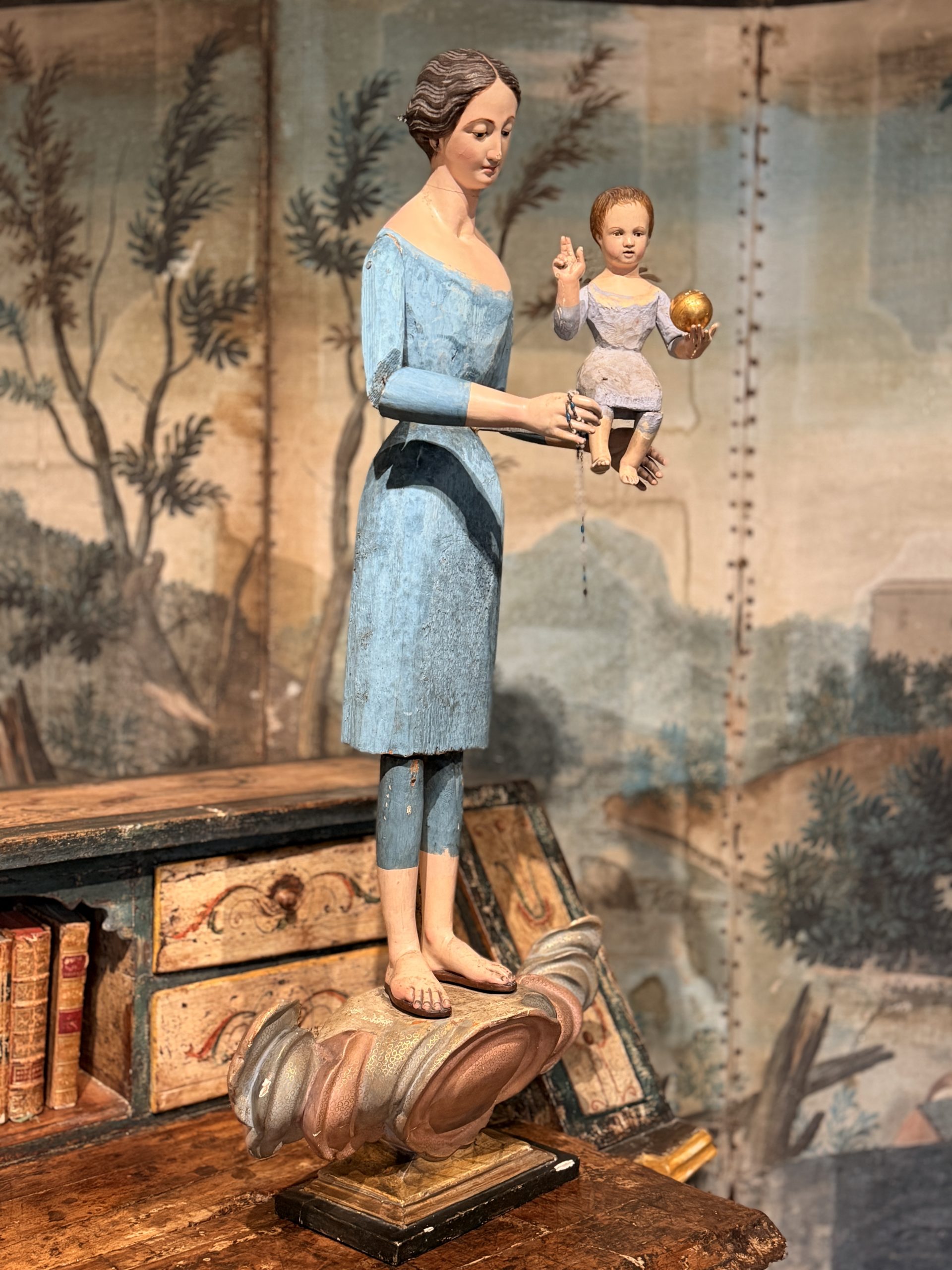
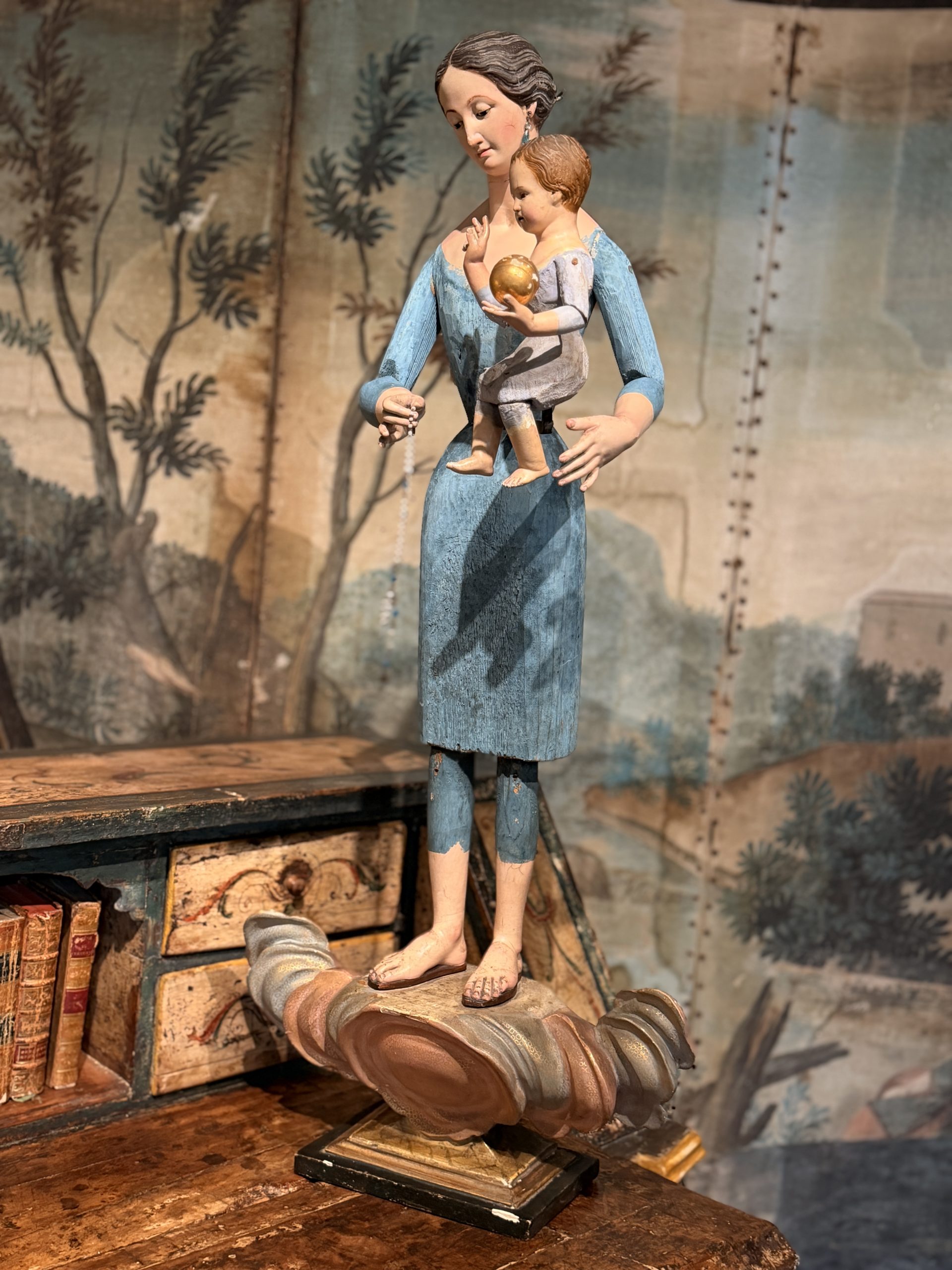
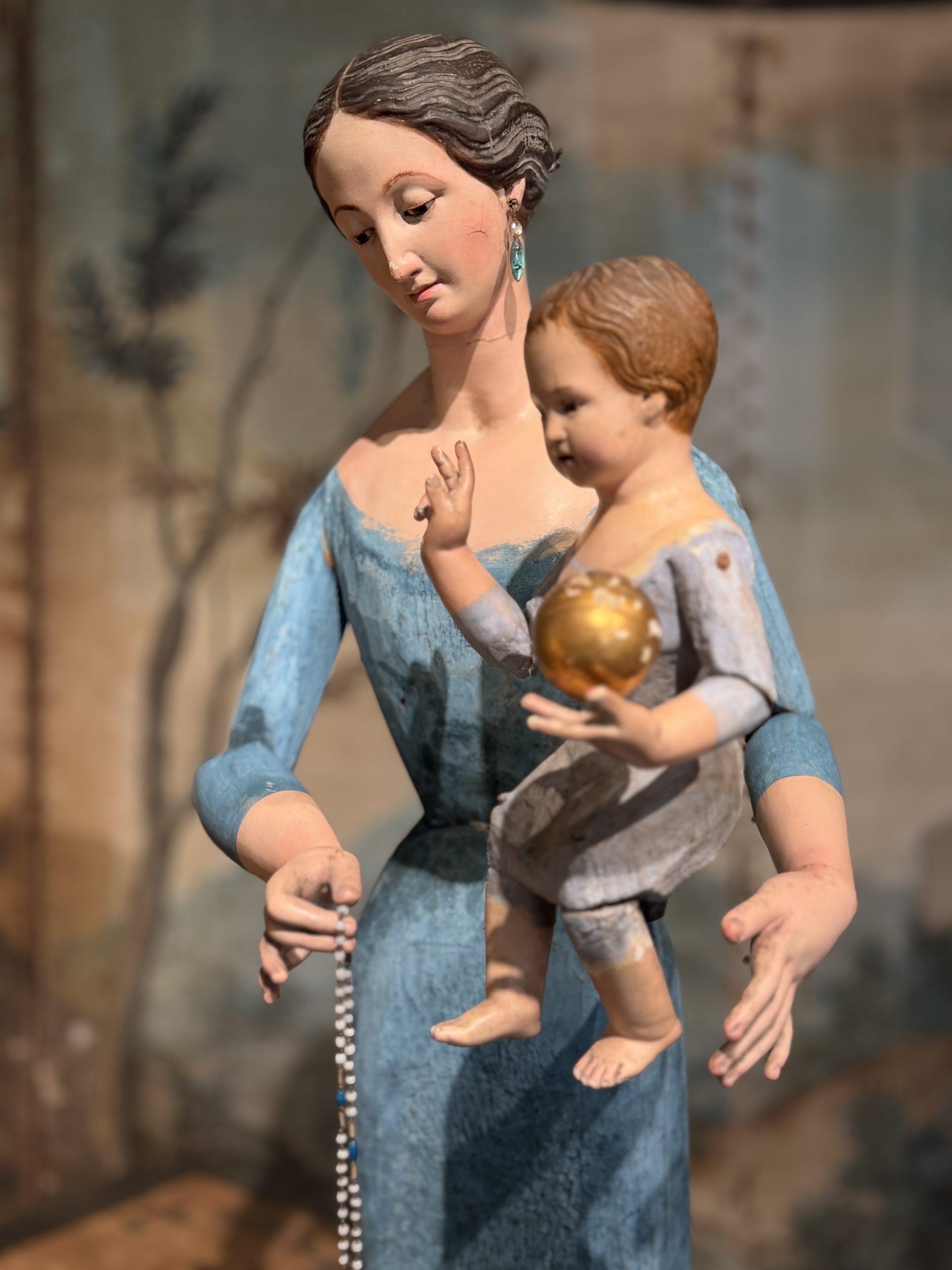
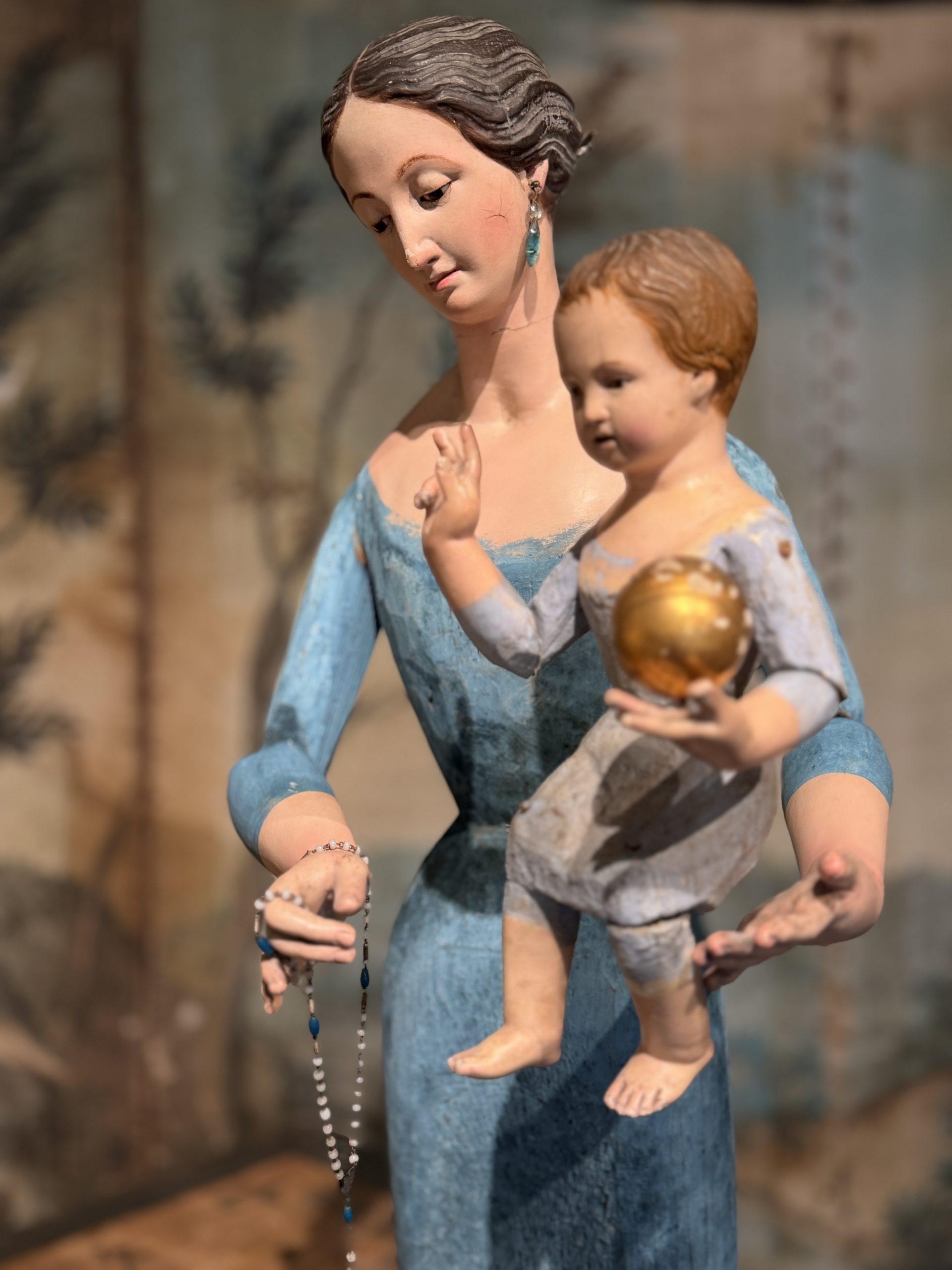
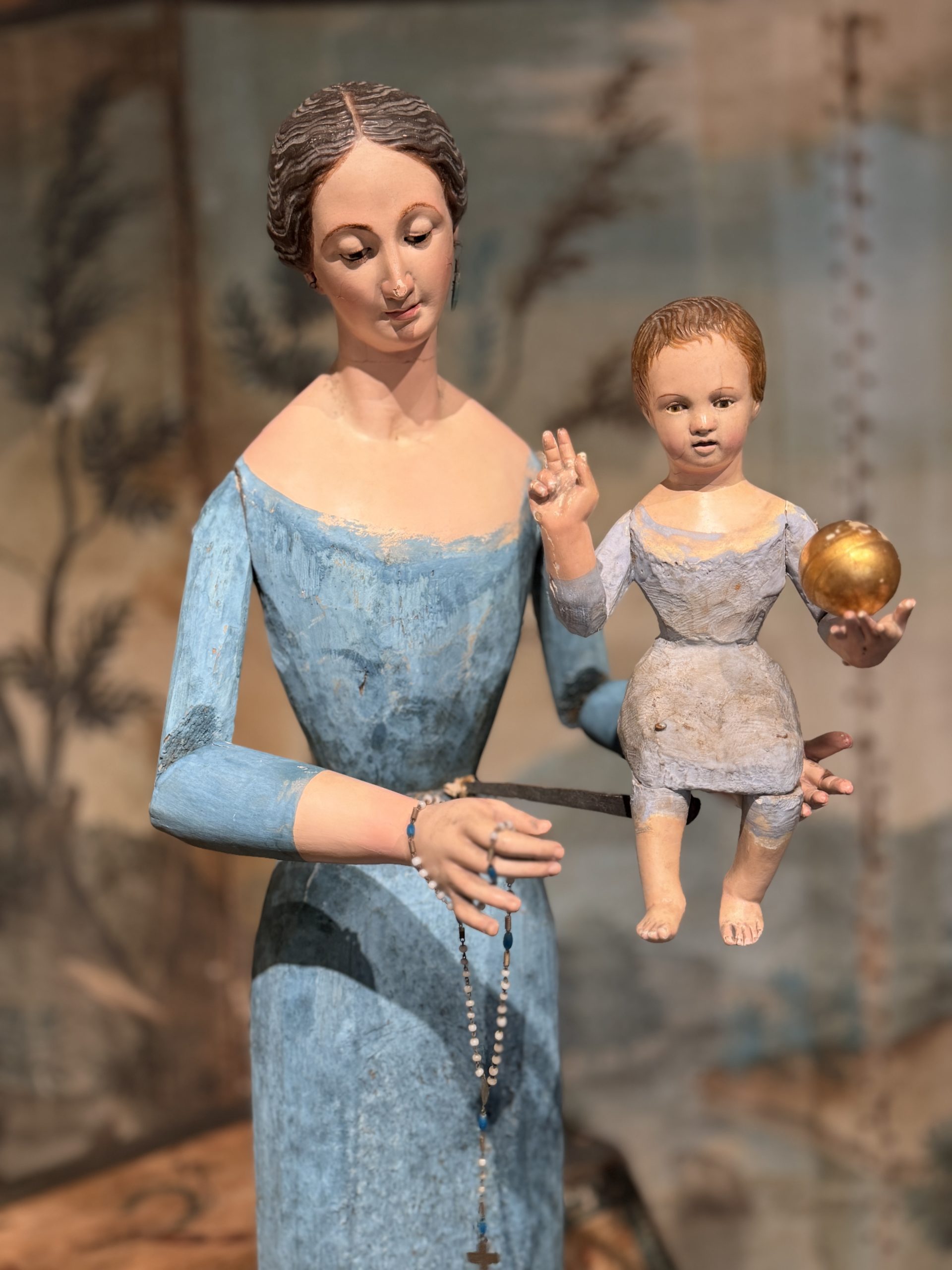
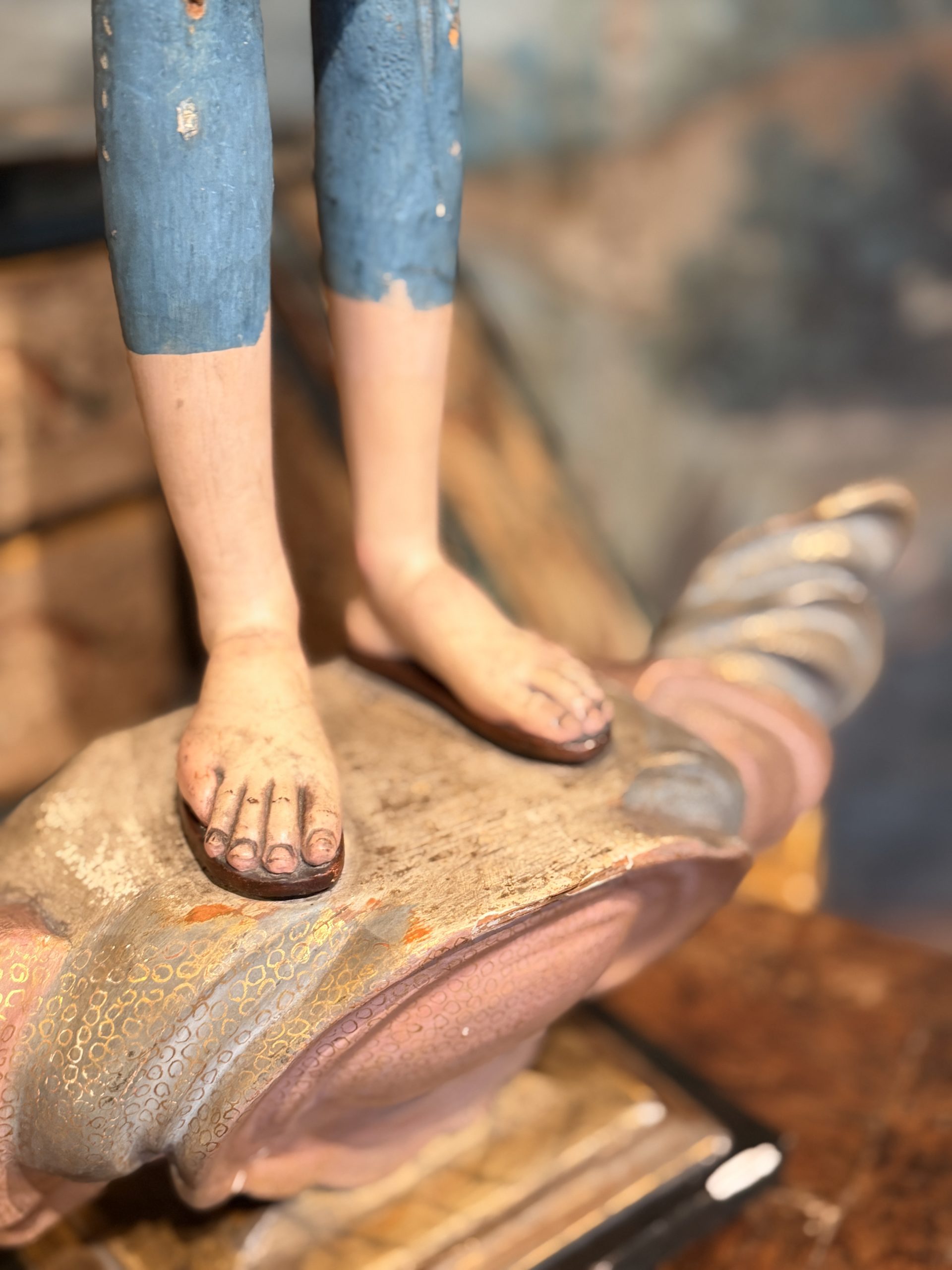
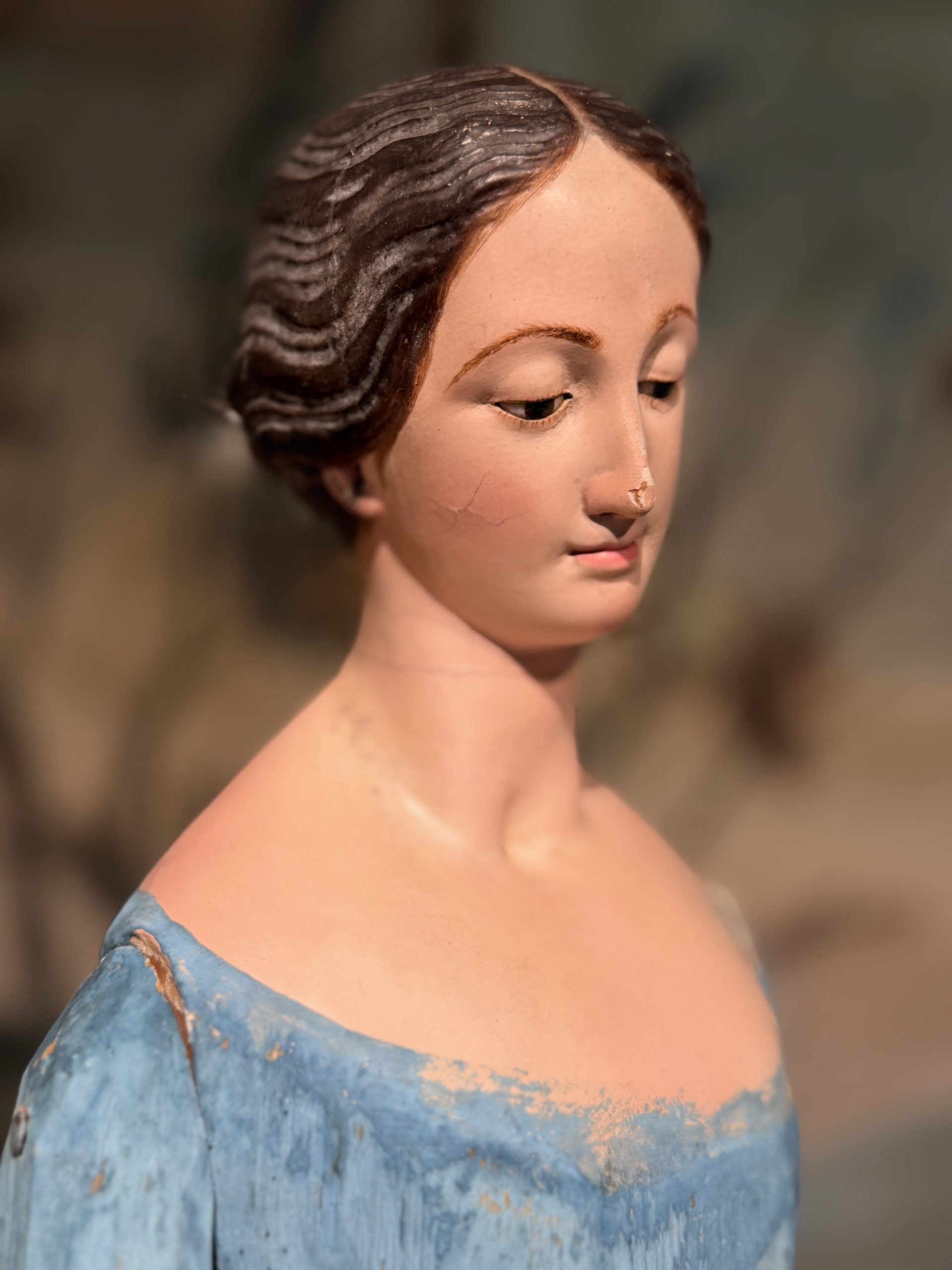
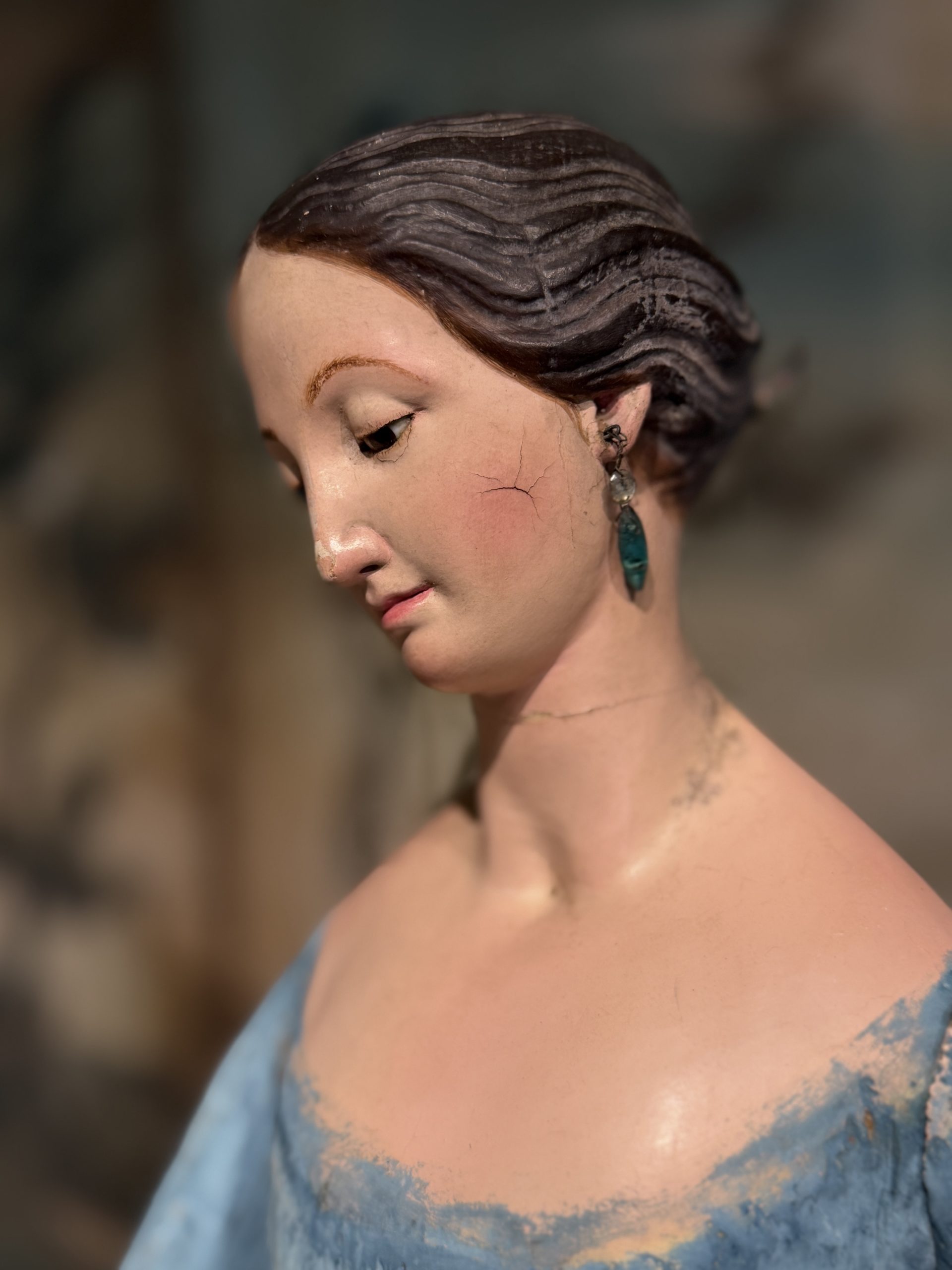
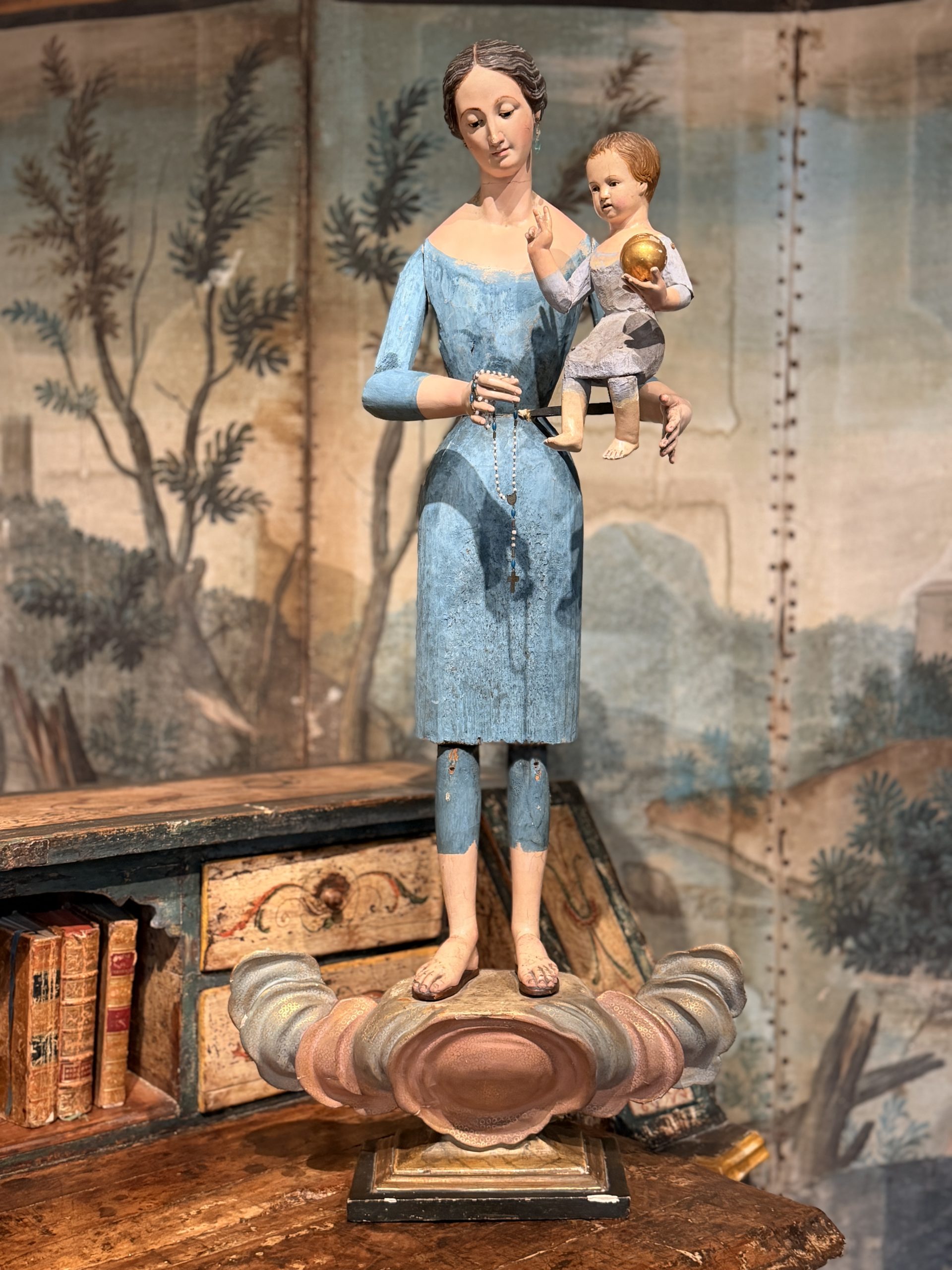
A rare and moving Italian processional statue from the early 19th century, belonging to the category of works known as *Capipote*. This term, of Catalan origin, literally means “head and foot” (*cap i pota*) and perfectly describes the very structure of this type of religious sculpture. The Virgin’s head, hands, and feet are finely carved and polychromed, while the body consists of a simplified torso extending into an original blue gown; the figure is designed as a mannequin intended to be dressed in rich garments and ornaments suited to various liturgical feasts.
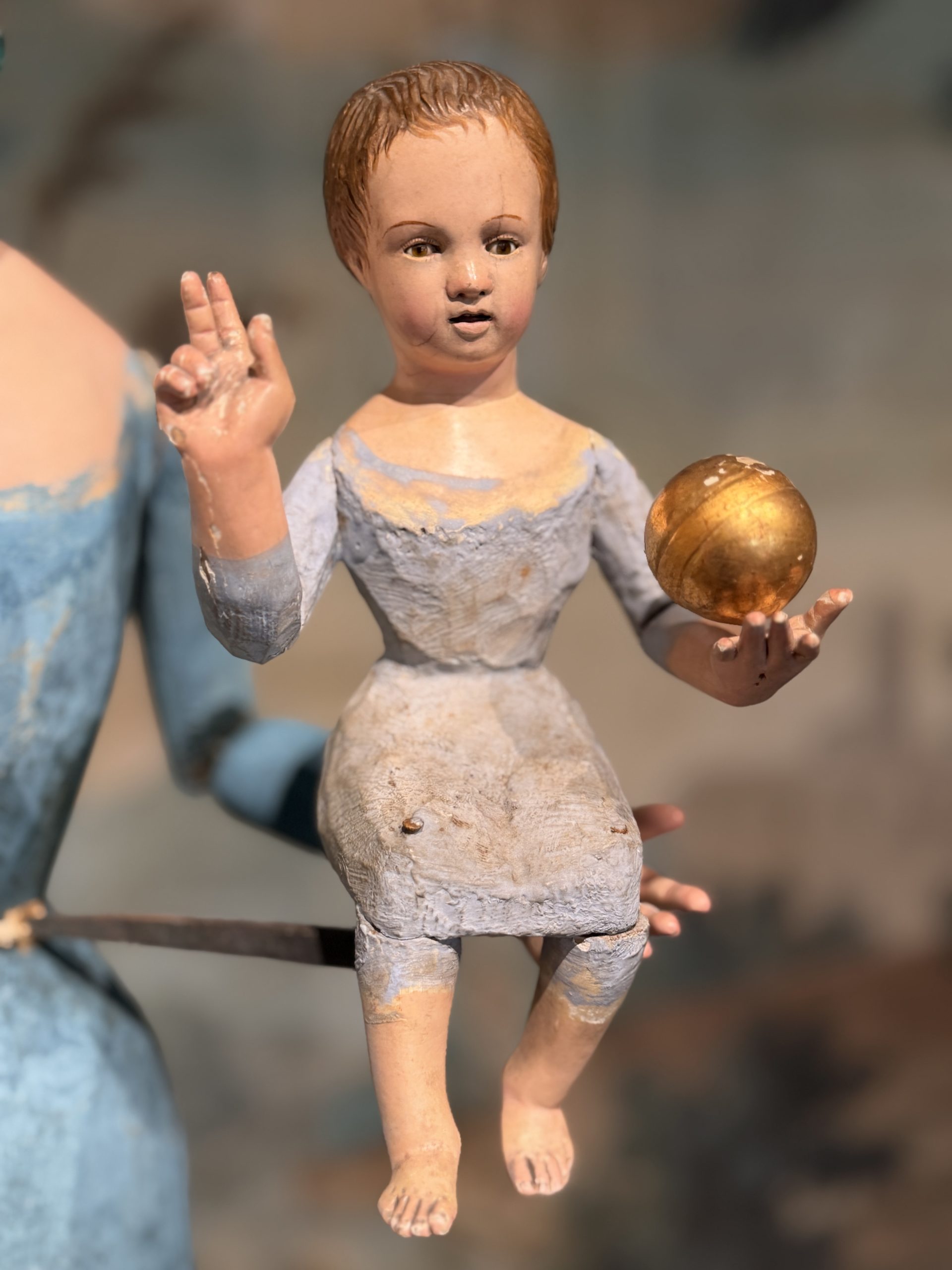
The Virgin wears an expression of great gentleness, framed by a hairstyle with delicately wavy locks gathered into a low bun—a style typical of the first half of the 19th century. She holds a beaded rosary in her right hand and supports the Infant Jesus with her left arm. The Infant—detachable from his iron mounting rod—is depicted giving a blessing with his right hand and holding a gold-leafed globe (*Salvator Mundi*). The entire ensemble rests on a substantial carved and polychromed wooden base, decorated with stylized clouds featuring silvery and pinkish highlights that evoke the celestial nature of the scene.
Italy
Early 19th century
Dimensions
92 cm x 45 cm