
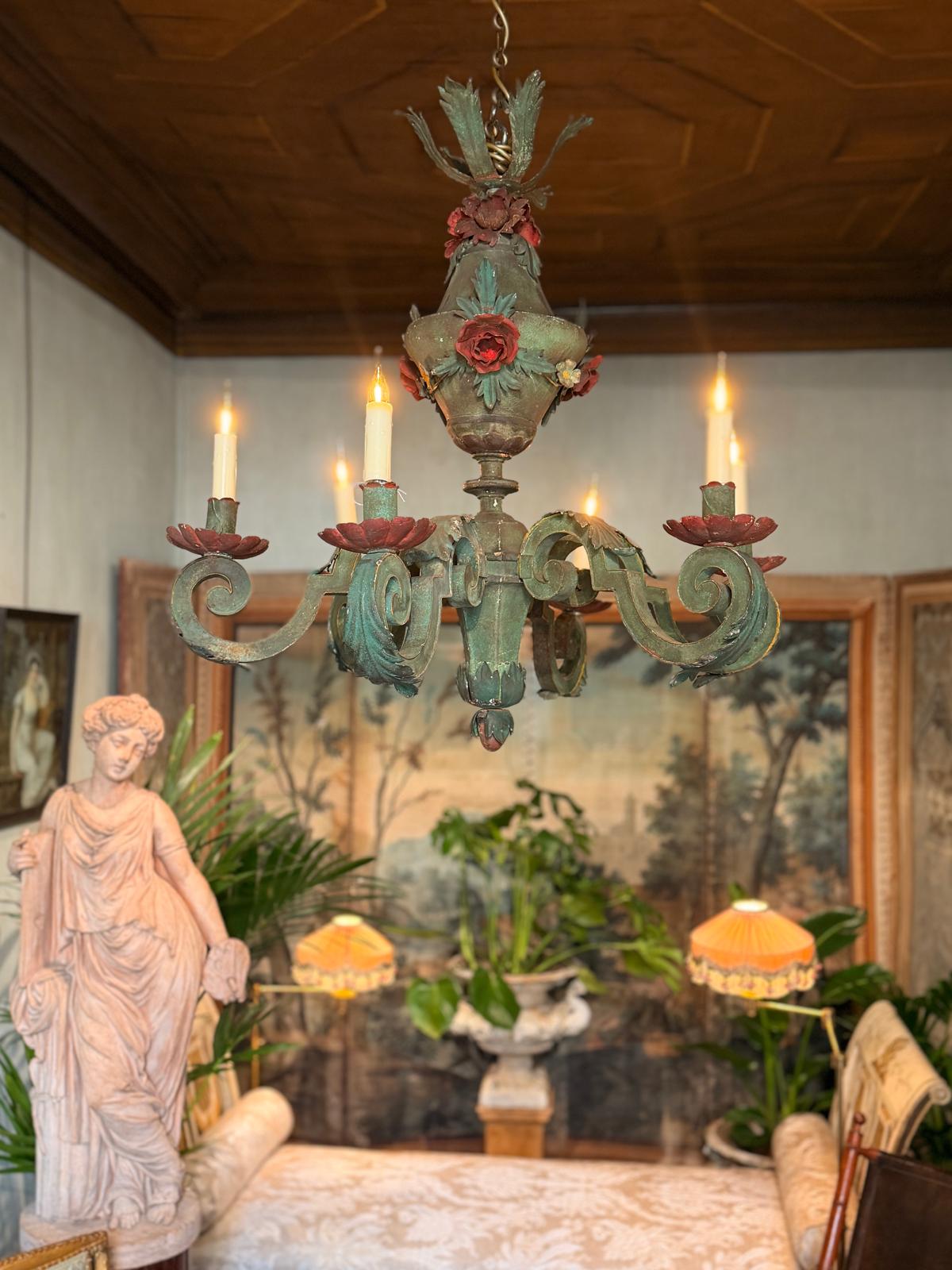
Highly sought after by enthusiasts of antiques and charming décor, this style of lighting fits perfectly into Hollywood Regency, country house, or classic bohemian interiors.
Italy, late 19th century.
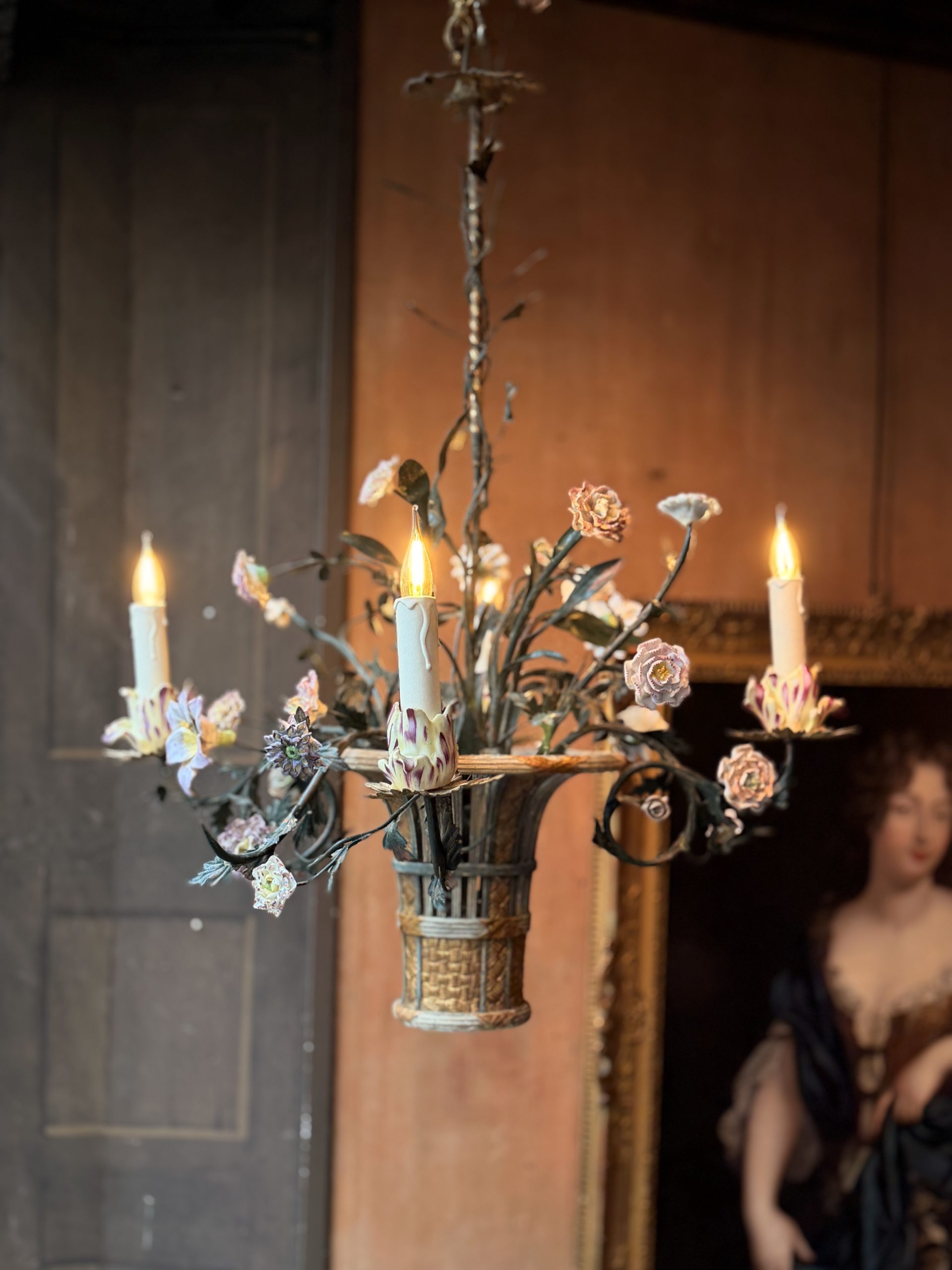
This type of porcelain work, known as pastillage, was highly appreciated in the 18th century. Initially mastered by the German Meissen manufactory, it was subsequently challenged in France by the Vincennes manufactory. The latter obtained a monopoly on the production of porcelain flowers during the reign of Louis XV, much to the delight of Madame de Pompadour. Gradually, and particularly under Louis XVI, this fashion declined. It was not until the Second Empire that these everlasting bouquets once again came to be appreciated and admired.

Pair of lamps depicting two porcelain birds, each distinguished by its own plumage: one yellow, the other white and brown. Each bird is perched on a tree branch and surrounded by delicate porcelain flowers. The lamps are mounted on gilt and patinated brass bases in the Louis XV style, lending the pair an elegant decorative character.


The pair depicts green parrots perched on gilt-bronze branches, each holding a foliate spray in its beak. The wall lights are fitted with new green-lined silk shades, finished with Declercq passementerie.

Pair of articulated brass wall lights, topped with delicate pink silk-lined shades adorned with elegant Houlès passementerie. Fully adjustable, they can be positioned in both height and width, allowing them to adapt harmoniously to a variety of spaces. Their soft, diffused light is ideal for creating a warm and refined atmosphere. Rewired to current electrical standards.

This Italian chandelier dates to circa 1930 and is made of gilt sheet metal and rock crystal. Its Neoclassical forms are characterized in particular by its drapery motifs and symmetrical composition. Across the chandelier’s three tiers, the various pendants are arranged in different configurations, with some arranged concentrically to form floral motifs.
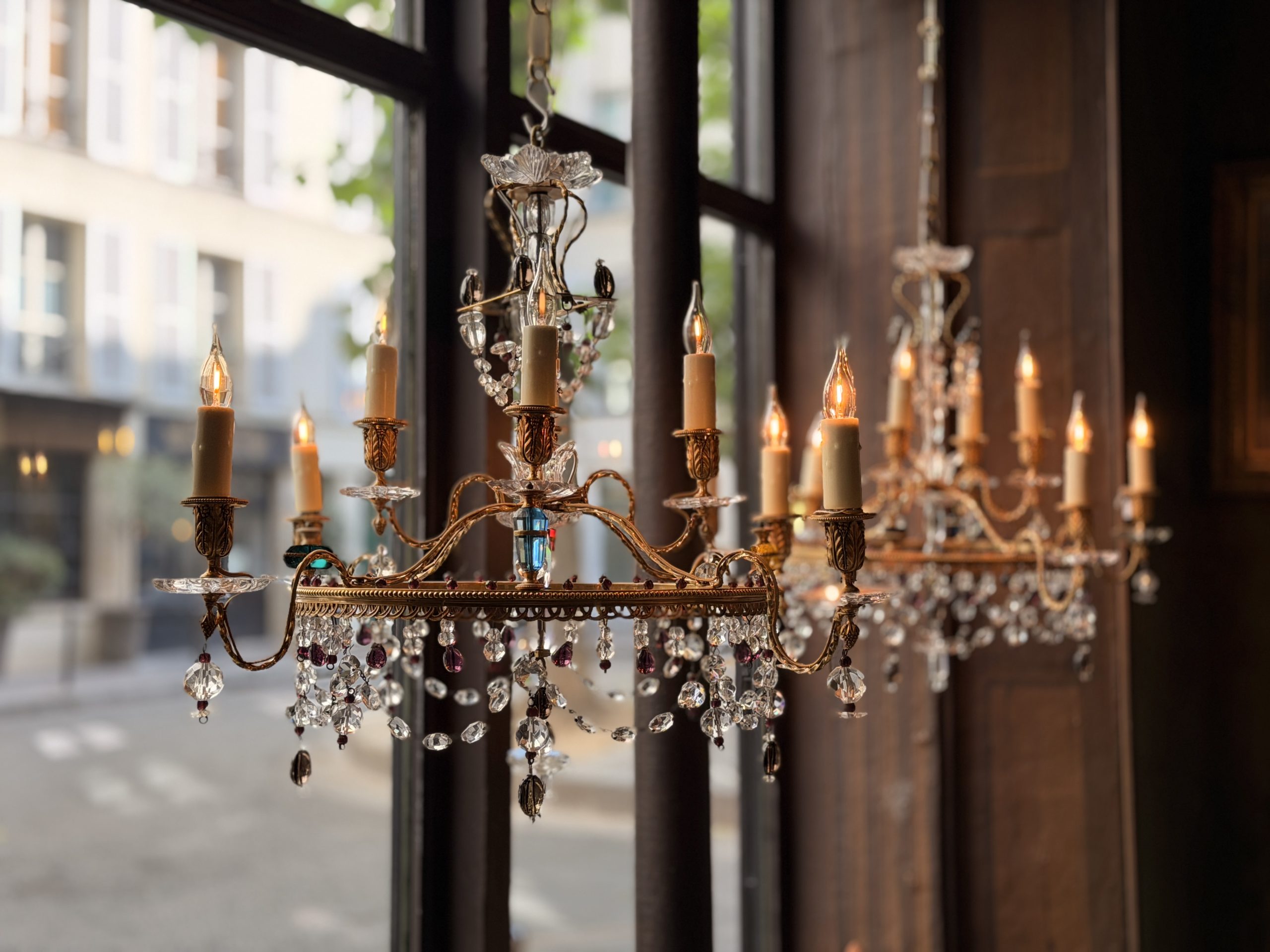
Pair of Neoclassical Chandeliers in Gilt Bronze and Cut Crystals of Various Colors
Early 20th Century.
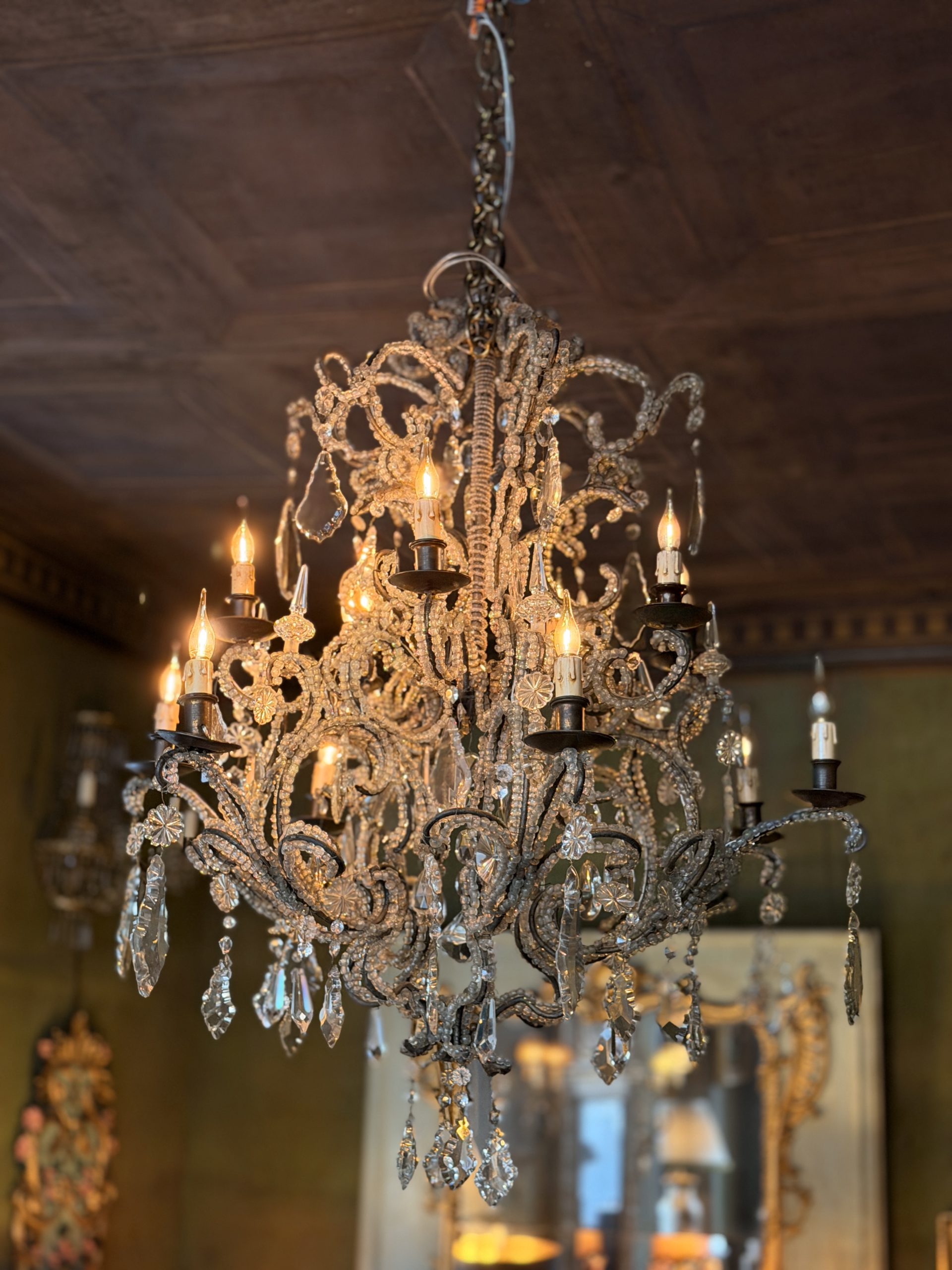
This fixture is distinguished by its wrought-iron structure, entirely and meticulously covered in an intricate web of blown-glass bead strands—a virtuoso technique characteristic of Venetian Murano craftsmanship.
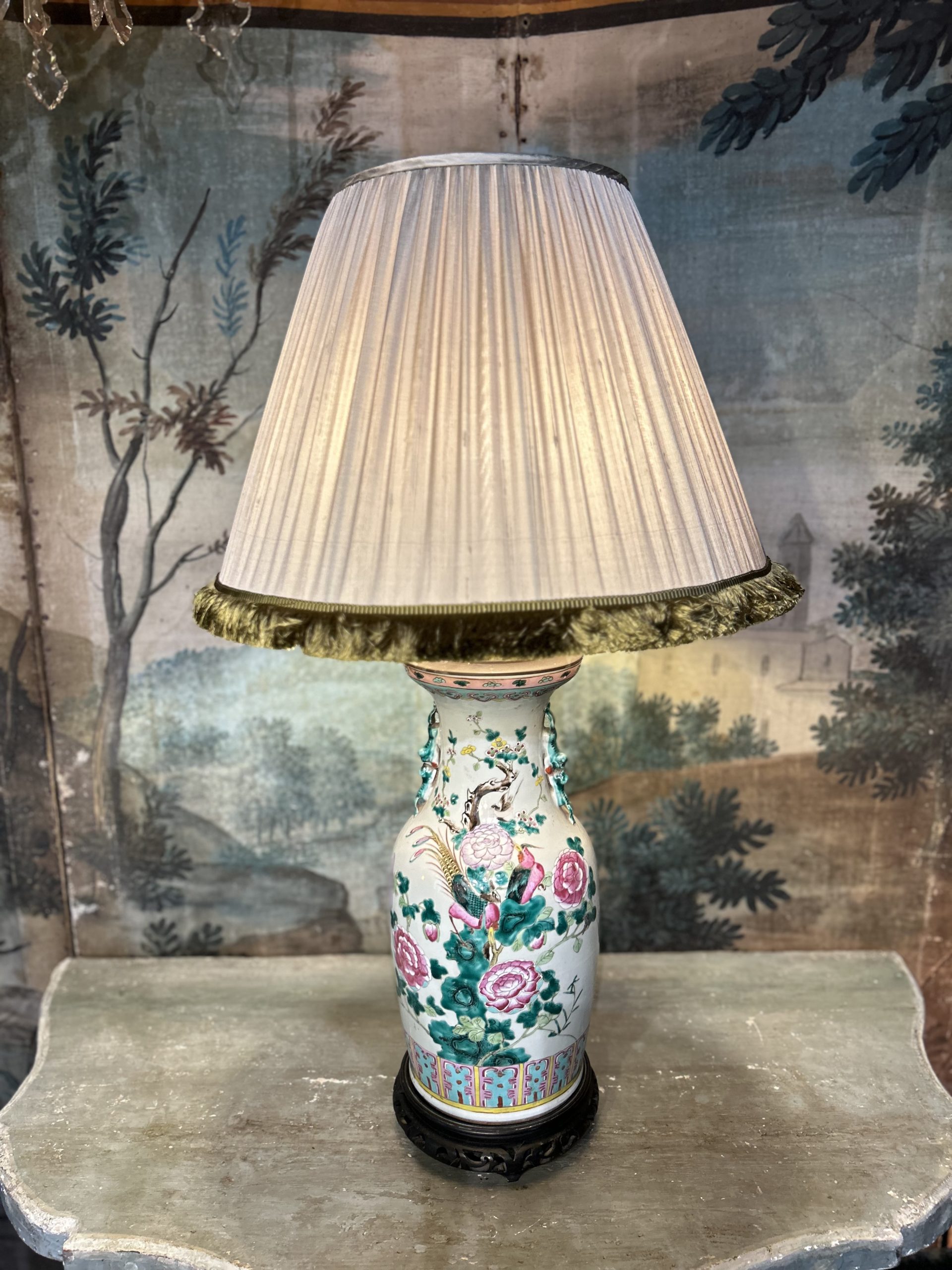
The vase’s body displays a rich naturalistic decoration in polychrome enamels, depicting birds of paradise (Fohang) among blooming peonies and flowering branches, traditional symbols of prosperity and beauty. The flared neck, adorned with small stylized handles in relief, is highlighted by geometric friezes in turquoise and pink tones that harmoniously frame the central scene.
China
Late 19th Century