

An elegant and intimate composition depicting a molded white marble mantelpiece. At the center stands a terracotta sculpture of a young woman in profile, her silhouette reflected in the large mirror in the background. Arranged around the bust are a bronze candlestick adorned with crystal pendants and fitted with pleated pink silk lampshades, an antique leather-bound book, two framed miniatures, and a porcelain snuffbox.

Pair of paintings depicting a partially nude woman at two different moments in her life. In the first canvas, which can presumably be considered the earlier of the two, a woman is shown in profile, her breast exposed, contemplating the miniature portrait of a man that she holds in her left hand. At this stage, the narrative appears to be rather happy. The second painting, however, depicts the same woman in a very different emotional state. The faint smile has now given way to tears, while her clenched fist encloses what we may assume to be the memory of her husband.
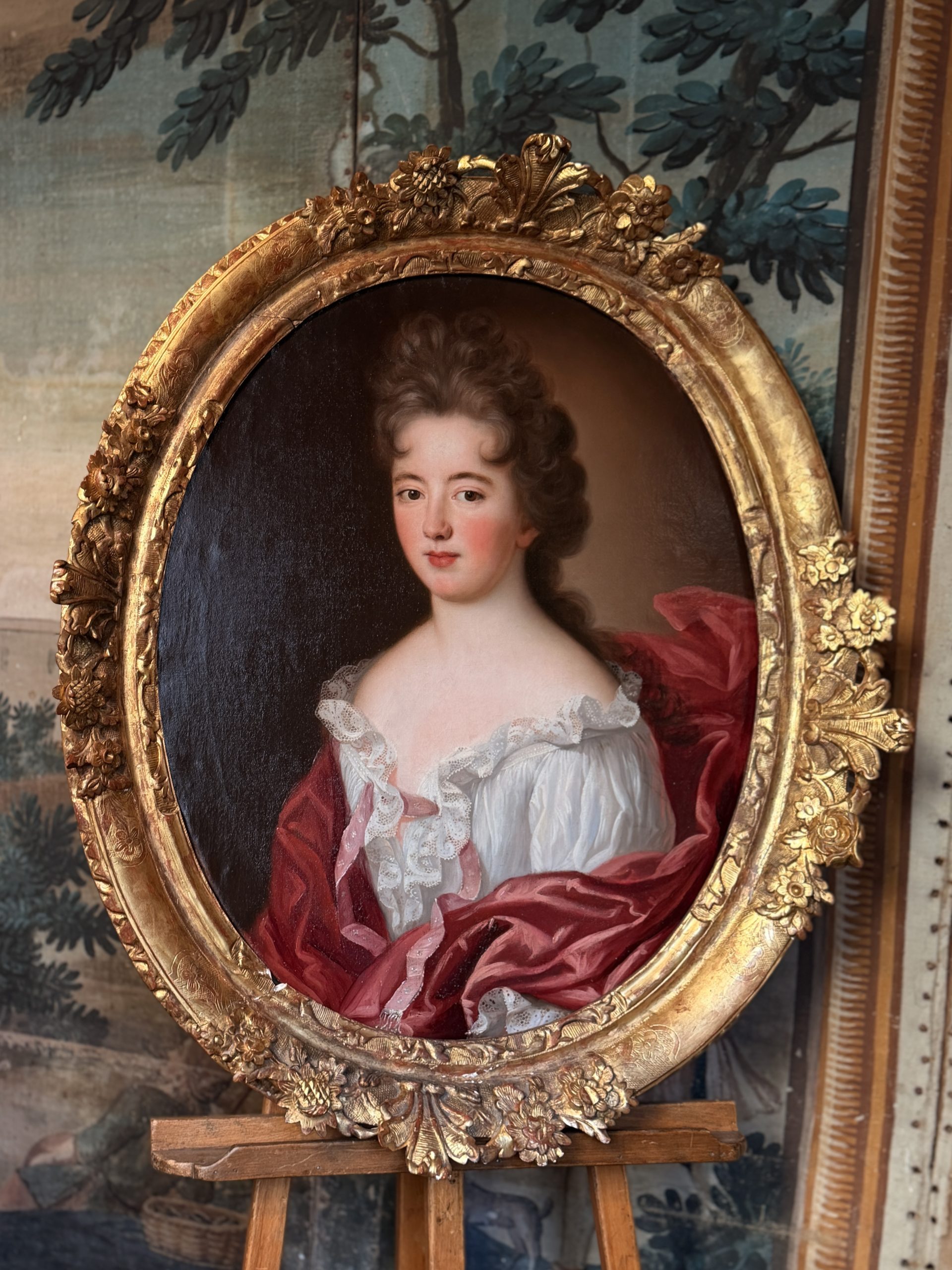
Mademoiselle de Fontanges remains famous in the history of fashion for having inadvertently launched one of the 17th century’s most iconic hairstyles. During a royal hunt in the Forest of Fontainebleau around 1679, her hair came undone; she hastily tied it up at the crown of her head using a ribbon from her garter. Charmed by this spontaneous, elegant disarray, Louis XIV asked her to keep the hairstyle. By the very next day, all the ladies of the court rushed to imitate the royal mistress, transforming this improvised gesture into a genuine fashion phenomenon that dominated Europe for over two decades.
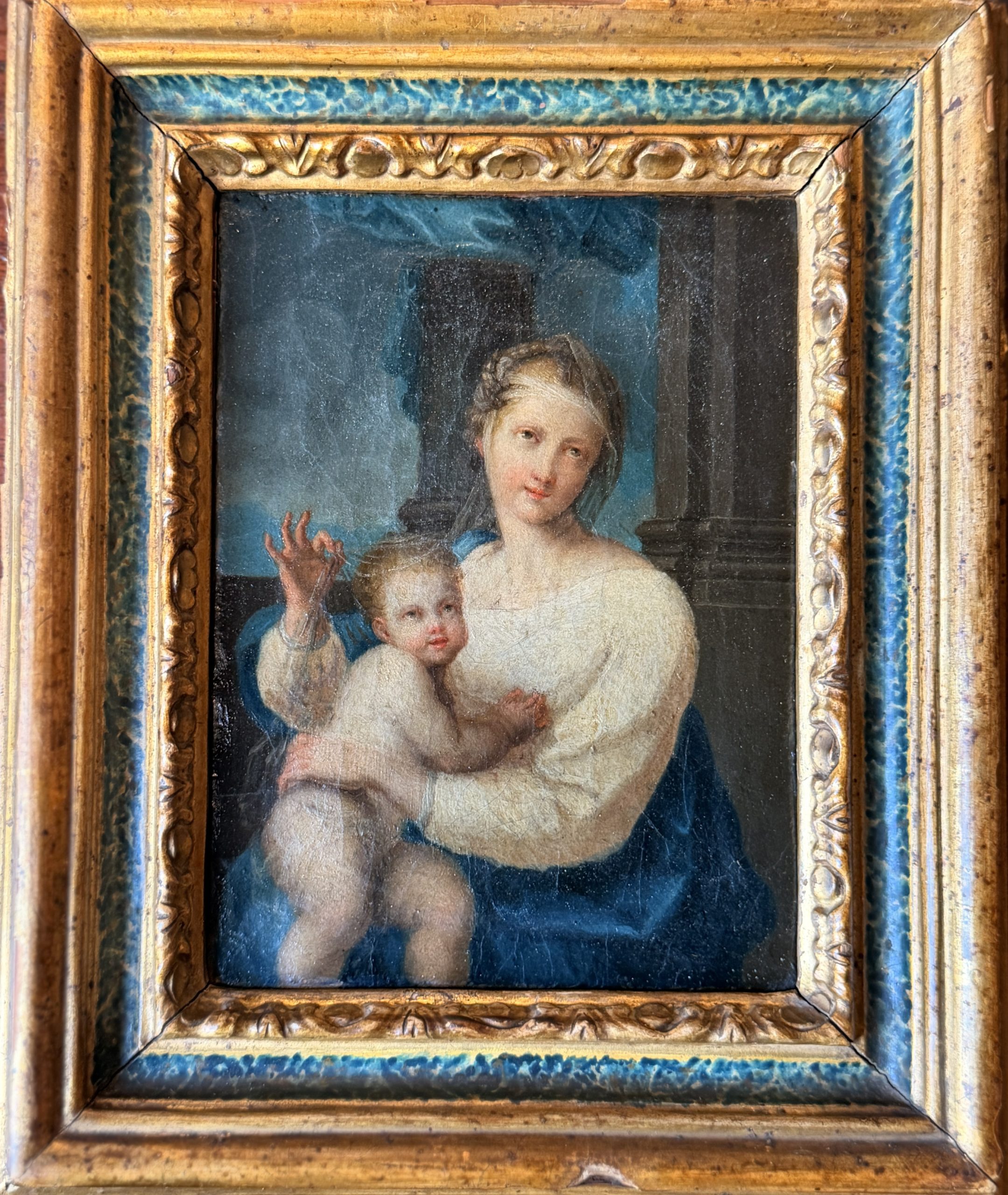
This delicate Baroque cabinet painting stands firmly within the tradition of the 17th-century Bolognese School, reflecting the immense influence of its leading figure, Guido Reni. The work embodies the master’s aesthetic ideals: the Virgin’s face with its perfect oval shape and alabaster complexion, her gently lowered eyelids conveying a sense of melancholy, and her hair swept up and held simply by a diaphanous veil.
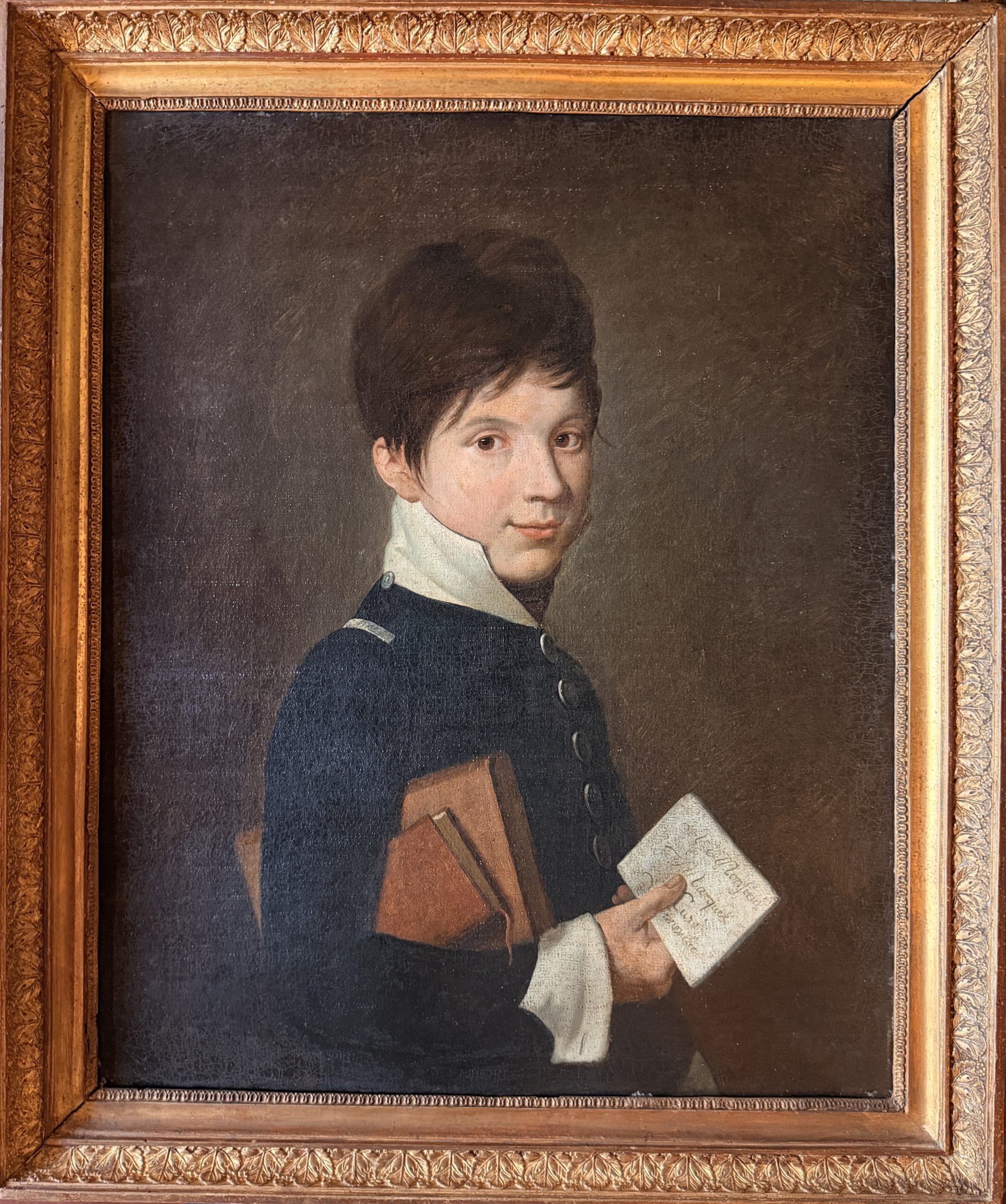
The inscription appears to read “À Monsieur / Marquet…” (“To Monsieur Marquet…”), a traditional pictorial detail serving to identify the patron or the intended recipient of the role symbolized by the young man.
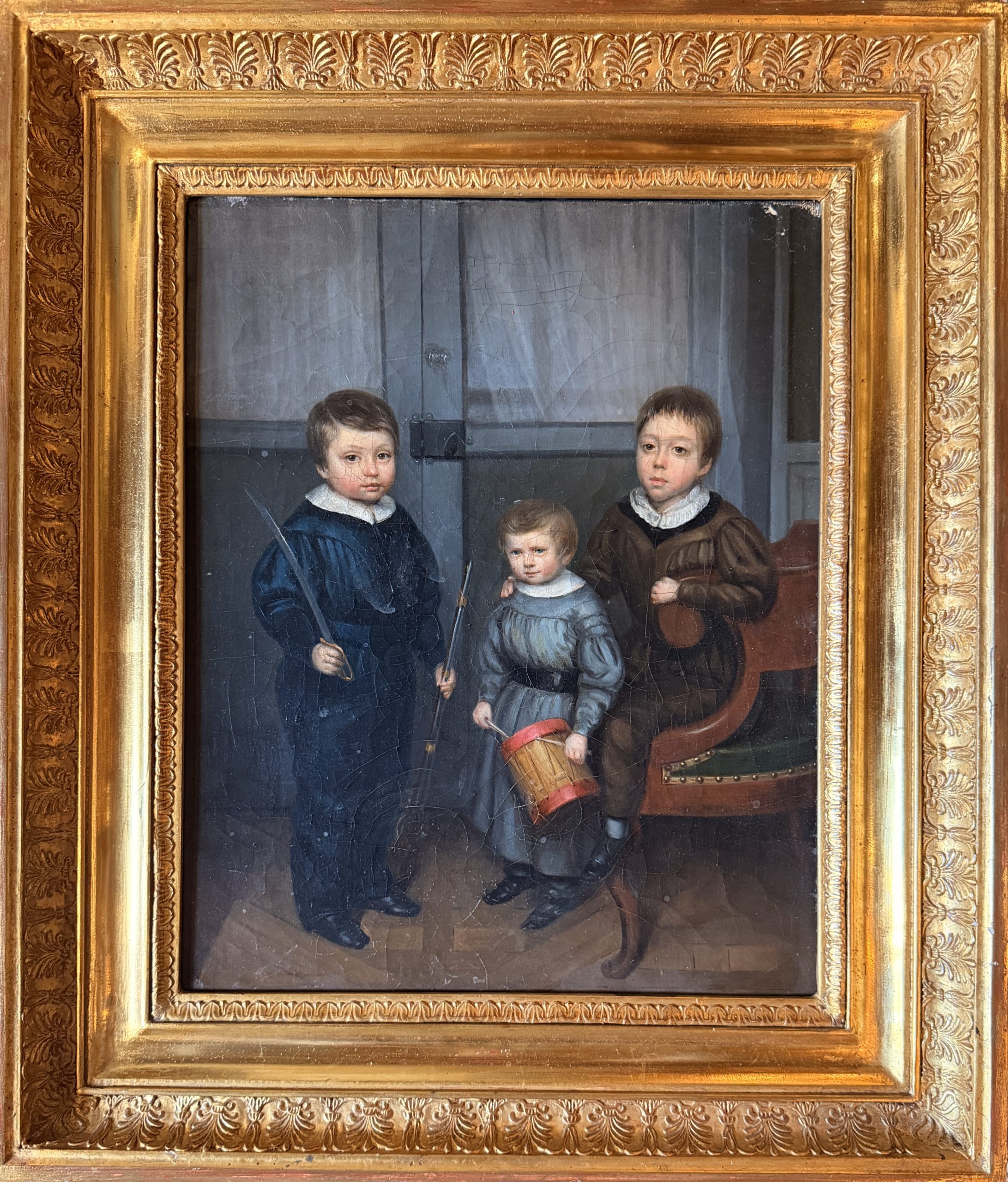
This touching group portrait from the Restoration period depicts three young boys from a prominent bourgeois or aristocratic family, identified by an old label on the back as the children of the Prévôt Renaud de Saint-Lézin family. The composition is skillfully arranged within a restrained interior featuring a parquetry floor, set before a large frosted-glass door.
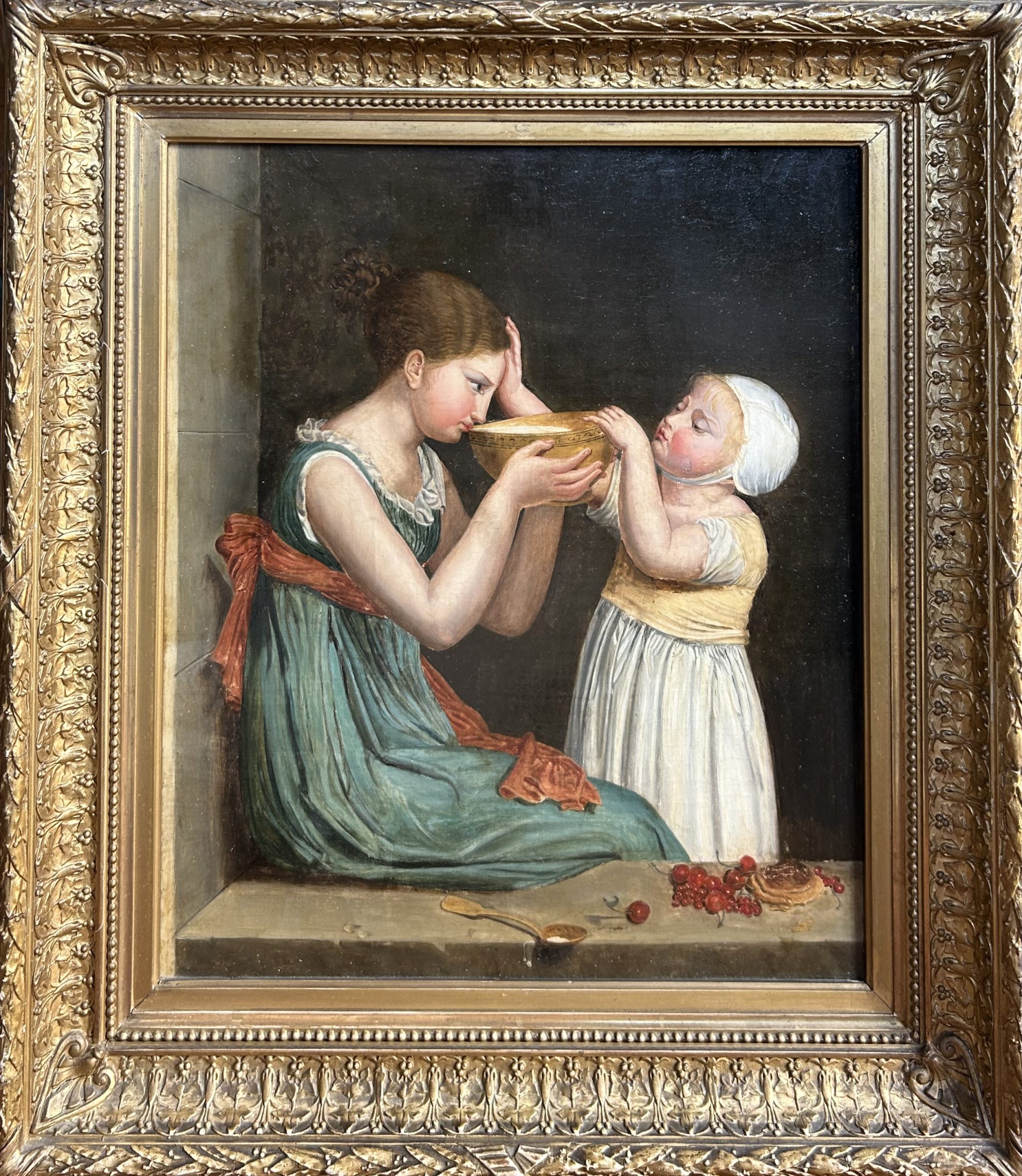
It is fascinating to note that the first historical owner of the original painting was none other than Lucien Bonaparte, the Emperor’s brother and a great patron of the arts, which testifies to the immense prestige of this work from its creation.
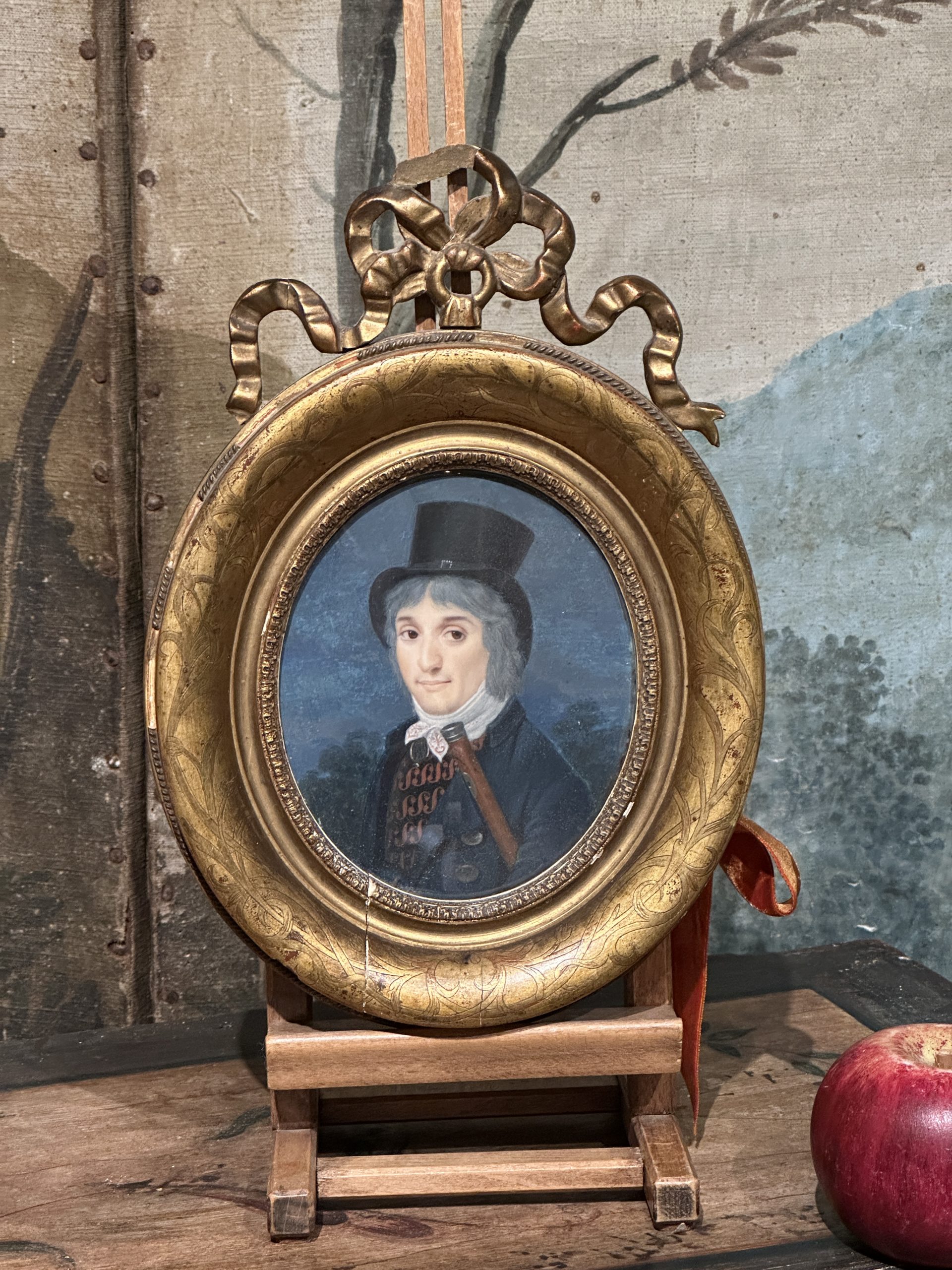

The lady is dressed in a gown known as a “déshabillé,” a refined garment emblematic of French fashion in the 1670s. Her bodice is adorned with black stones—diamonds. At that time, diamonds did not yet reflect light effectively. To accentuate their brilliance, cutters applied soot behind the stones, creating a contrast that gave the illusion of sparkle. This is why, in early Renaissance and 17th-century paintings, diamonds are often depicted in black.