
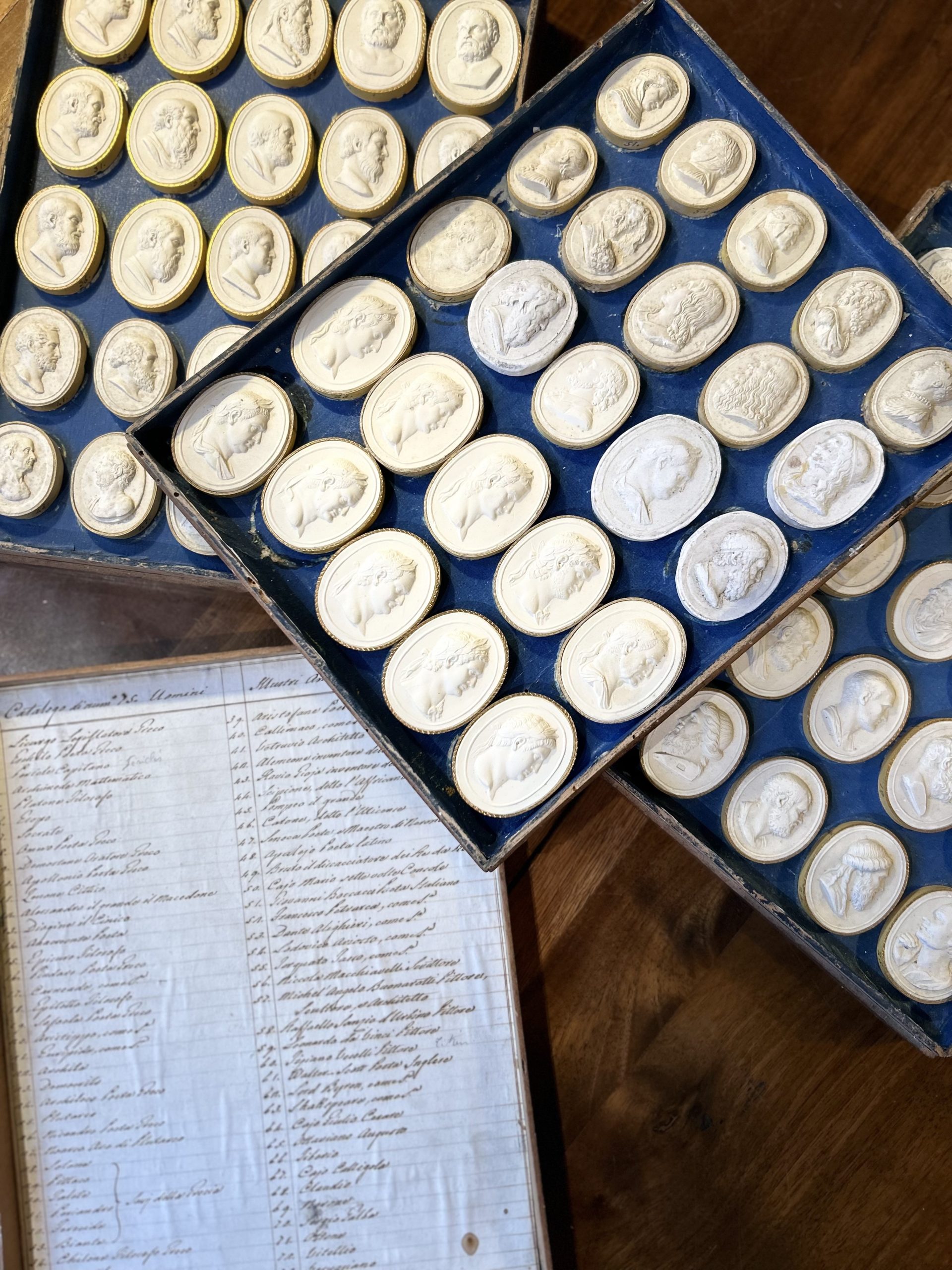
Souvenirs of travel to Italy. The Neoclassical style of ornamentation, very fashionable under Louis XVI, the Directory, and the Empire, fostered the creation and dissemination of works of art influenced by Greco-Roman art. During their travels to Italy, passionate collectors and artists brought back boxes of molded miniatures as typical souvenirs or as subjects for study, drawing inspiration from classical themes. These boxes reflect the taste for Antiquity and the spread of classical models in 19th-century Europe.
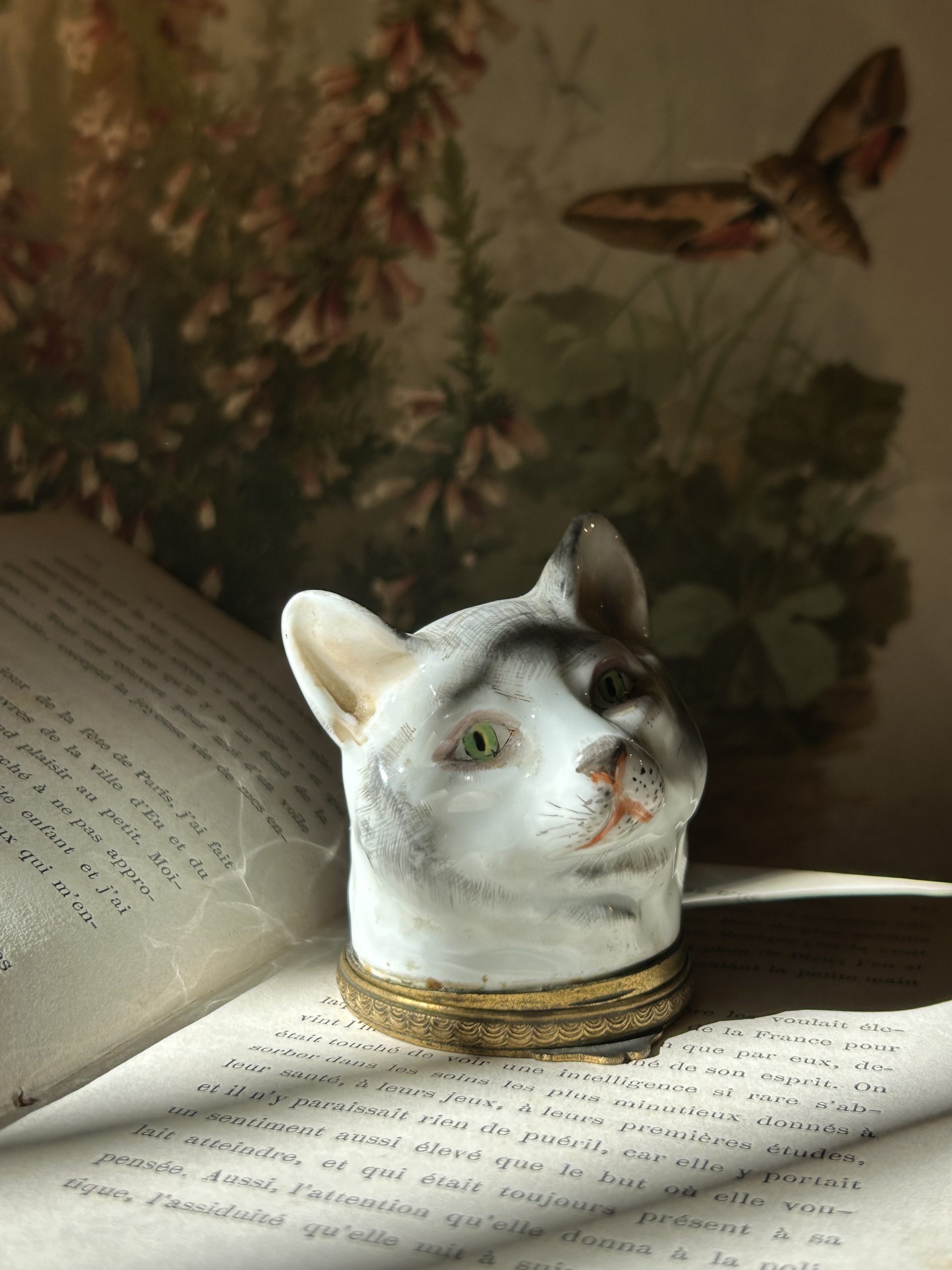
Maison Samson, a famous Parisian factory of the 19th century, is recognized for the exceptional quality of its reproductions of old porcelain and for the remarkable precision of its decorations. Appreciated by collectors and lovers of decorative arts, it is distinguished by its technical standards and its keen eye for detail.
Around 1875
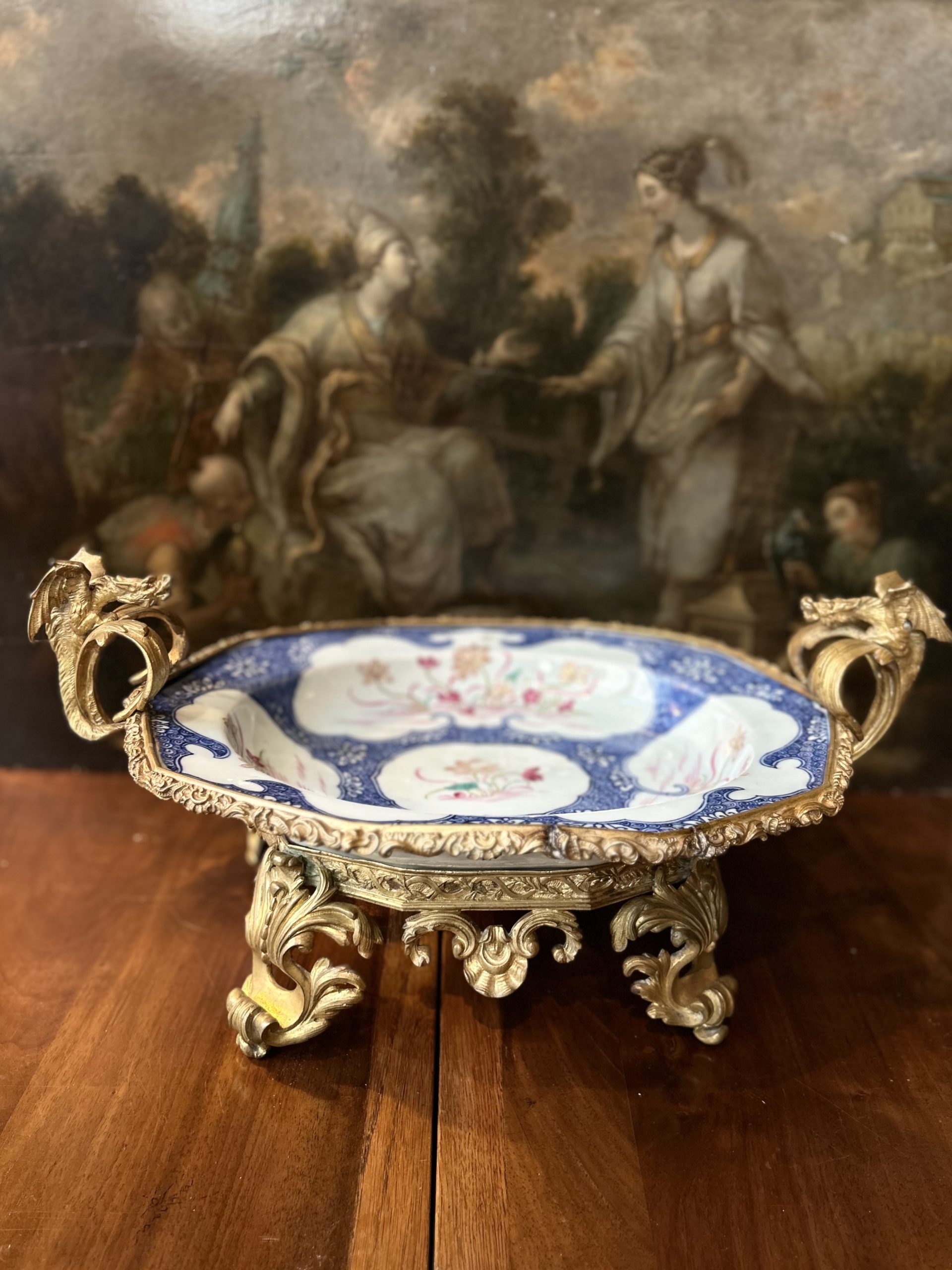
It consists of a deep Imari-type porcelain plate, in particularly bright colors, deep blue, bright white and intense red.
The gilded bronze frame is in keeping with the spirit typical of the Louis XV style.
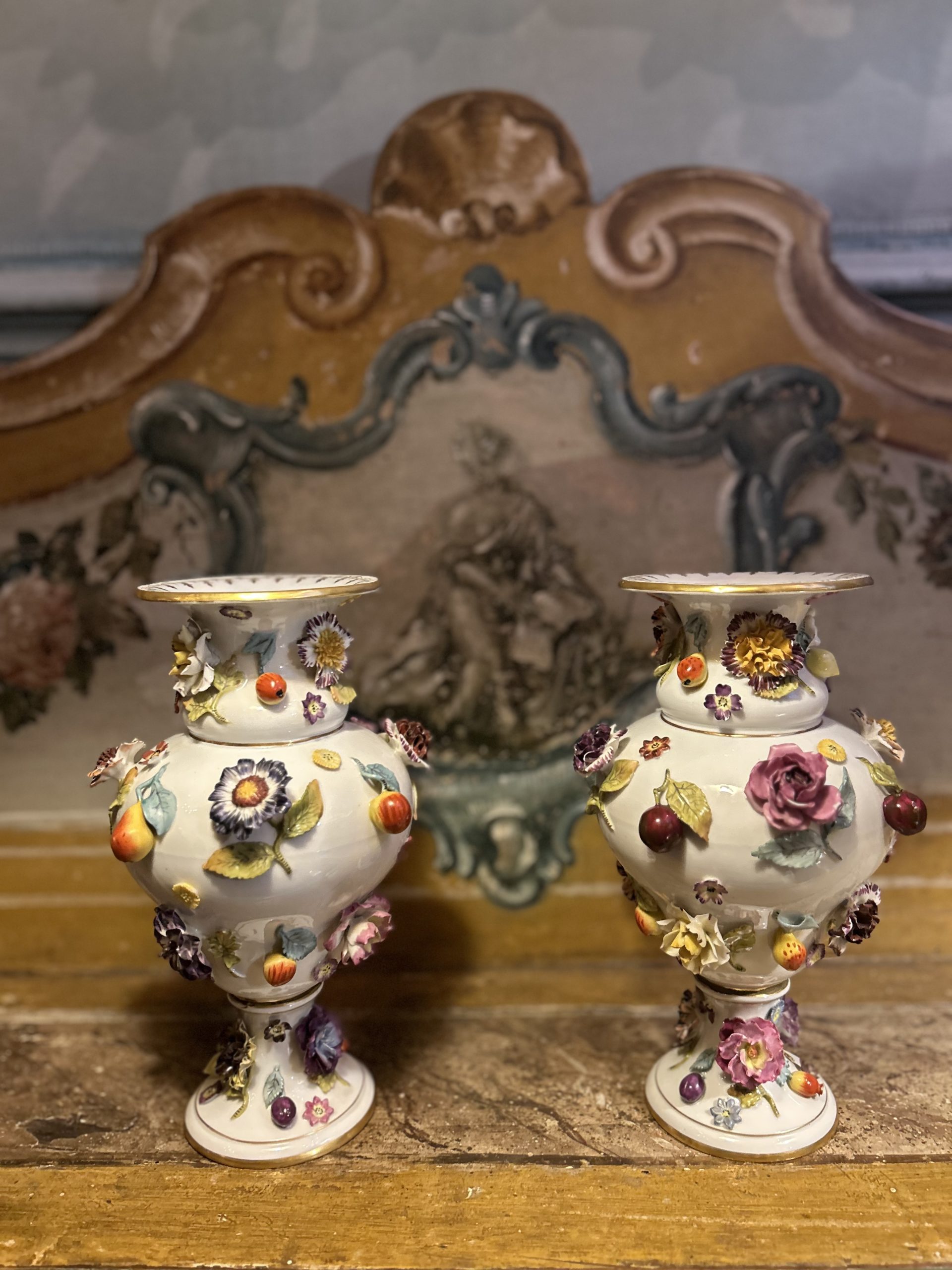
This elegant pair of baluster-shaped Saxon porcelain vases comes from the Carl Thieme factory in Potschappel, circa 1900. These pieces perfectly illustrate Dresden craftsmanship with a rich and refined naturalistic decoration.
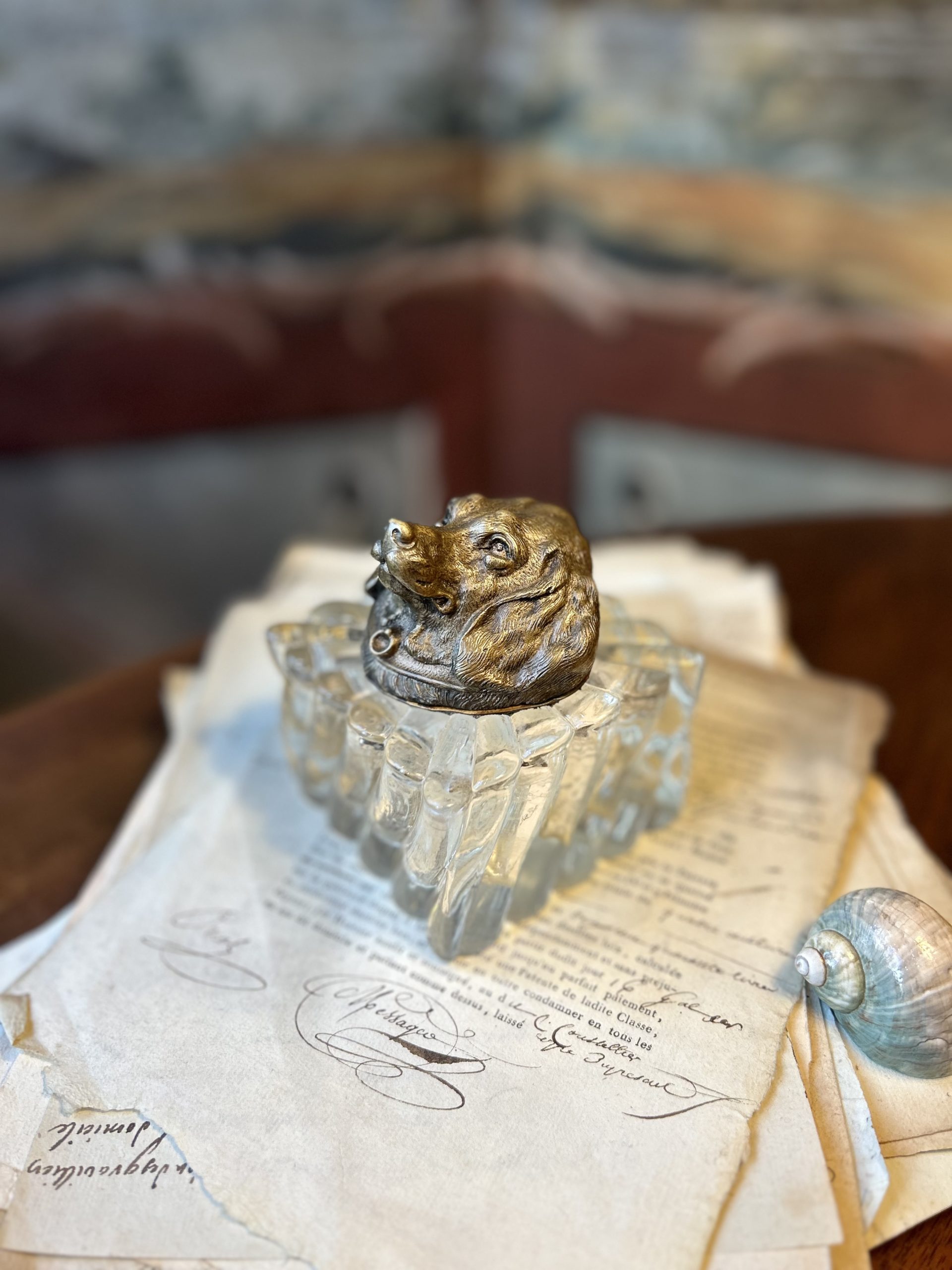
Today, it can also be used as a paperweight, while retaining its decorative charm and unique presence.
France
Late 19th century
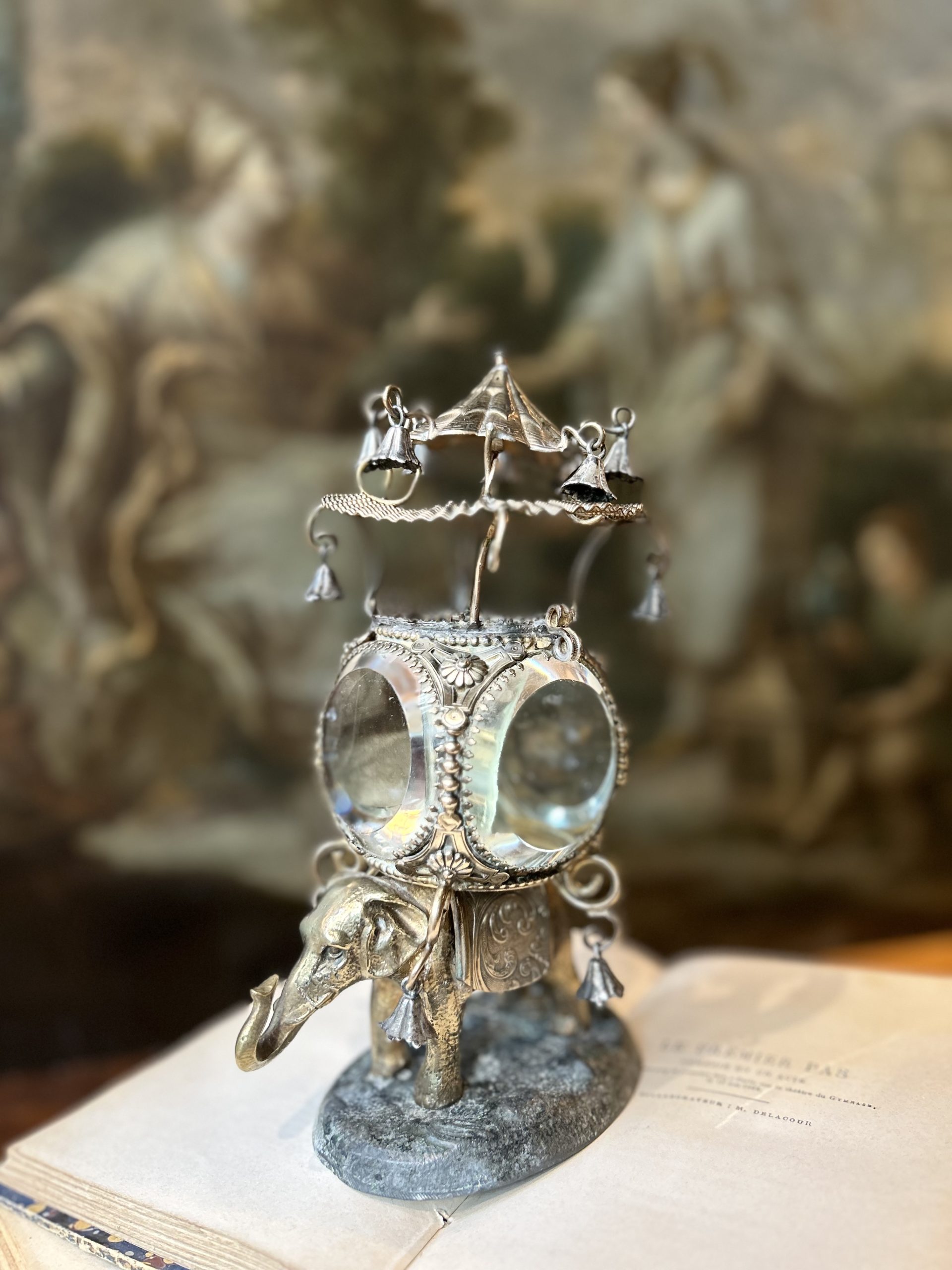
An elegant curiosity from the Napoleon III period, this piece illustrates the 19th-century fascination with Japonisme, which was very fashionable during the Second Empire after Japan opened to the West.
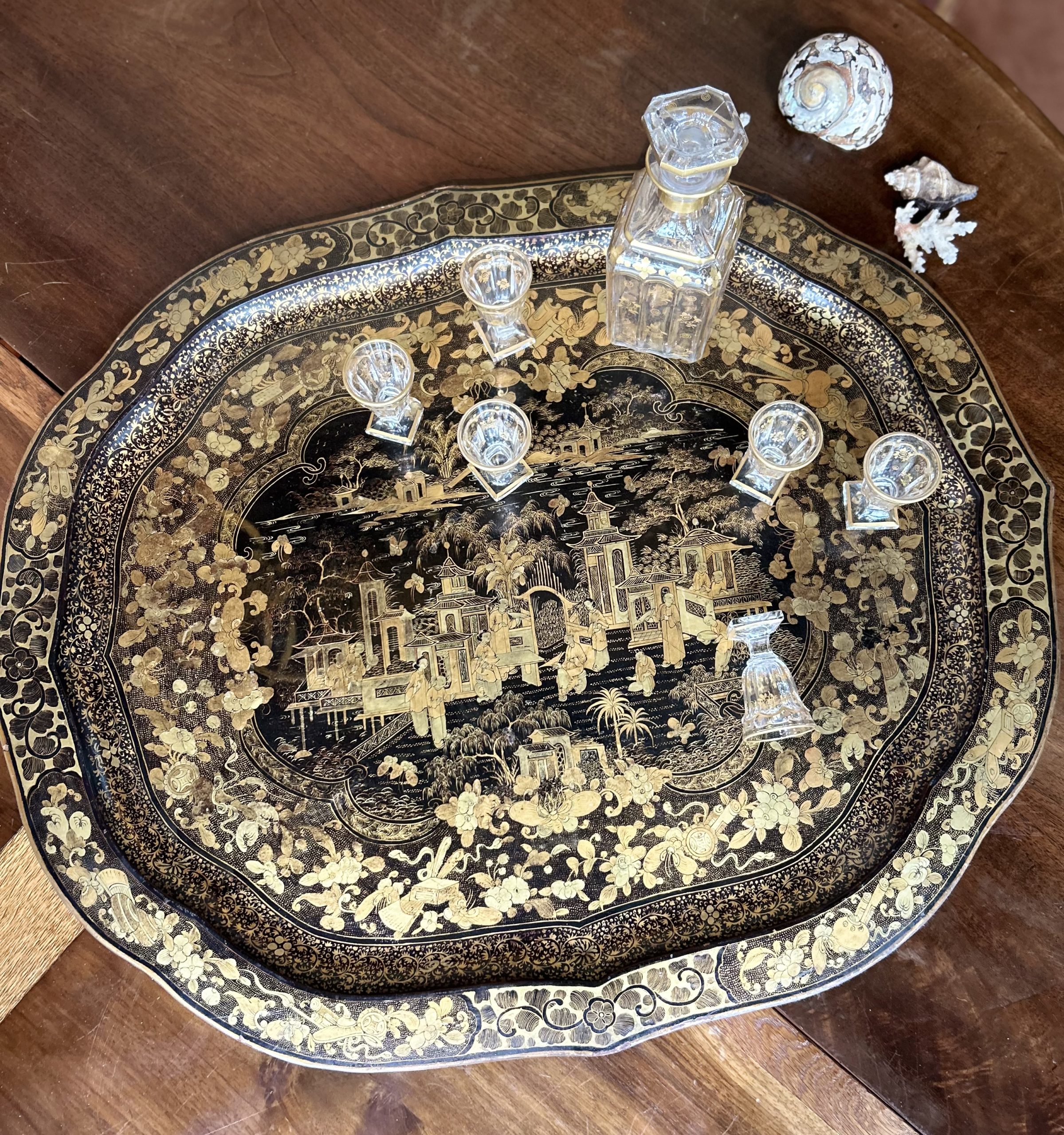
Primarily used for serving tea, it is a fine example of a Cantonese export item, combining the exoticism of Far Eastern landscapes with the refinement of the Second Empire style.
France, 19th century

Created in the style of apprentice furniture or pieces used to demonstrate skills, it testifies to great craftsmanship.
The front, composed of two drawers, is decorated with painted motifs imitating objects: necklaces, ribbons, keys, and fabrics appear to be suspended or placed on the piece with striking realism.
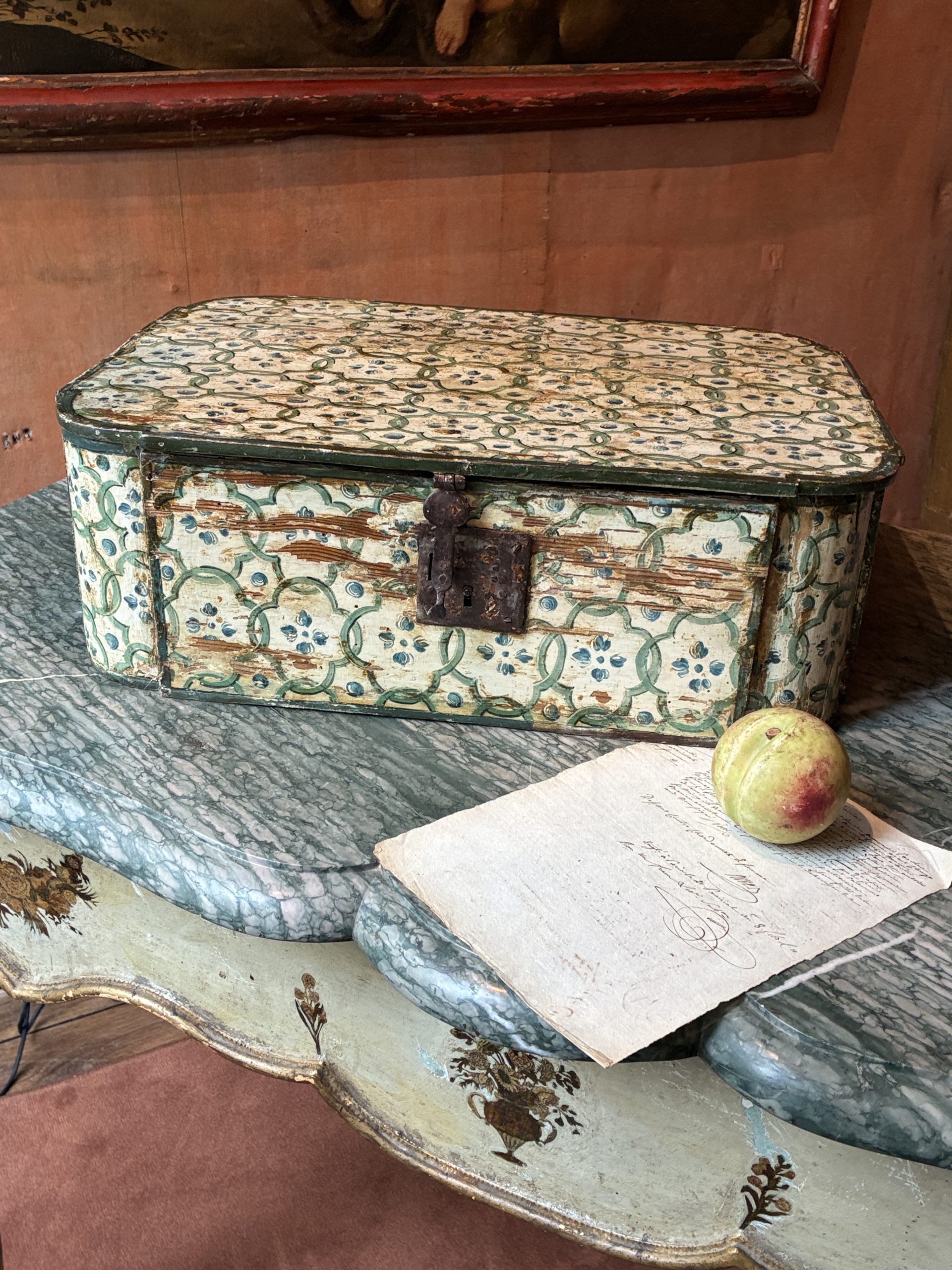
Polychrome wooden box decorated with geometric patterns and fitted with a wrought iron lock.
Early 19th century
Height: 17.5 cm
Length: 52 cm
Width: 39.5 cm

Japanese inkwell made in the 20th century. The central figure is richly dressed, decorated with a bindi on the forehead and holding a scroll in her hand. She is probably Kannon, the Bodhisattva of Compassion, who is very widespread in Japan. On either side of this figure are two small flowering trees.