
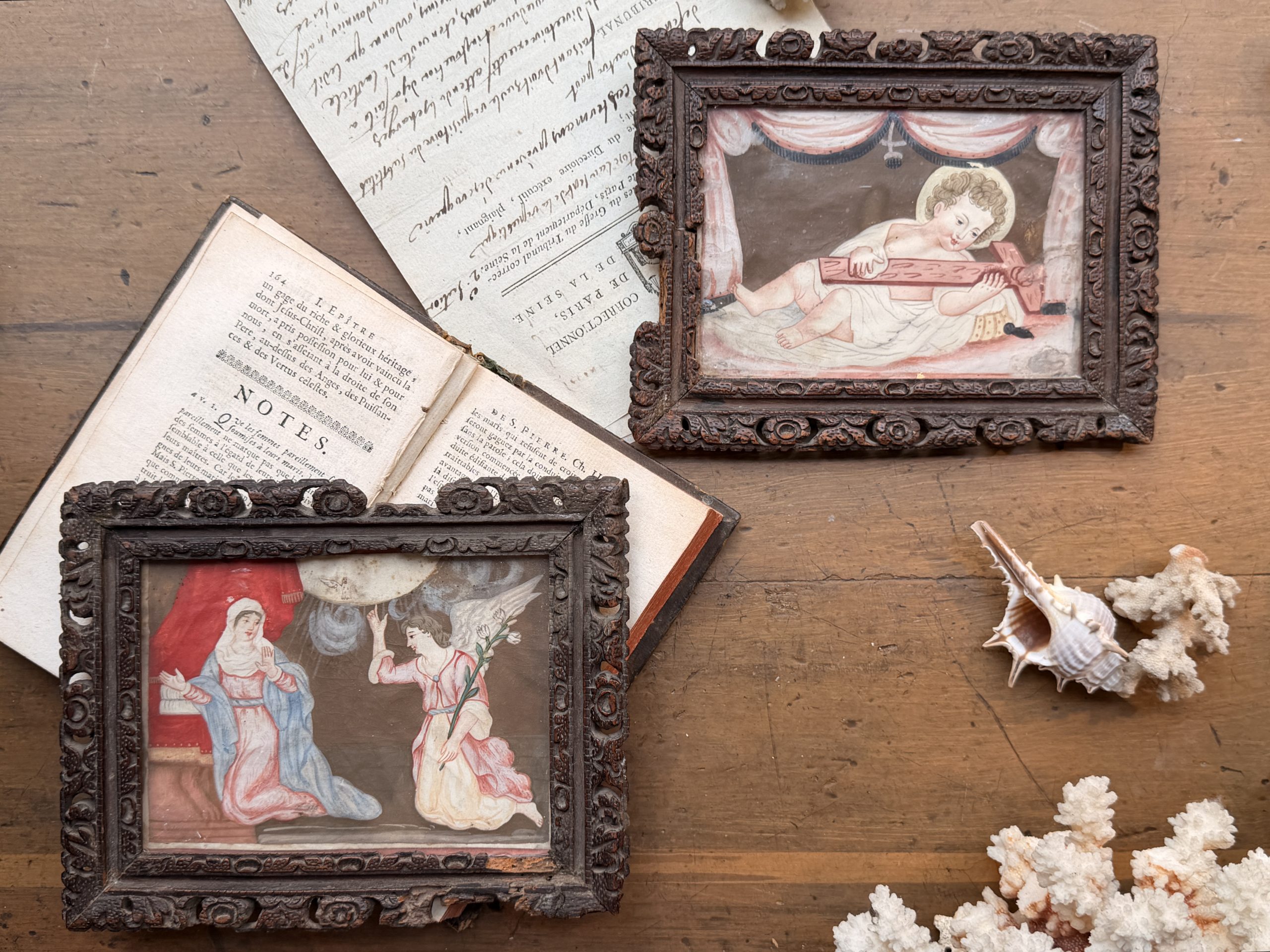
Rare Pair of Miniature Devotional Paintings on Vellum, 18th Century
This delicate pair of 18th-century miniature paintings beautifully illustrates the spirit and fervor of private devotion under the Ancien Régime. Presented in their original, richly carved wooden frames.
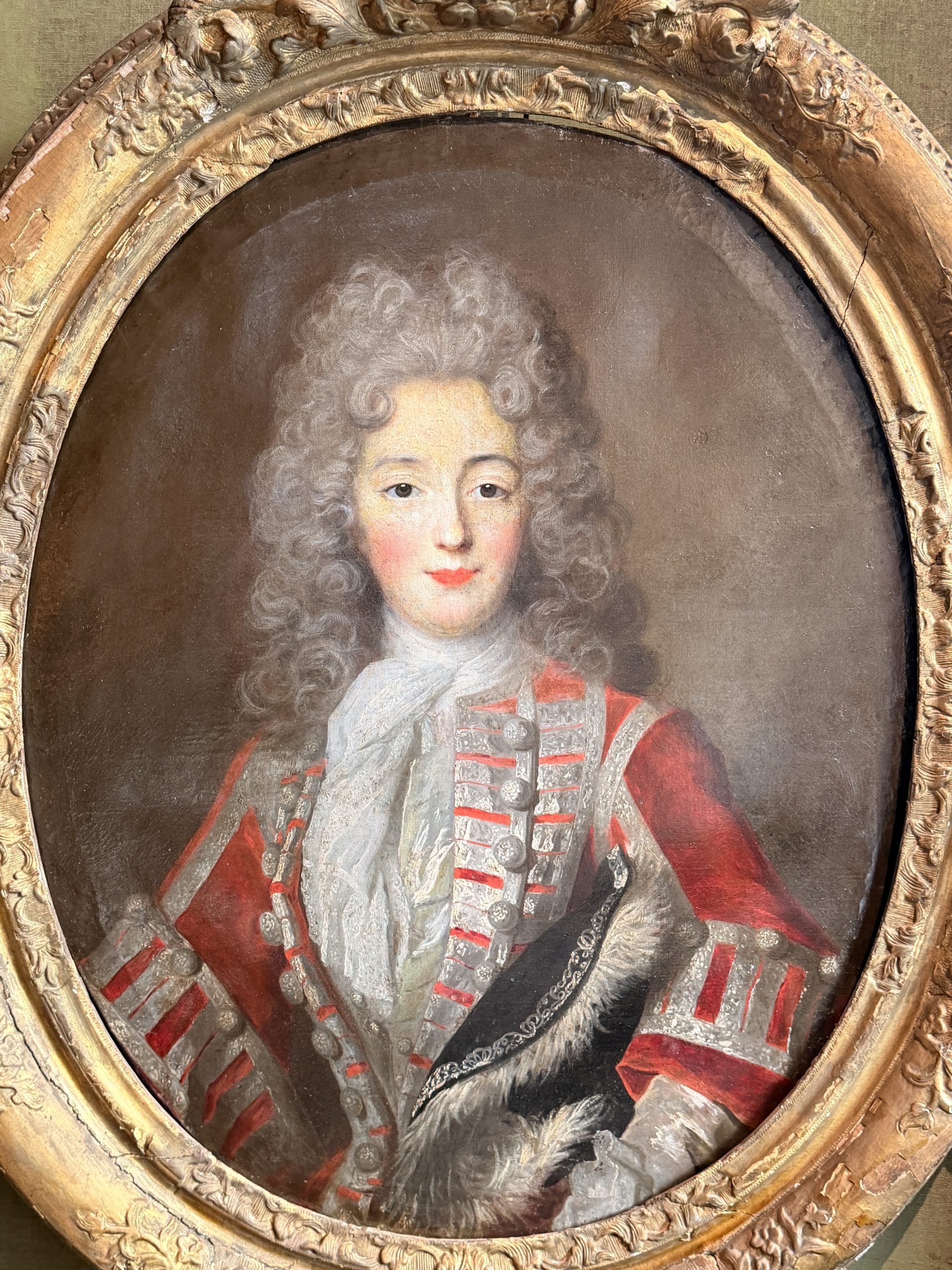
This magnificent three-quarter portrait captures the ideal of the “gentleman” and the nobility of the sword at the end of Louis XIV’s reign. The young aristocrat displays the ceremonial codes of the Court: powdered complexion, cheeks enhanced with rouge, and an imposing “in-folio” wig.

The identification of Joan of Arc, known as the “Maid of Orléans,” is first supported by the Latin inscription: “Virago Aurelianensis, profligatis debellatisque Anglis, ad sexus sui miraculum ovans.” This translates literally as: “The warrior woman of Orléans, having routed and defeated the English, triumphing to the astonishment of her own sex.”
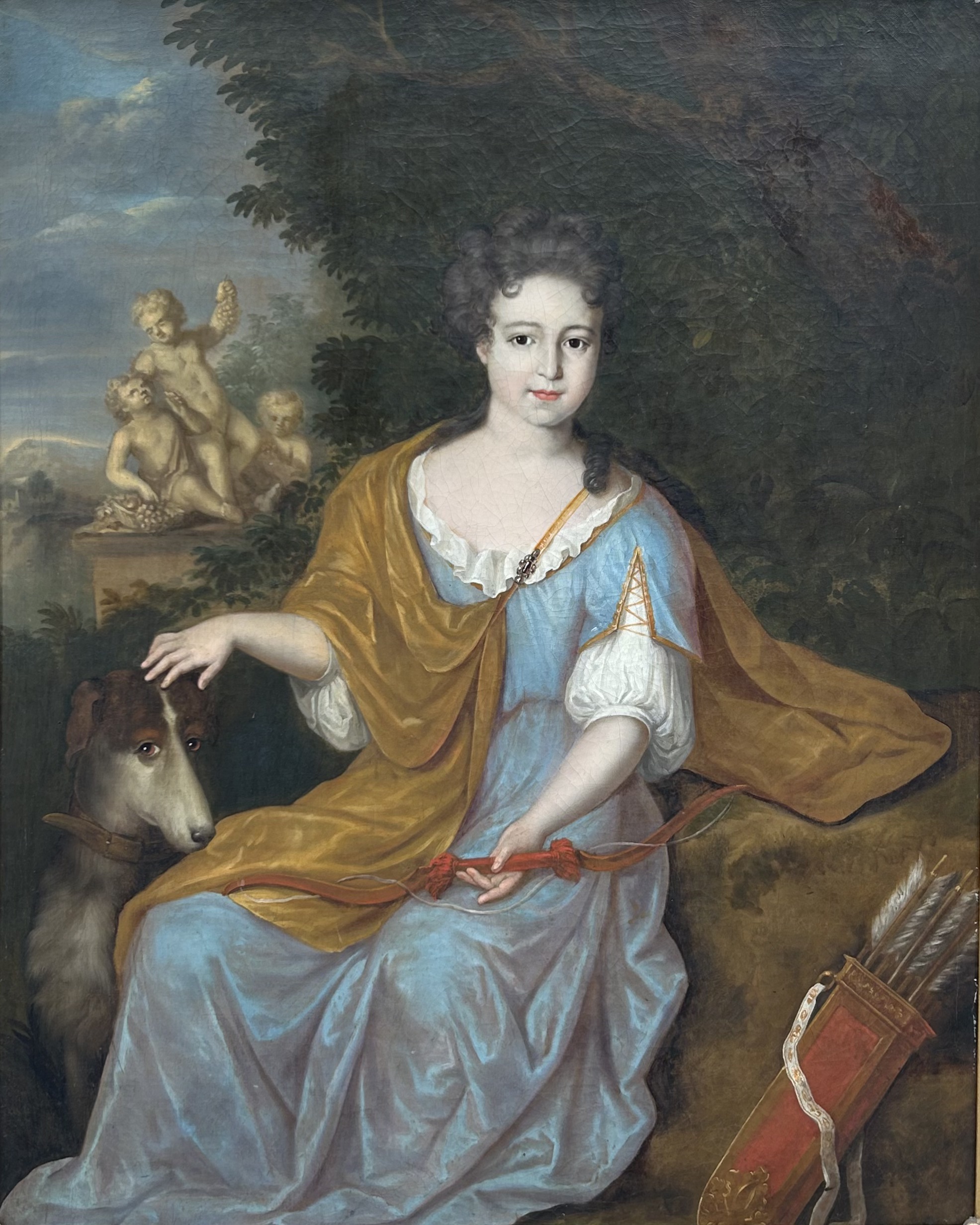
This magnificent portrait of a lady of quality dates from the 18th century. A young woman is dressed in a sumptuous azure gown enhanced by a wide gold cloak, while sporting a Fontange hairstyle, very fashionable at court.
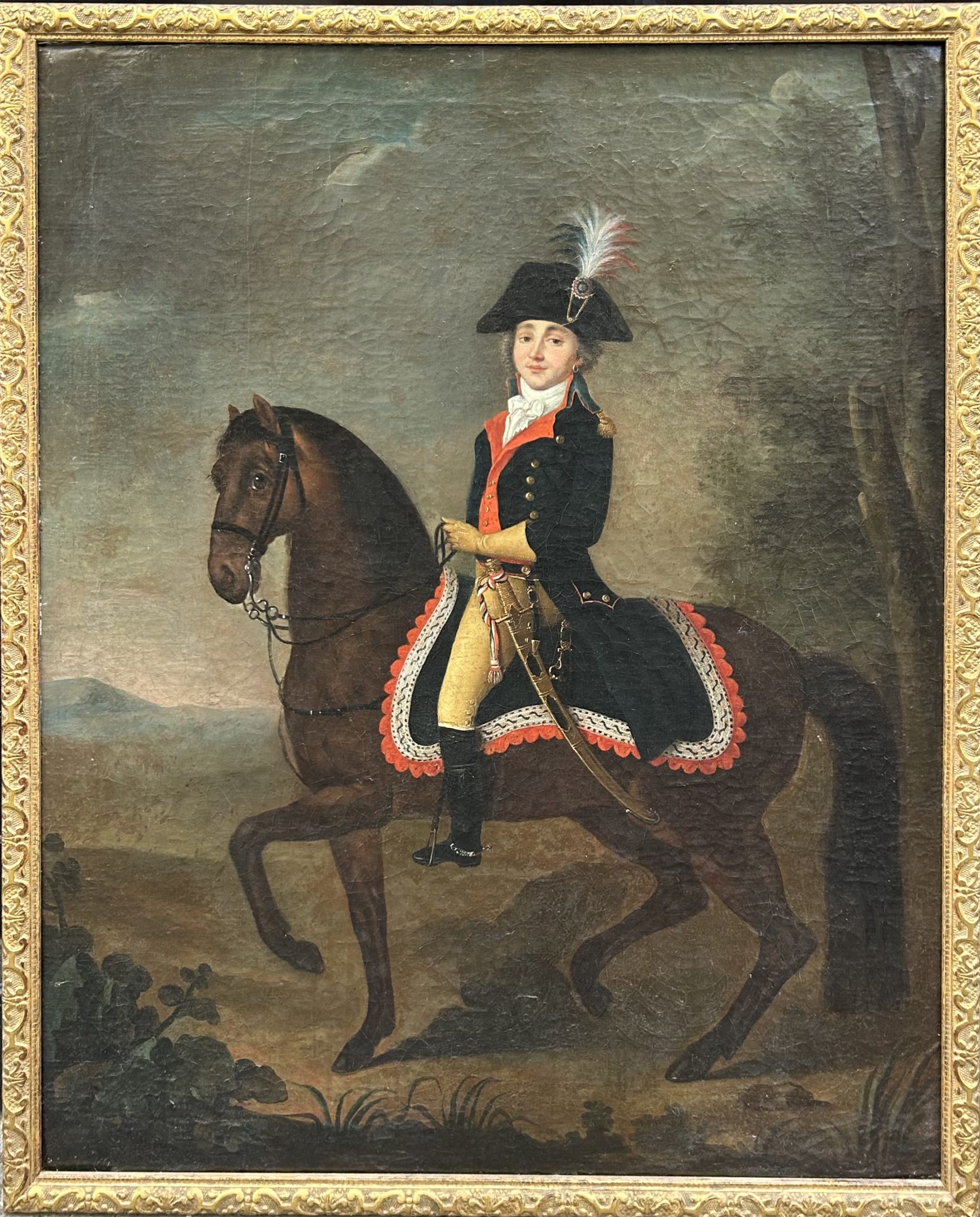
This portrait is firmly rooted in the equestrian portrait tradition, whose conventions date back to classical antiquity, notably with the famous statue of Marcus Aurelius on the Capitoline Hill. By choosing to depict Kléber on a rearing horse or at a measured pace, the painter reinterprets this allegory of the “war leader” capable of taming not only his mount but also human passions and the tumult of battle.

The princess is shown in a silk dressing gown, an informal yet exquisitely refined indoor outfit that perfectly exemplifies the elegance of 18th-century French fashion.
Far from being careless, this sartorial choice underscores the sitter’s high rank through its studied simplicity. Her bodice is delicately adorned with a diamond brooch, while a pink veil rests upon powdered hair, in accordance with the aristocratic beauty standards of the time.

This piece illustrates the virtuosity of the masters of the Genoese school of the Seicento (17th century) through a representation of the Pietà of rare dramatic intensity.
Genoese School, 17th Century
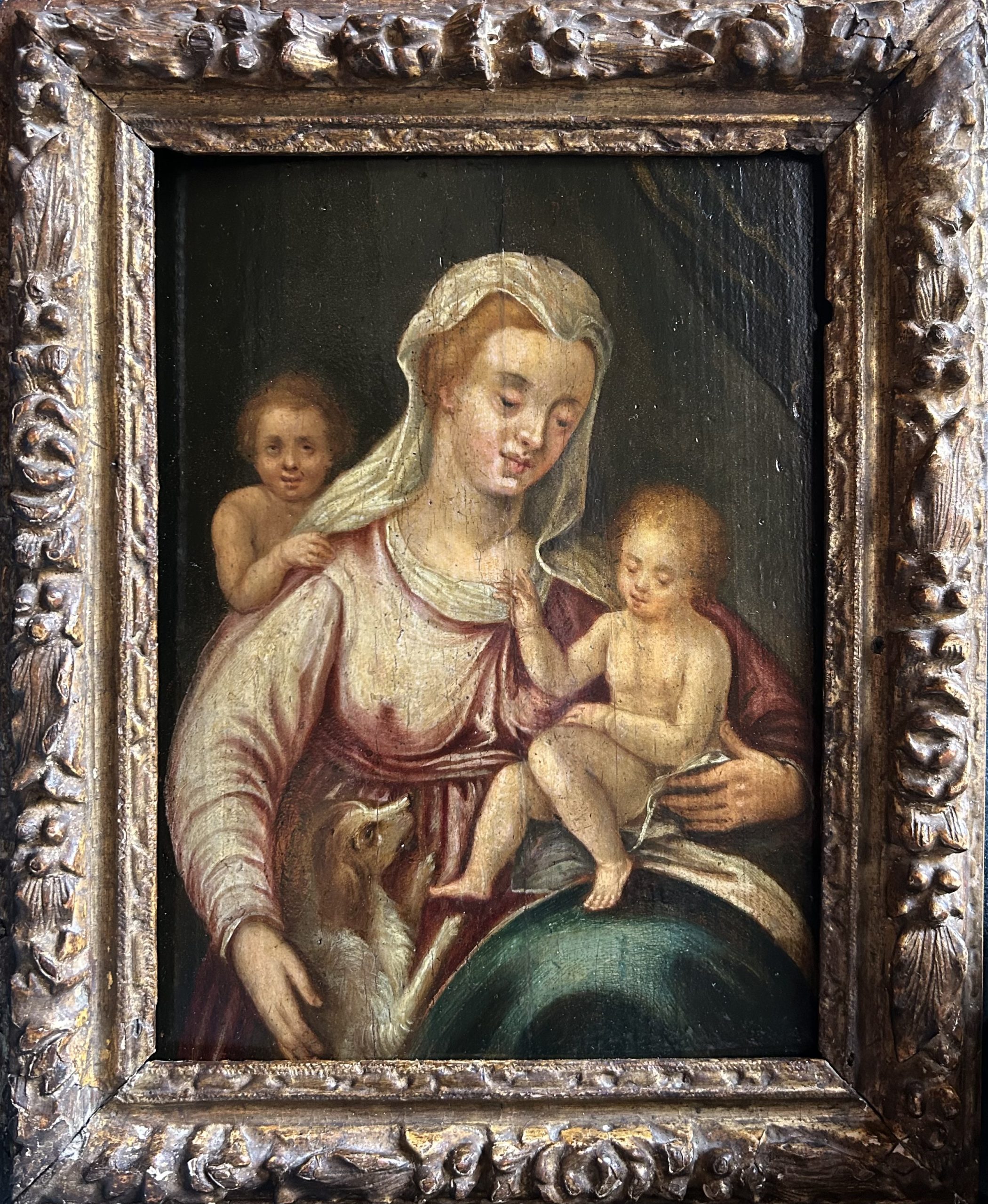
The presence of a dog in the foreground may symbolize absolute fidelity and vigilance towards the divine, and on the other hand, it reinforces the intimate and domestic character of this Holy Family, anchoring the scene in a reality close to the faithful.
Italy
17th century
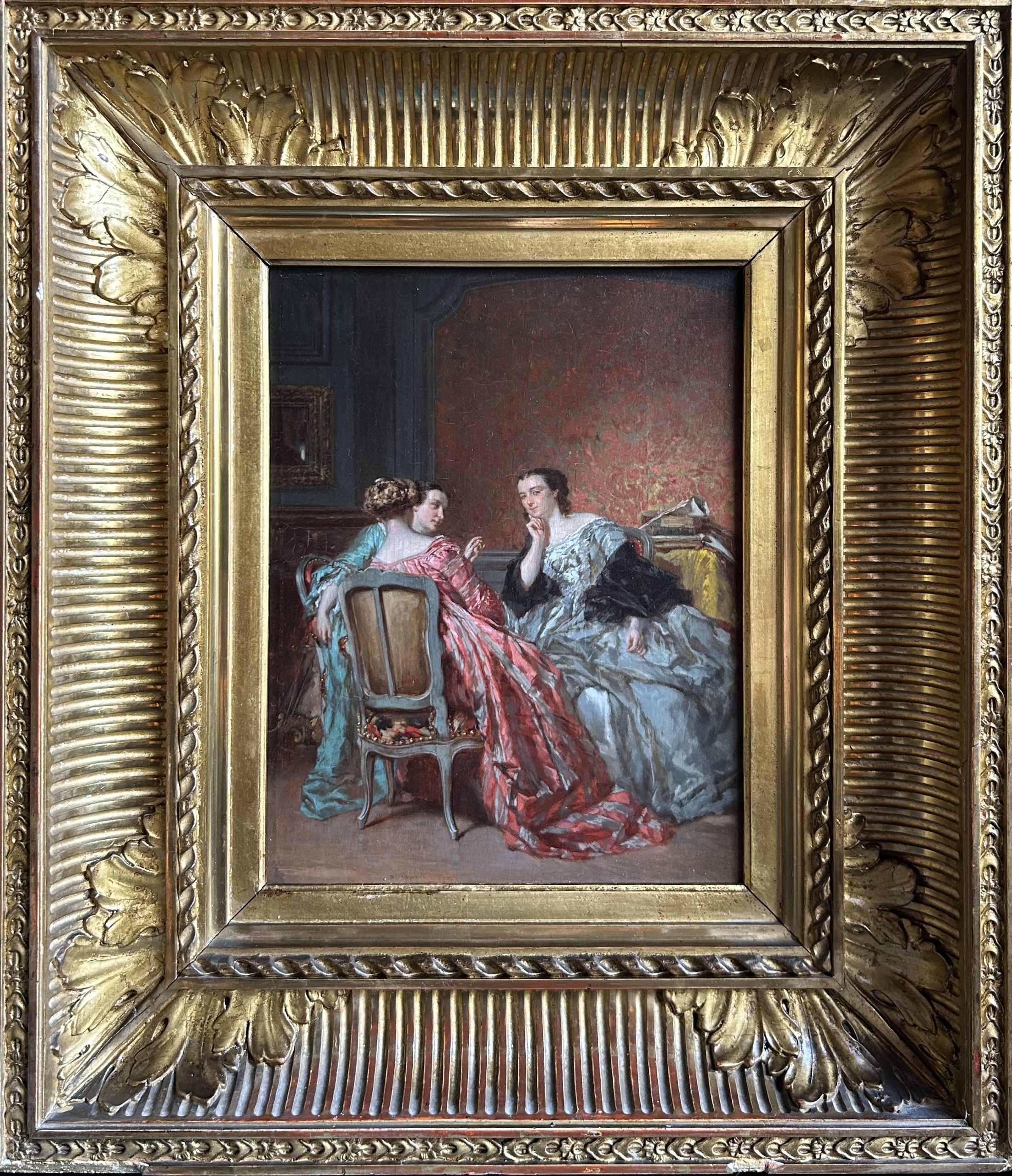
Victor Joseph Chavet was a renowned French painter, a student of Pierre-Roch Vigneron and Tony Johannot. A recognized specialist in genre scenes and portraiture, he distinguished himself by his ability to paint with meticulous detail, often on small canvases, leading to comparisons with the Flemish masters for the precision of his brushwork.

This delicate watercolor depicts two elegantly dressed young girls.
This image conveys the refinement and gentleness of early 20th-century bourgeois childhood.