

A rare and elegant living room set comprising a sofa and two armchairs, attributed to the renowned Swedish designer Carl Malmsten (1888-1972), a major figure in 20th-century Nordic design.
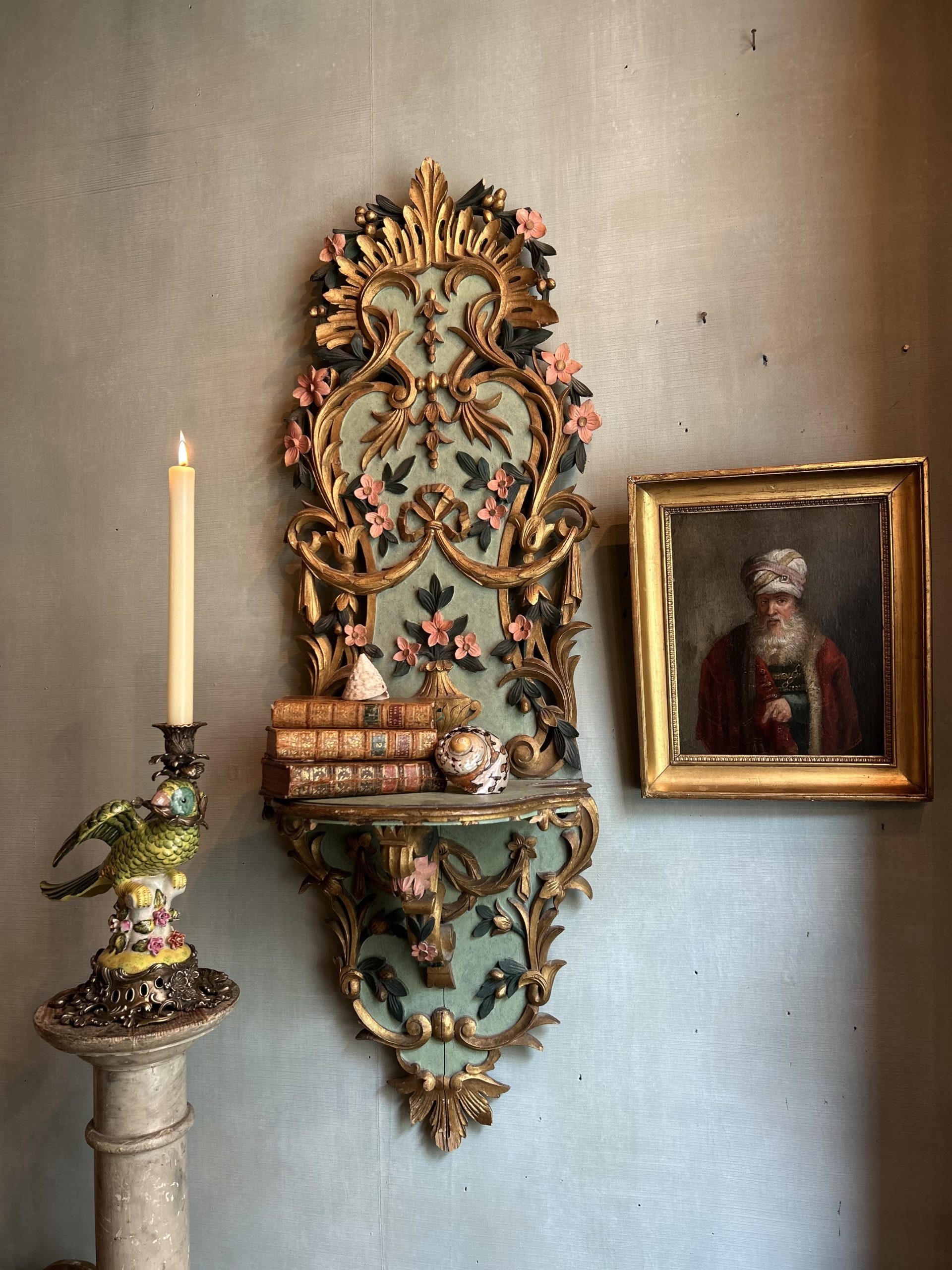
The decoration of this turban stand is characteristic of the Rococo style introduced to the Ottoman Empire during the Tulip Period, a time of openness to Western artistic influences in the 18th century. The decorative technique employed, known as Edirnekâri, refers to a tradition of sculpture and polychromy developed by artisans in the city of Edirne, in western Turkey.
Ottoman Empire, Turkey
Late 18th century

Rare day bed, sculpted wood, original polychromy, to recover
Epoch Directoire
France
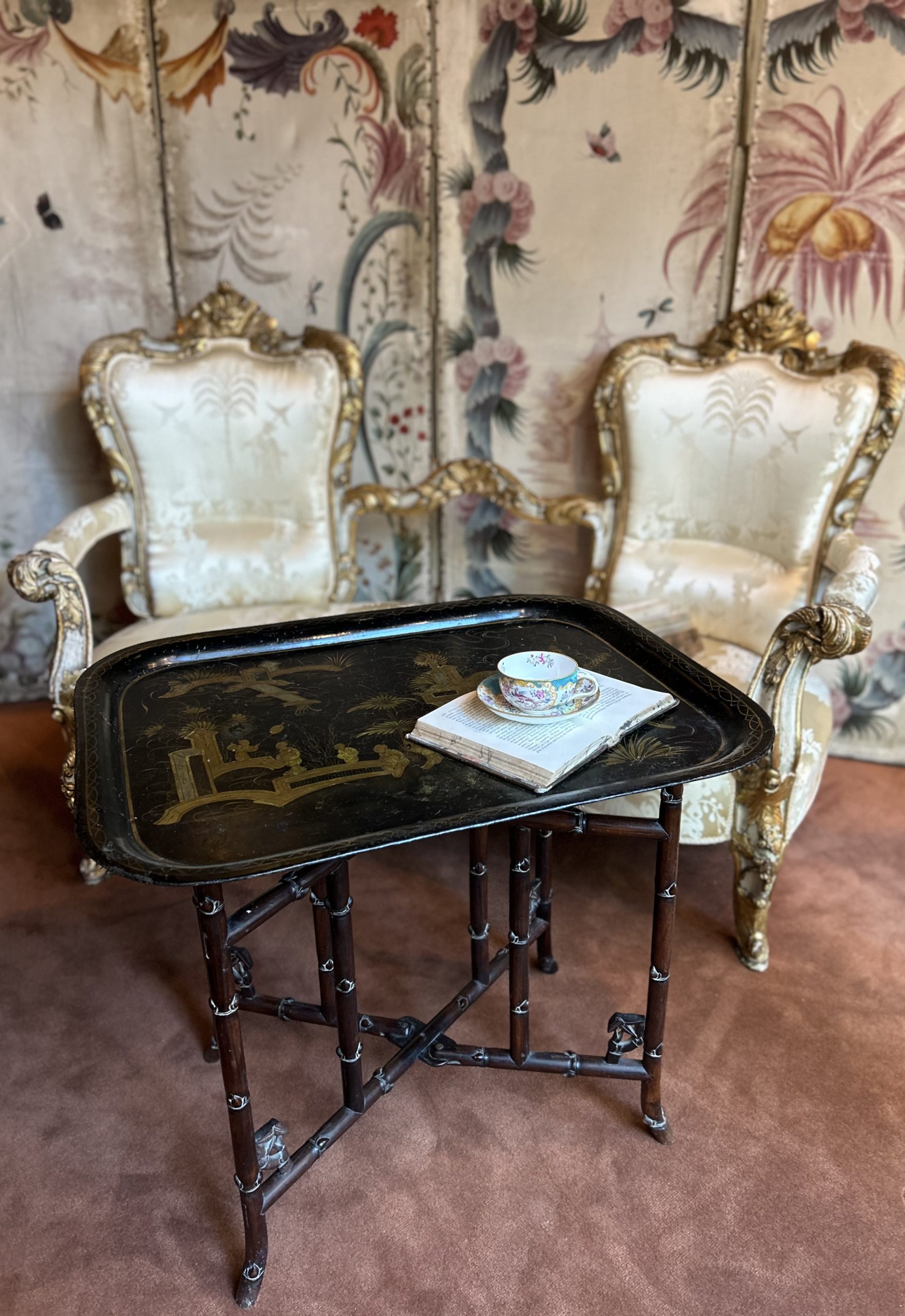
Charming Napoleon III period coffee table with a rectangular top featuring raised edges, decorated with a Japanese-style genre scene against a black background.
France XIX century

Pair of 17th-century theater drapes in carved polychrome wood, depicting an elegant knotted drape adorned with large golden tassels. The skillful carving of the pleated fabric and the richness of the original polychromy give these pieces a particularly theatrical character. Very beautiful preserved antique patina.

This pair of small Louis XV style tables is made of black lacquered wood, each topped with a tabletop framed by a gold border and decorated with chinoiserie motifs: floral patterns, sinuous branches, and birds, rendered in soft shades of green, ochre, and red. The whole rests on four slender, slightly curved legs. Although they form a pair, each table has a distinct decoration.

A small “indiscreet” bollard consisting of a three-seater seat upholstered in animal hair in the traditional style, all on a network of twenty stiff springs… a triple backrest also separated by three padded, buttoned rails topped with a Medici vase in gilded wood, entirely covered in Rubelli jacquard fabric, with Declercq trimmings.
Napoleon III period, 19th century

Polychrome wooden writing desk with scroll and floral motifs, opening onto two drawers and a drop-leaf flap, four small interior drawers, and keys.
Italy
18th century
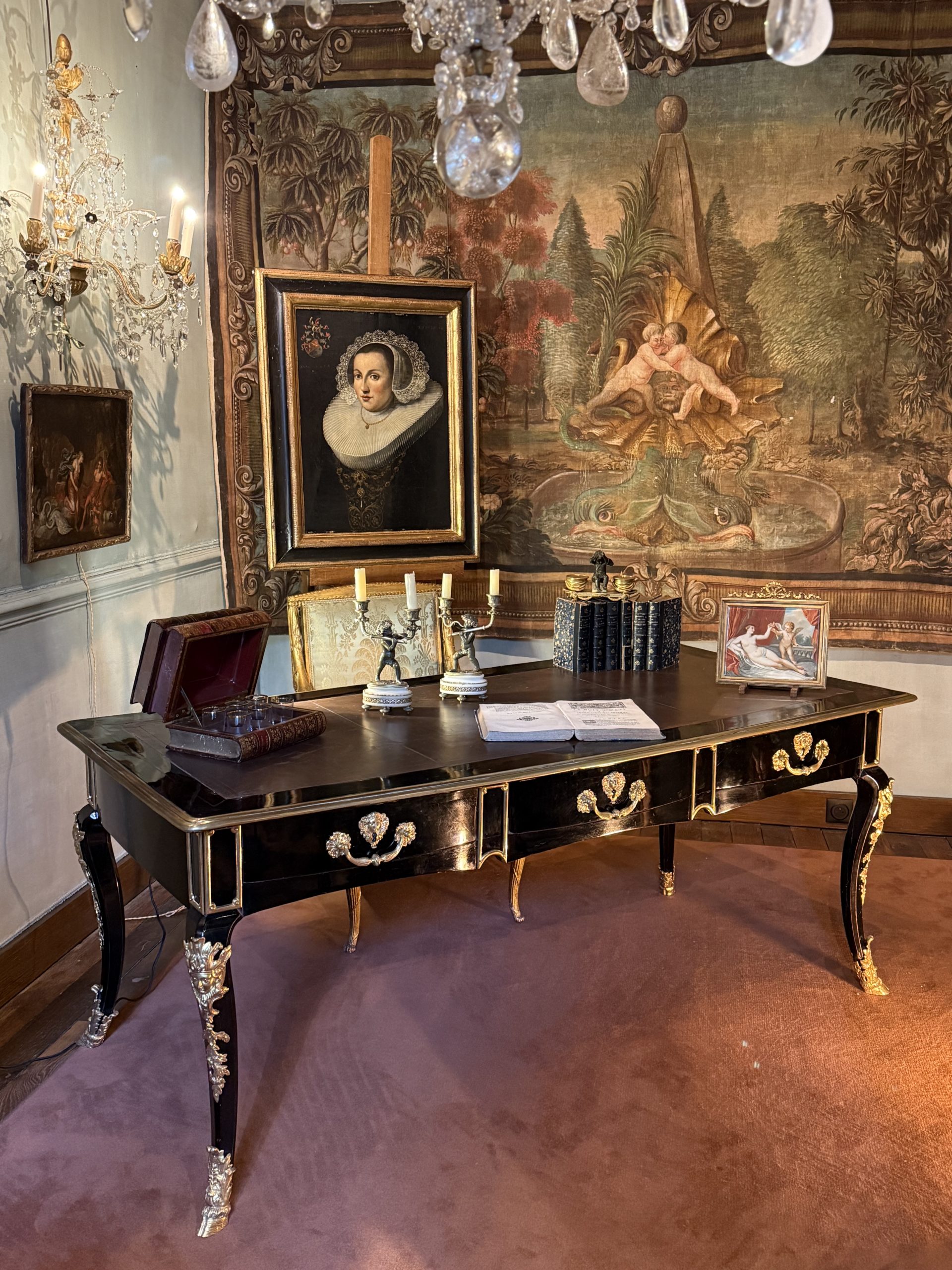
Large flat desk, all black lacquered sides opening with three drawers in a row. It rests on nicely curved legs enhanced with a decoration of bronzes with heads of figures and hooves, top covered in old brown leather surrounded by wood and an ingot mold.
Epoque Napoléon III
France

Pair of armchairs in gilded carved wood, upholstered in damask silk, wear and tear on the armrests.
Early 19th century
Lucca, Italy