

In the lower-left of the composition, a small spaniel with large, expressive eyes and a red-and-white coat enlivens the scene with a touch of familiar tenderness.
18th century

The composition follows the classic arrangement in which the Archangel Gabriel—wings unfurled and wrapped in swirling drapery—bows to the left before the Virgin, offering her a lily (a symbol of purity), while the Virgin Mary, clad in a sky-blue mantle and a pink robe, pauses in her reading to receive the divine message.
Giltwood frame
Italy, 18th century

This painting depicts a lady of rank, dressed in an elegant blue velvet gown adorned with gold passementerie and a pink satin drapery covering her right shoulder. She is portrayed three-quarter length and wears a hairstyle that may evoke that of her presumed model, Mlle de Fontanges.
Although the identity of this woman remains unknown, she undoubtedly belonged to the French nobility of the eighteenth century. The quality of the painting, particularly evident in the refined rendering of the fabrics and lace, suggests an attribution to the workshop of François de Troy, who excelled especially in the treatment of such details. Also noteworthy is the hazy brown background, which can be found in several works by this great portraitist.

Portrait of a woman from the 18th century wearing a “déshabillé,” a term referring to a softer and lighter garment, often adorned with lace. She wears a lace choker, a type of jewellery that has existed throughout history but experienced a notable revival in popularity during this century. Her powdered hair is adorned with small flowers, while a pretty blue bow decorates her sleeve.

These meticulous compositions—characteristic of the paper-cut art and relief pictures of the Louis XVI era—feature figures dressed in real fabrics (silk, muslin, ribbons) finely fashioned in three dimensions. They are set against a landscape background painted in gouache and enhanced with naturalistic relief elements such as moss, small twigs, and dried flowers.
France, 18th century

This late-19th-century painting on wood depicts an intimate scene, capturing the kiss exchanged between two young children shown in bust-length portrait. On the left, a little girl, seen from the front and dressed in a white shirt or nightgown with puffed sleeves, smiles. On the right, a second child, probably her brother, dressed in a garment with a ruffled collar, leans over to kiss his sister on the cheek.
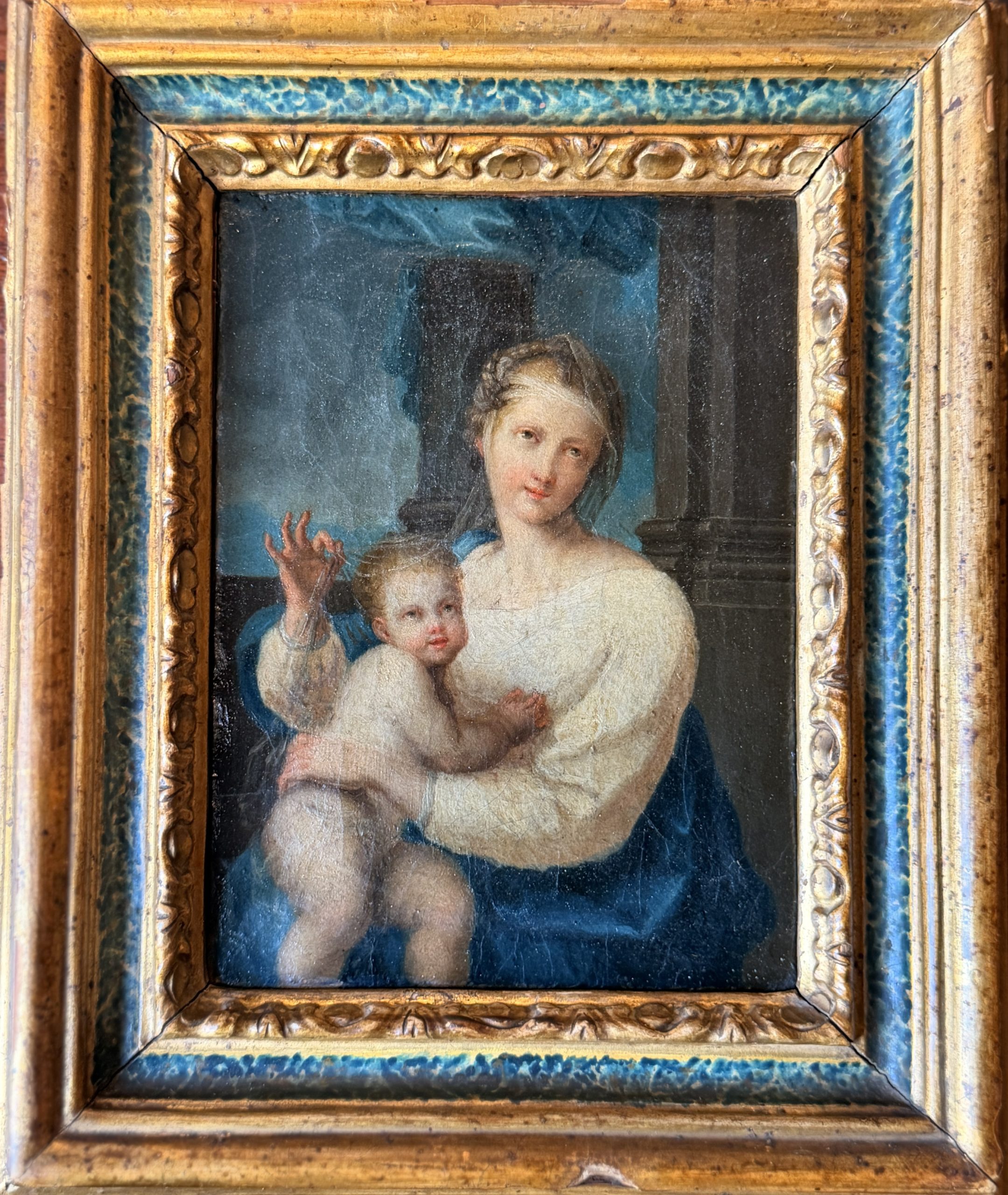
This delicate Baroque cabinet painting stands firmly within the tradition of the 17th-century Bolognese School, reflecting the immense influence of its leading figure, Guido Reni. The work embodies the master’s aesthetic ideals: the Virgin’s face with its perfect oval shape and alabaster complexion, her gently lowered eyelids conveying a sense of melancholy, and her hair swept up and held simply by a diaphanous veil.
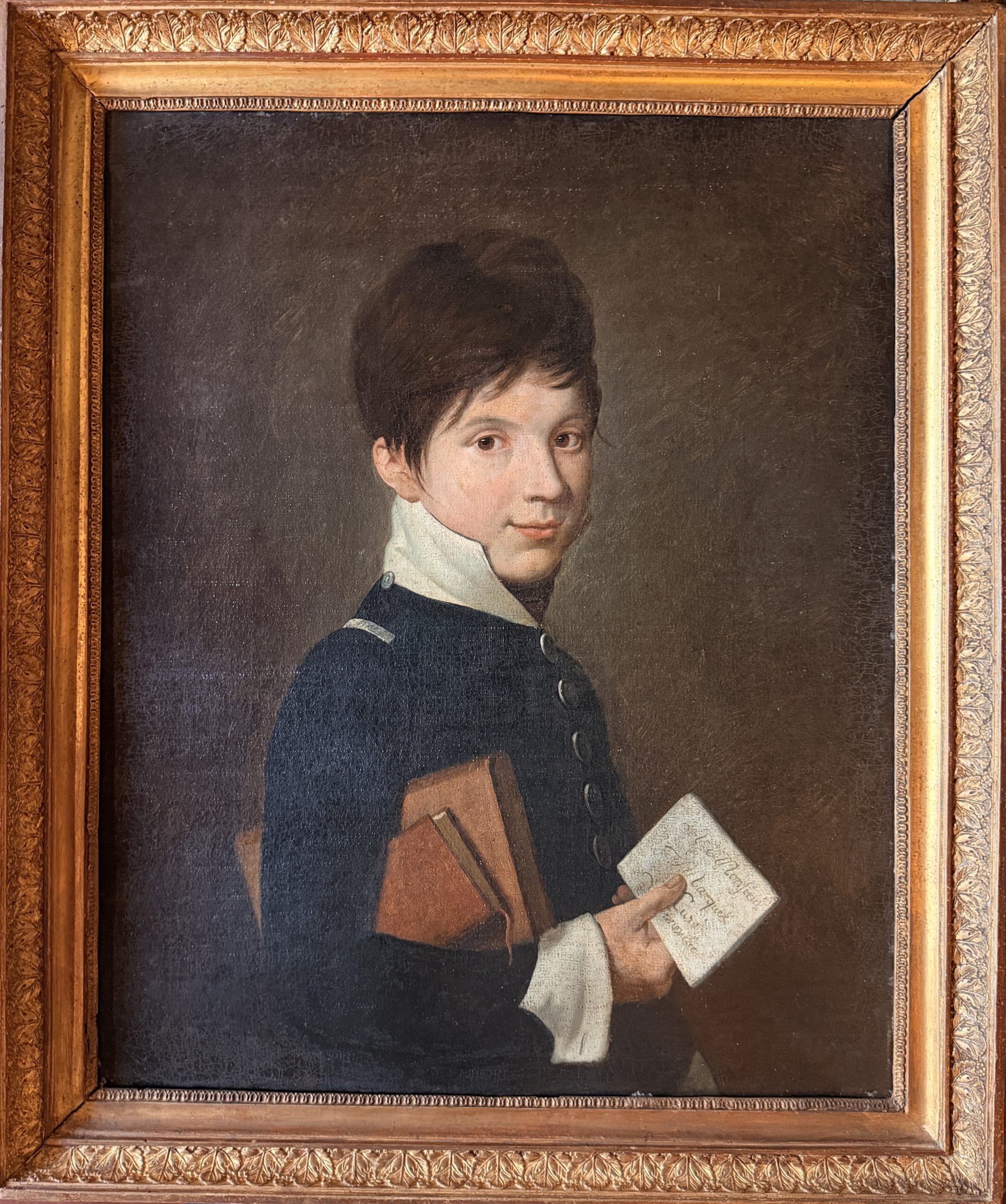
The inscription appears to read “À Monsieur / Marquet…” (“To Monsieur Marquet…”), a traditional pictorial detail serving to identify the patron or the intended recipient of the role symbolized by the young man.
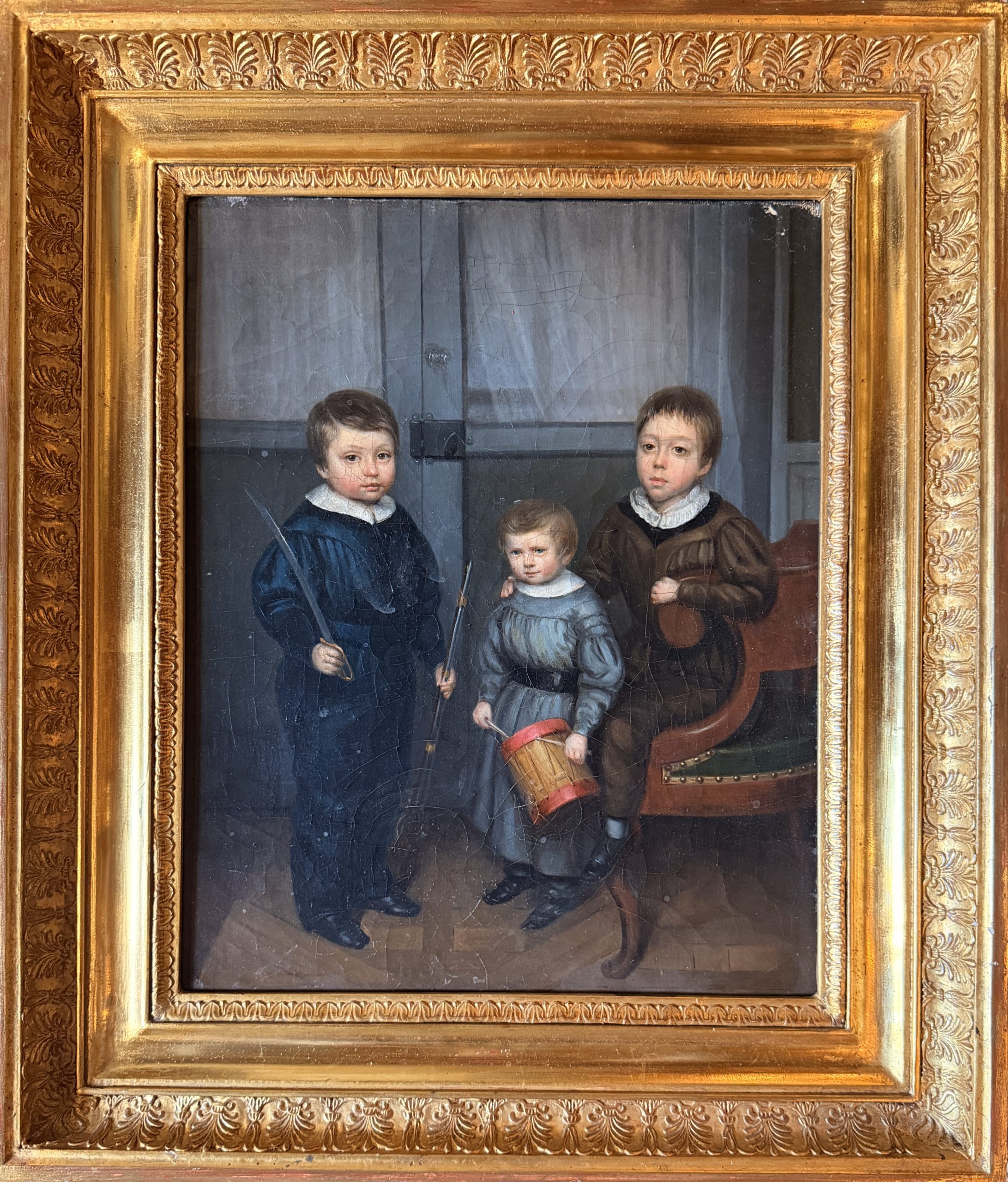
This touching group portrait from the Restoration period depicts three young boys from a prominent bourgeois or aristocratic family, identified by an old label on the back as the children of the Prévôt Renaud de Saint-Lézin family. The composition is skillfully arranged within a restrained interior featuring a parquetry floor, set before a large frosted-glass door.
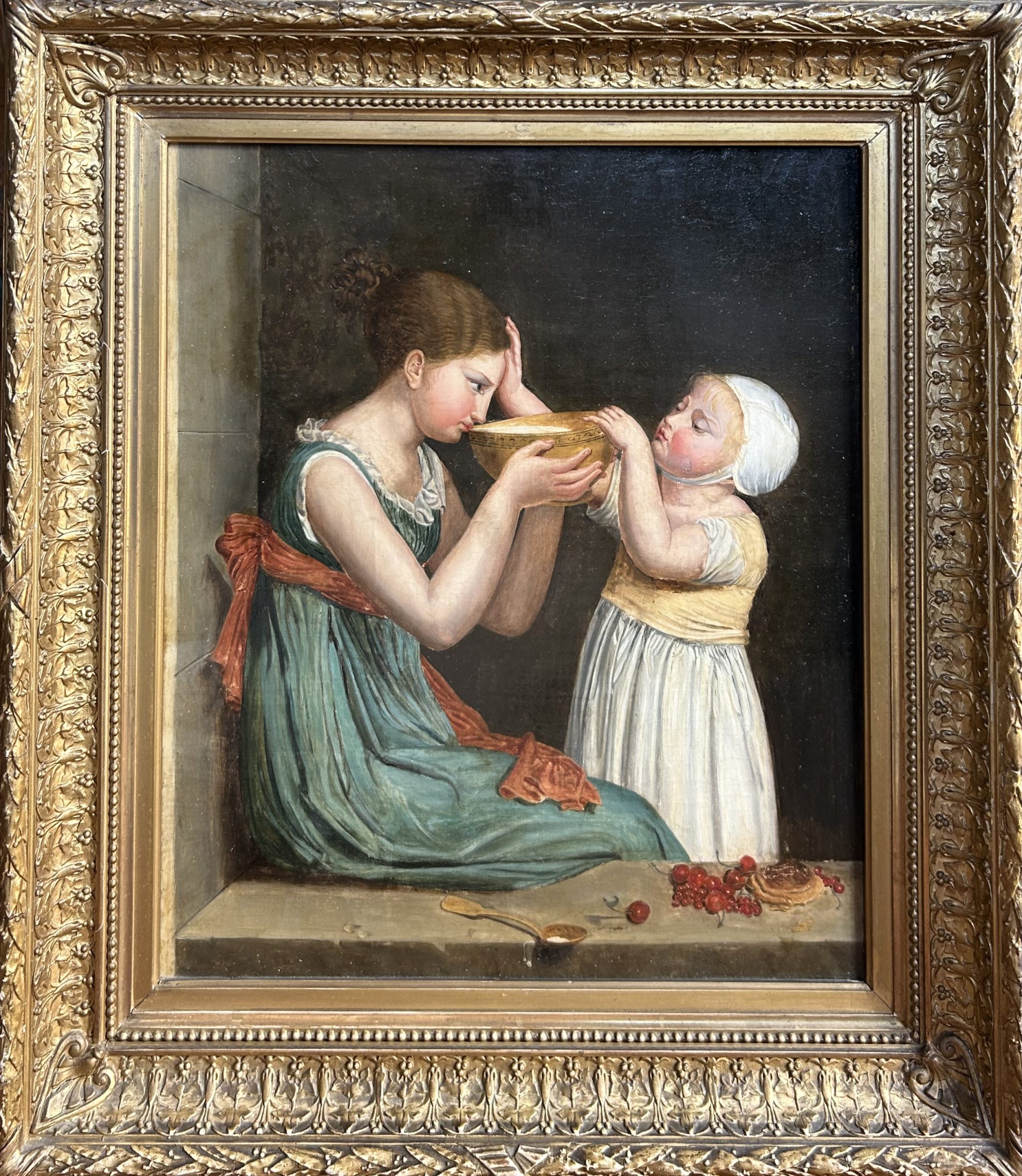
It is fascinating to note that the first historical owner of the original painting was none other than Lucien Bonaparte, the Emperor’s brother and a great patron of the arts, which testifies to the immense prestige of this work from its creation.