

Charming polychrome glazed terracotta sculpture depicting a dog seated on an elegant blue cushion adorned with a gilt trim. The sculpture displays a remarkable attention to realism, as evidenced by the finely modelled fur and the particularly lifelike expression of the animal. The flowing treatment of the coat lends the composition a natural sense of movement and vitality. The dog wears a delicate yellow collar, emphasizing its domestic character while adding a subtle touch of colour to this decorative piece.

Elegant French fashion doll dating from the second half of the 19th century, featuring a polychrome papier-mâché head with finely hand-painted facial details. Its expressive face is enhanced by large fixed eyes and an open mouth revealing two small teeth, a characteristic feature of high-quality French dolls of the period. The body is fully leather-covered with articulated limbs, allowing for remarkable flexibility and posing. Offered without clothing, this doll is a fine collector’s piece. It recalls the productions of the great French doll makers of the late 19th century, although no firm attribution can be made in the absence of a maker’s mark.
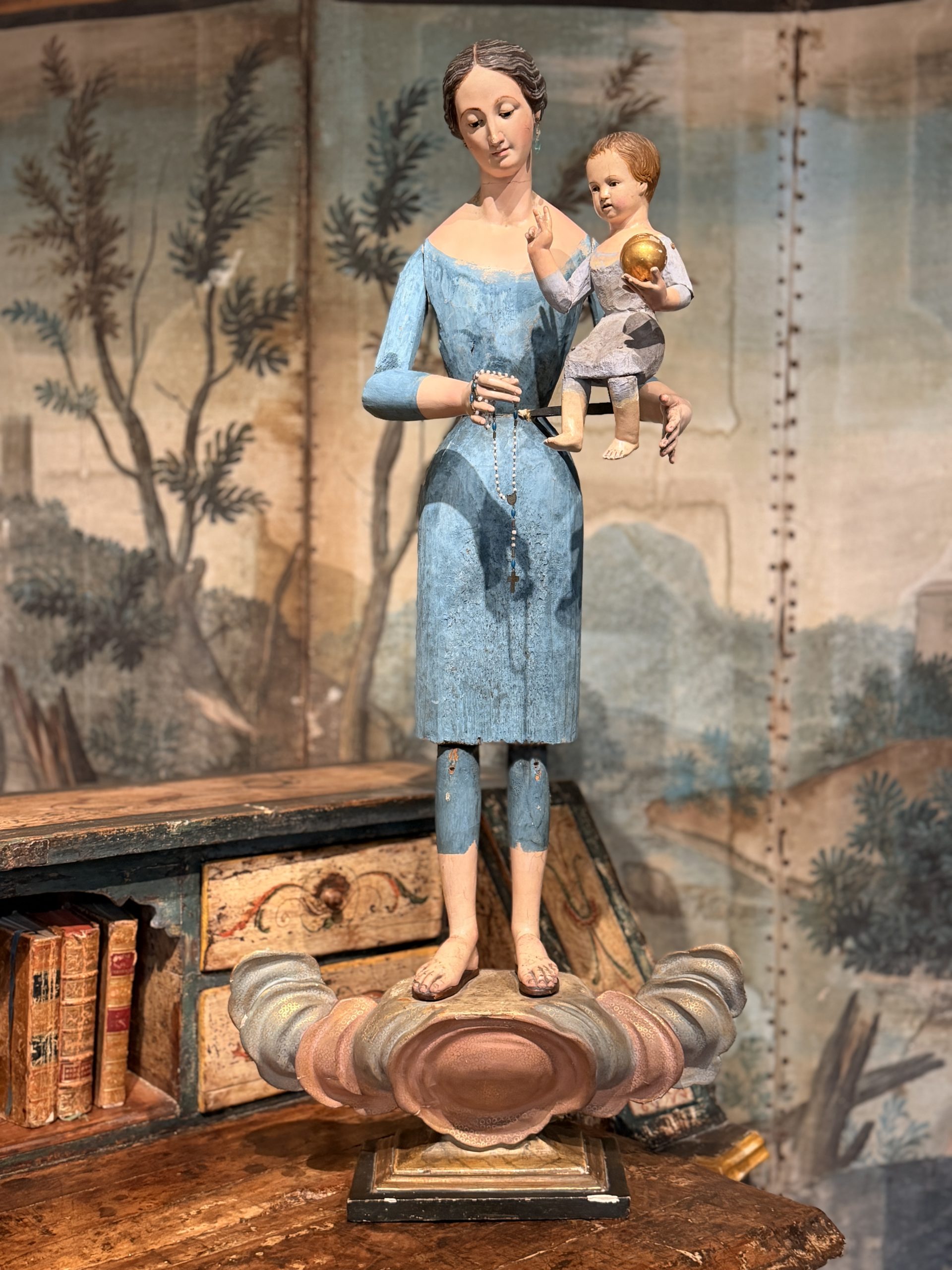
*Capipote* This term, of Catalan origin, literally means “head and foot” (*cap i pota*) and perfectly describes the very structure of this type of religious sculpture. The Virgin’s head, hands, and feet are finely carved and polychromed, while the body consists of a simplified torso extending into an original blue gown; the figure is designed as a mannequin intended to be dressed in rich garments and ornaments suited to various liturgical feasts.

Elegant armchair stool of serpentine form, resting on four cabriole legs terminating in scroll feet, with carved decoration of foliage and shells. The seat and apron are upholstered in an elegant textile with a polychrome floral design on a cream ground, lending the piece a certain delicacy. The particularly finely worked apron is centred with a carved rocaille motif.
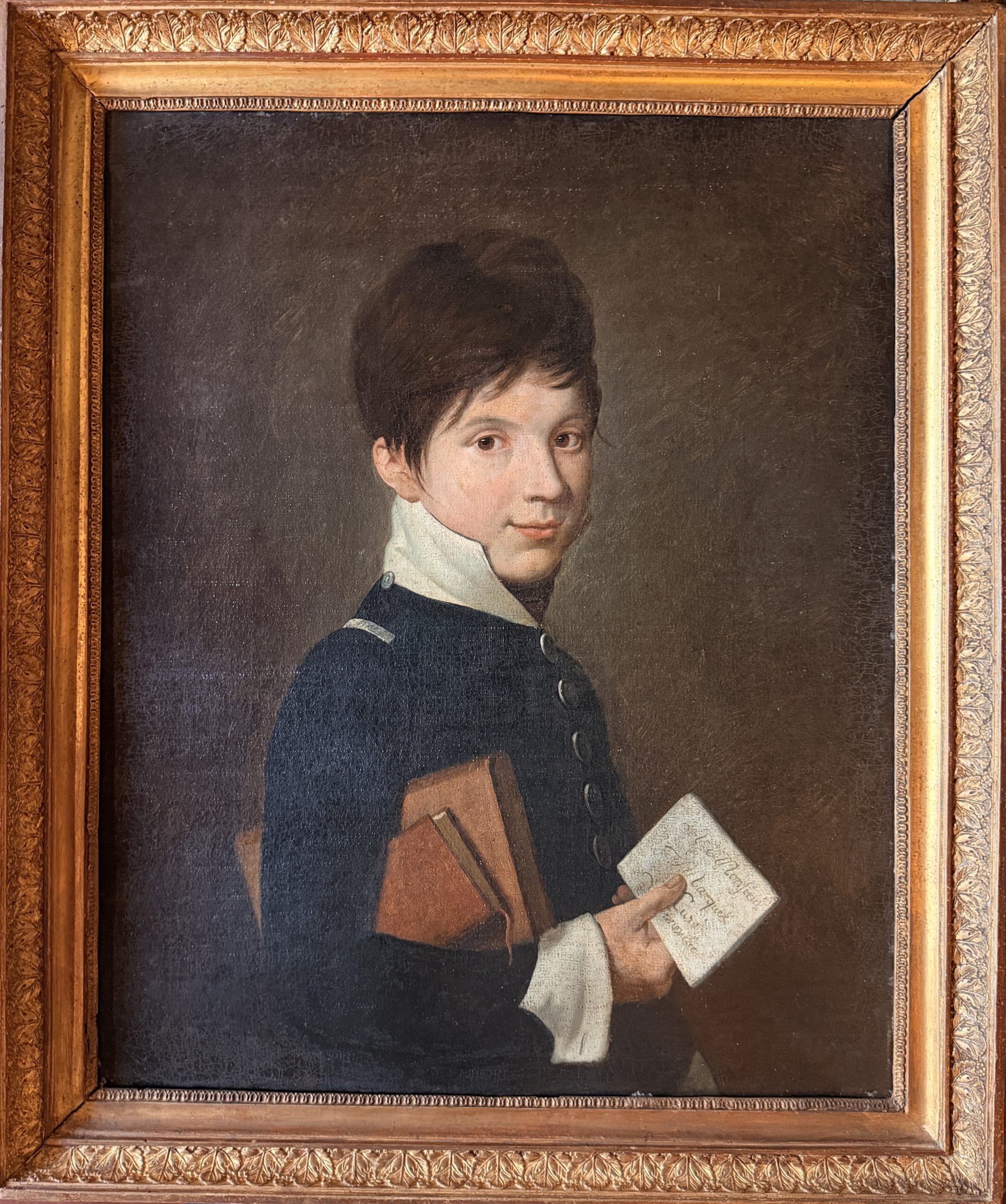
The inscription appears to read “À Monsieur / Marquet…” (“To Monsieur Marquet…”), a traditional pictorial detail serving to identify the patron or the intended recipient of the role symbolized by the young man.
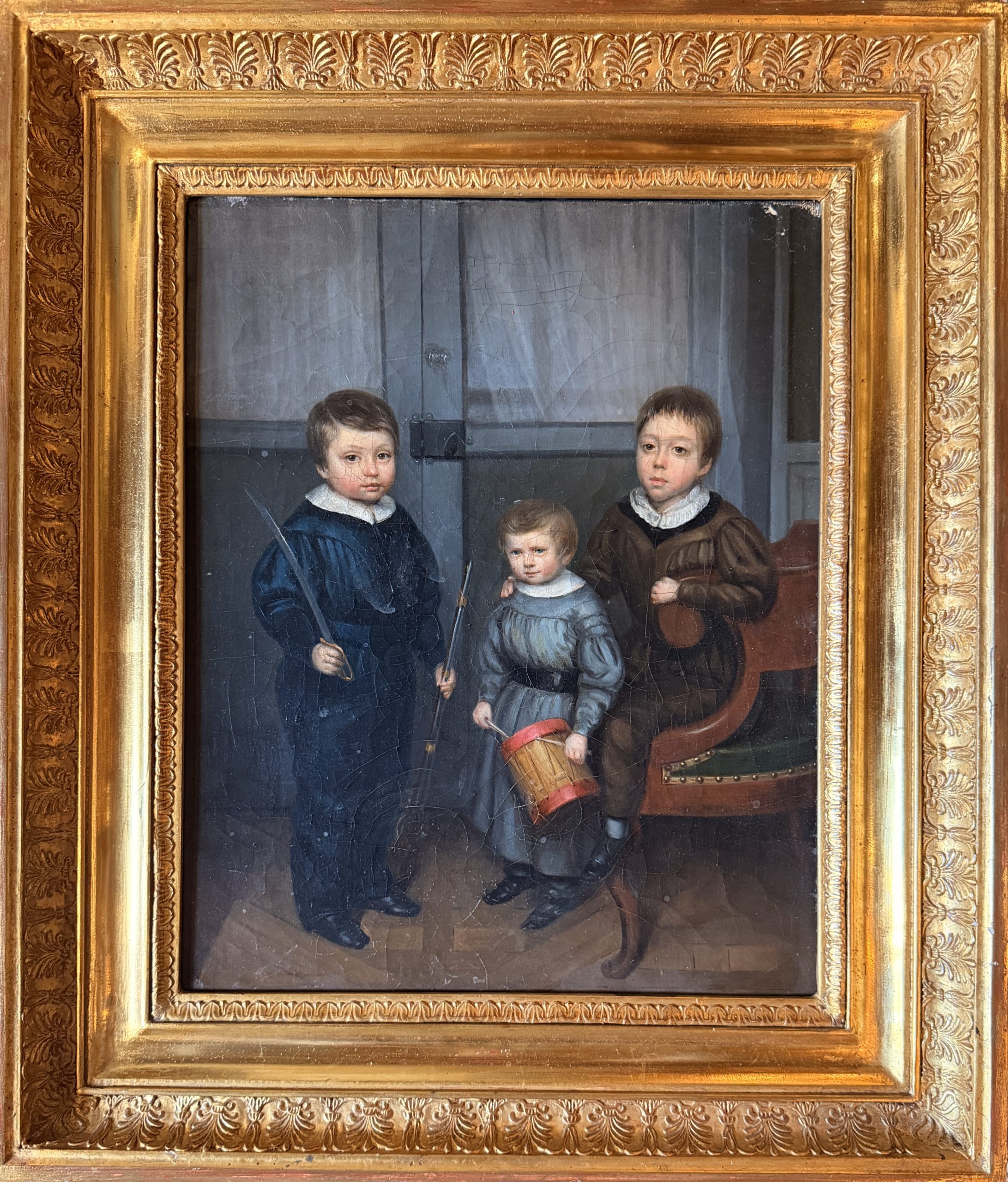
This touching group portrait from the Restoration period depicts three young boys from a prominent bourgeois or aristocratic family, identified by an old label on the back as the children of the Prévôt Renaud de Saint-Lézin family. The composition is skillfully arranged within a restrained interior featuring a parquetry floor, set before a large frosted-glass door.

An exceptional, large Louis XIV ceremonial mirror in finely carved and gilded wood. The rectangular frame features rich ornamentation—including gadrooned friezes, foliage, and geometric motifs—surrounding a central mirror plate framed by smaller border plates.
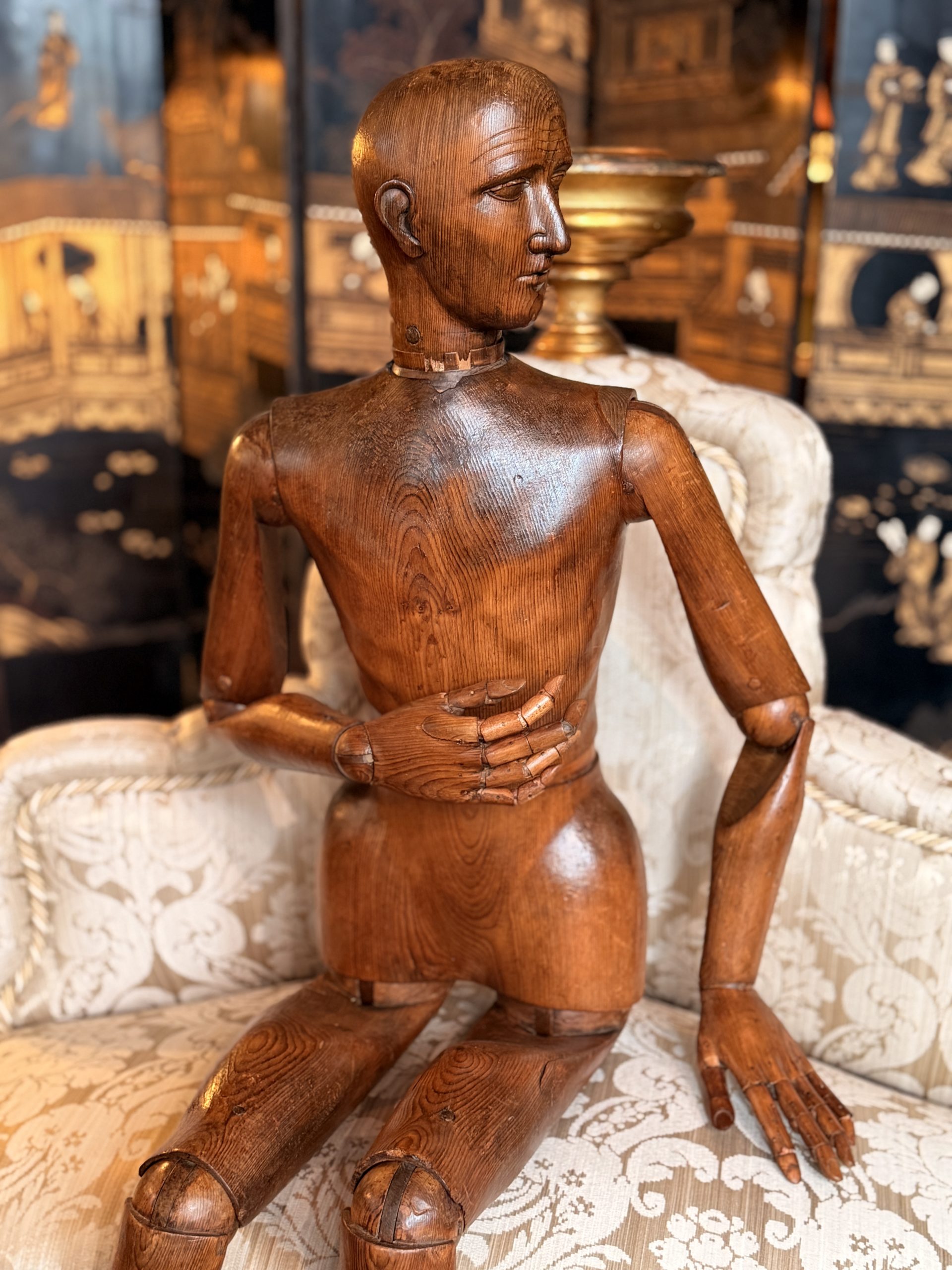
Schiaparelli said of her two mannequins: “Pure Greek beauty, supple and dignified… gazing with calm indifference at the crowds who stare at them open-mouthed.”
The designer named these mannequins Pascal and Pascaline.
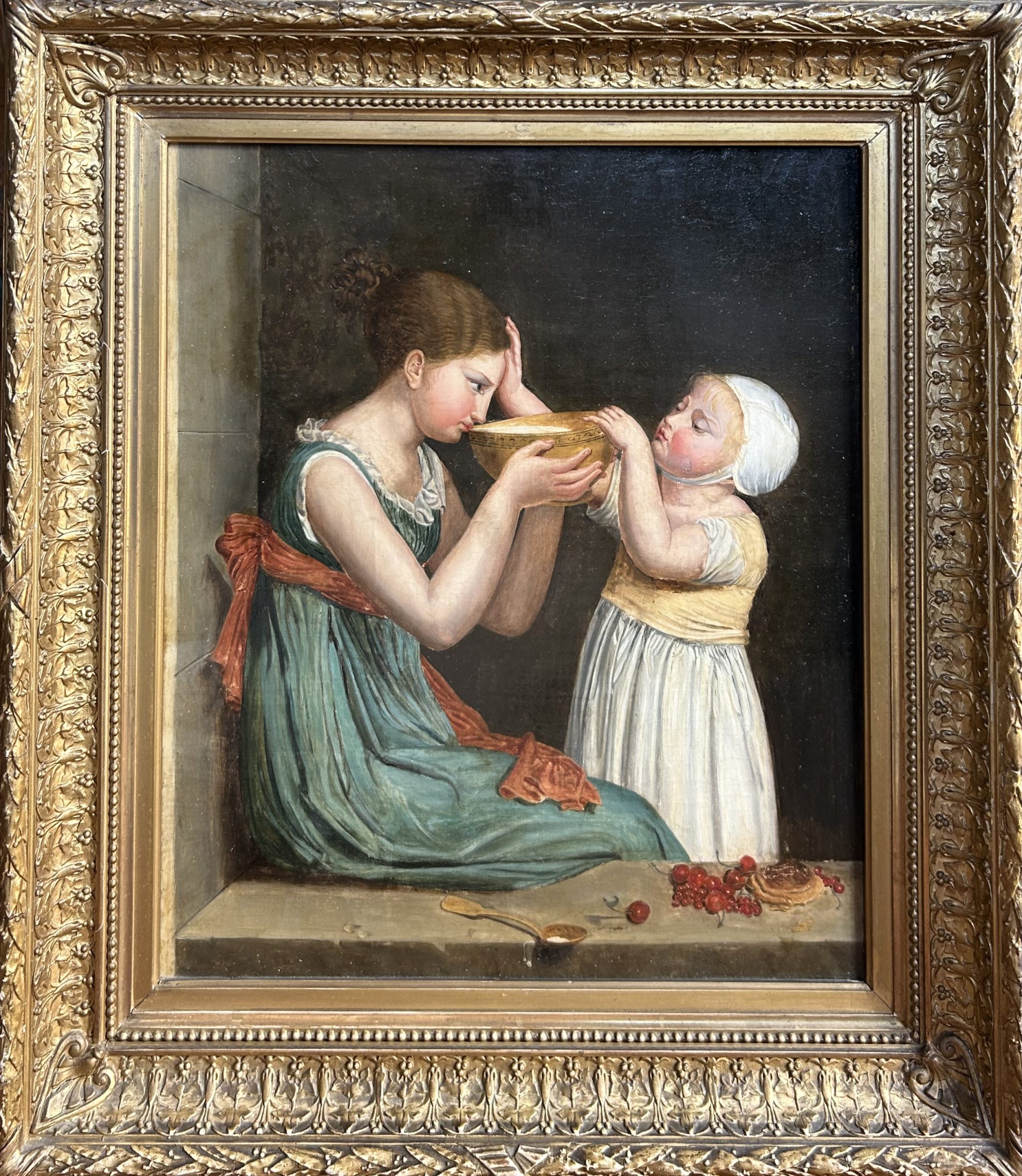
It is fascinating to note that the first historical owner of the original painting was none other than Lucien Bonaparte, the Emperor’s brother and a great patron of the arts, which testifies to the immense prestige of this work from its creation.
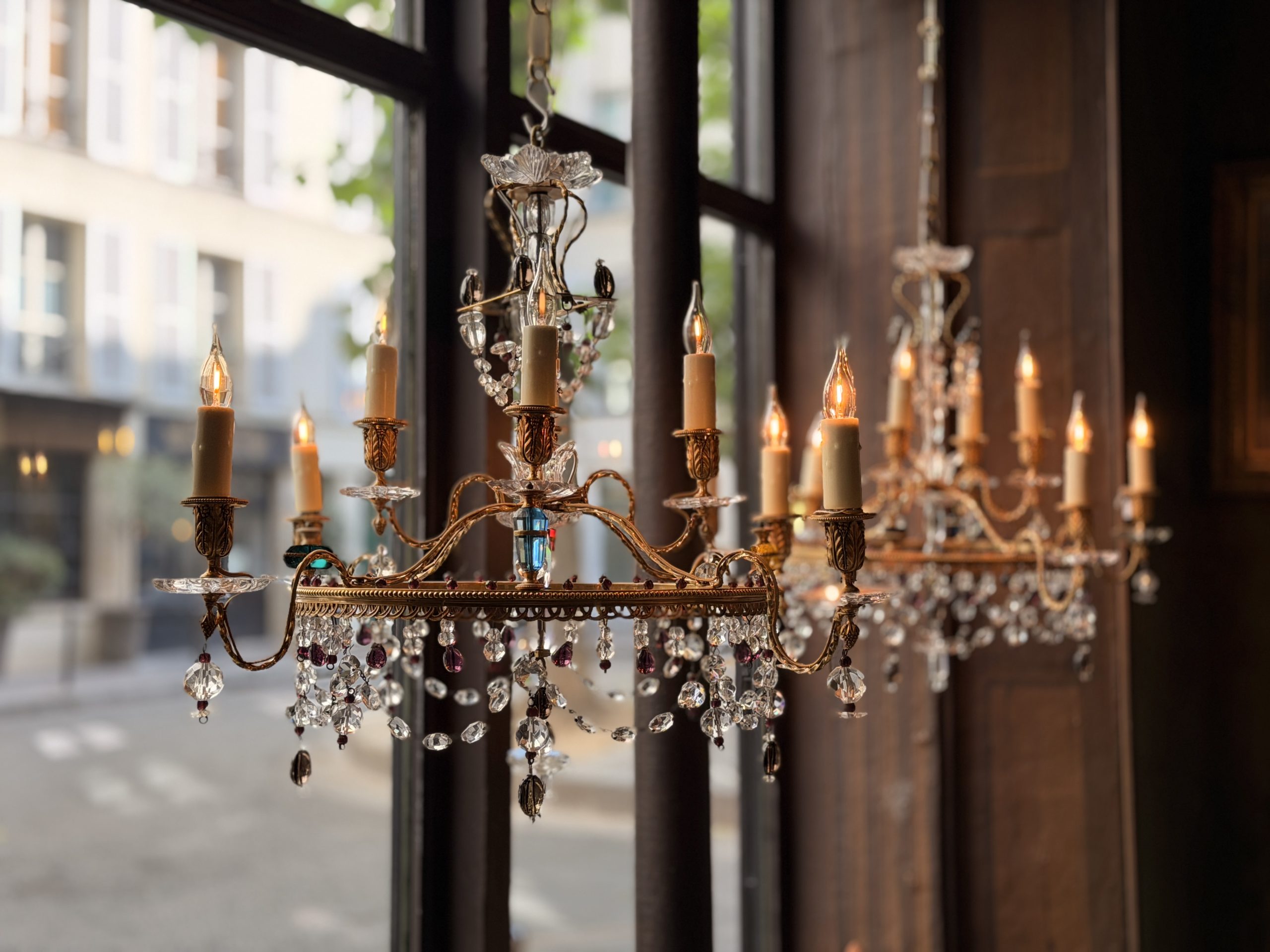
Pair of Neoclassical Chandeliers in Gilt Bronze and Cut Crystals of Various Colors
Early 20th Century.