

Large Saint-Lô cross accompanied by its neck chain. This jewel was mainly worn in Lower Normandy. Very widespread in the 18th century, this cross continued to be produced in the 19th century. Craftsmen of the second half of the 19th century, keen to reproduce models similar to those of the previous century, painted a small black dot on the back of the stones to give them an older appearance. This detail therefore allows us to date our cross to the second half of the 19th century.

This elegant center table is distinguished by its scalloped, lacquered black papier-mâché top—featuring a recessed center—adorned with a delicate medallion depicting a woman’s portrait, surrounded by gilded arabesques and scrolling foliage. A truly remarkable and rare feature is that the table comes with its complete set of nine matching original lacquered papier-mâché coasters, each finely decorated with *chinoiserie* and Asian-inspired scenes highlighted in gold.

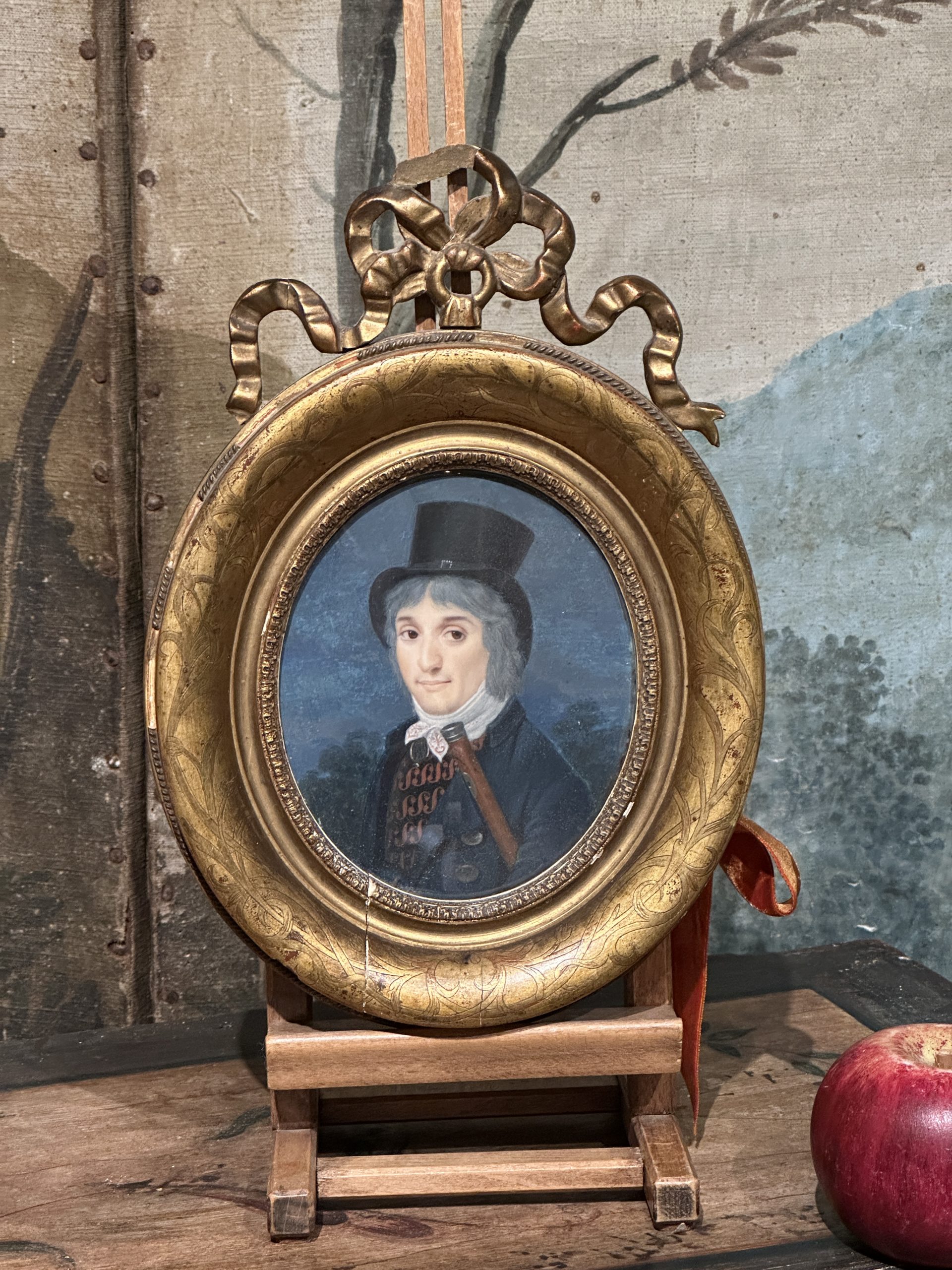
The lady is dressed in a gown known as a “déshabillé,” a refined garment emblematic of French fashion in the 1670s. Her bodice is adorned with black stones—diamonds. At that time, diamonds did not yet reflect light effectively. To accentuate their brilliance, cutters applied soot behind the stones, creating a contrast that gave the illusion of sparkle. This is why, in early Renaissance and 17th-century paintings, diamonds are often depicted in black.
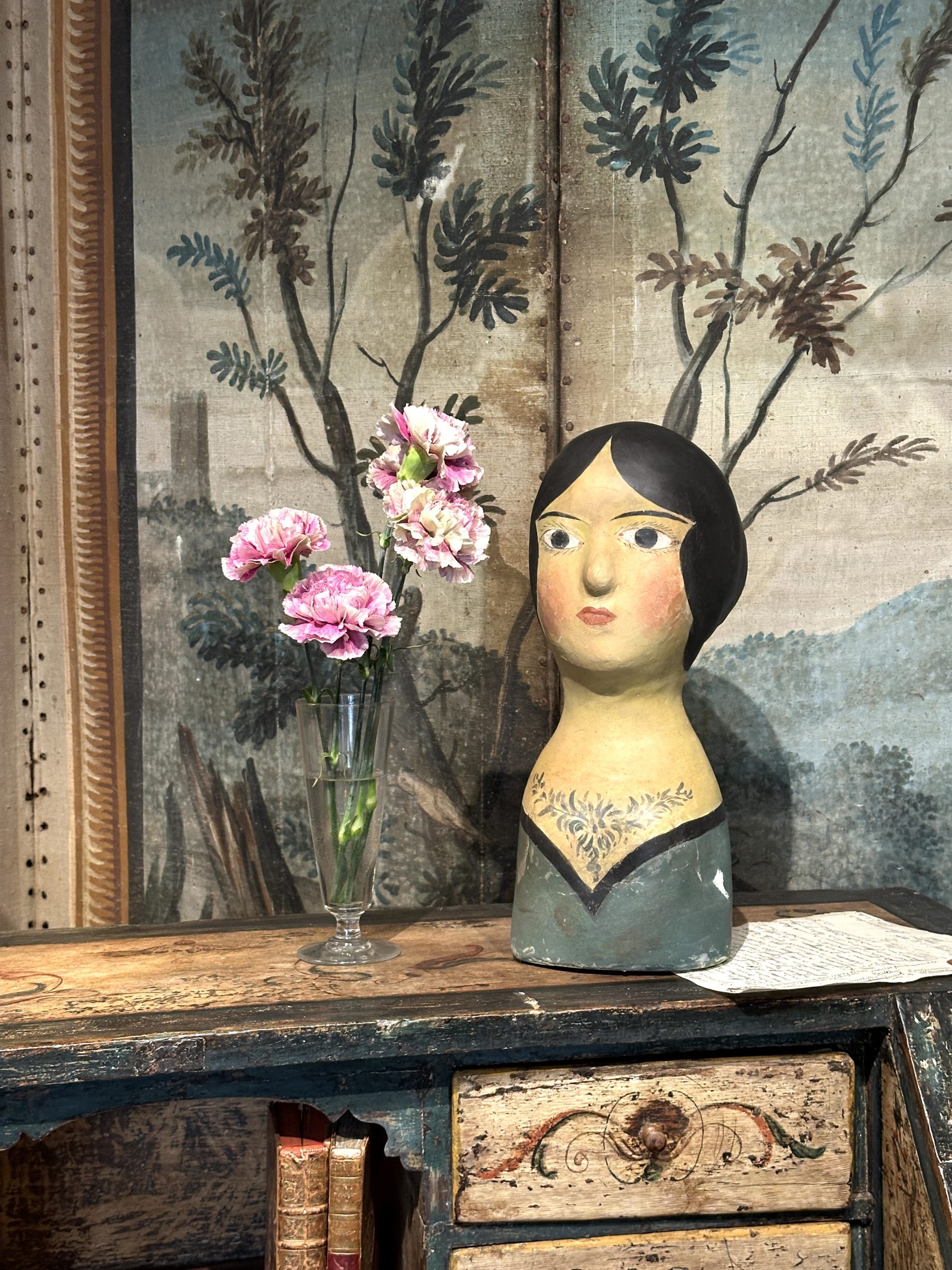
Mariottes appeared in the second half of the 18th century and served as supports for headdresses when they were not being worn. Because the mannequin’s shape resembled that of a real head, the headdress remained neatly pressed and in good shape; thus, milliners and headdress pressers frequently used mannequins in their work.
19th century, Paris
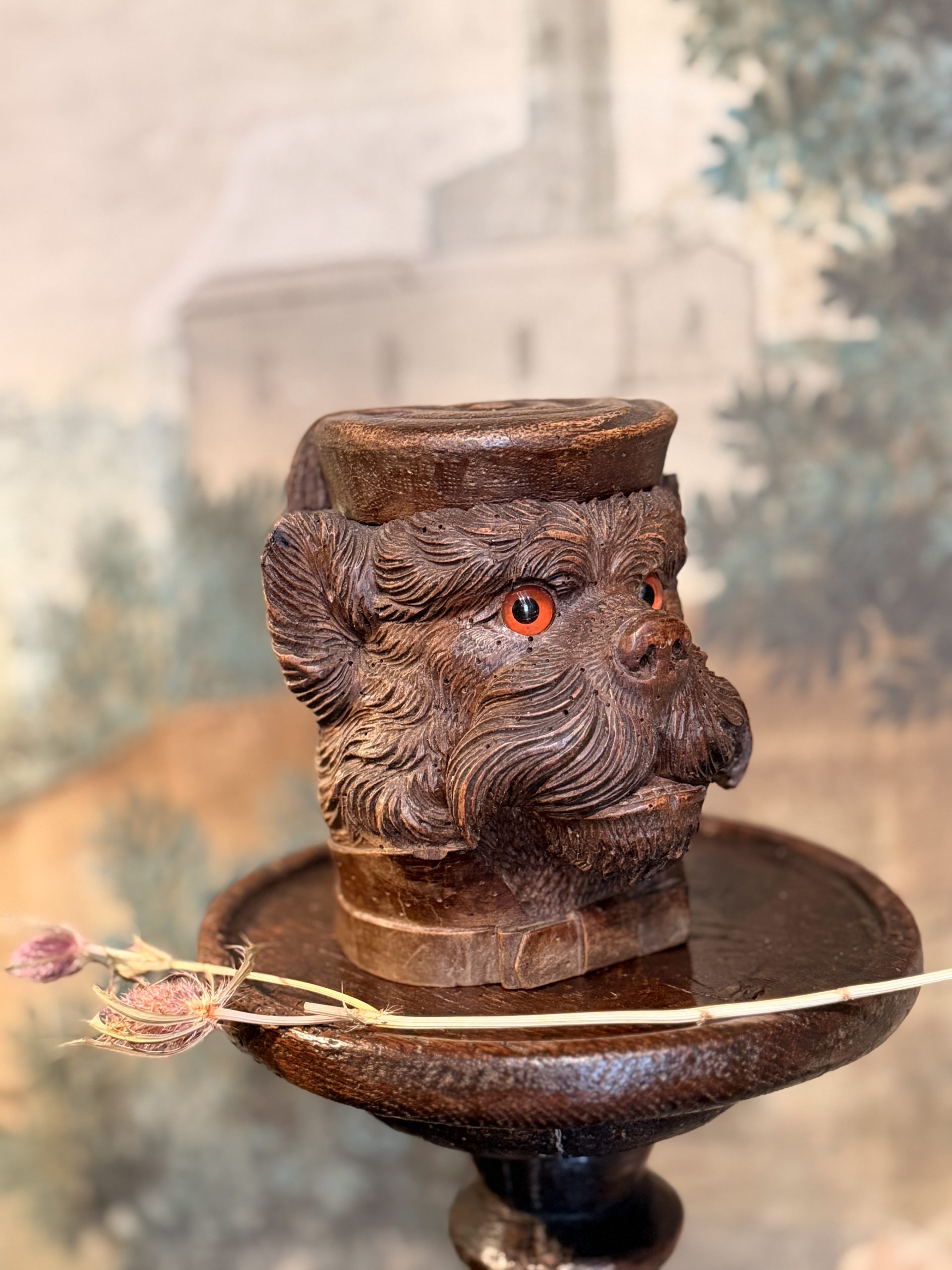
The particularly striking gaze is emphasized by the orange-red sulfide eyes, giving the piece an extraordinary presence. The top of the head is adorned with a small hat or flat cap.
France
19th century
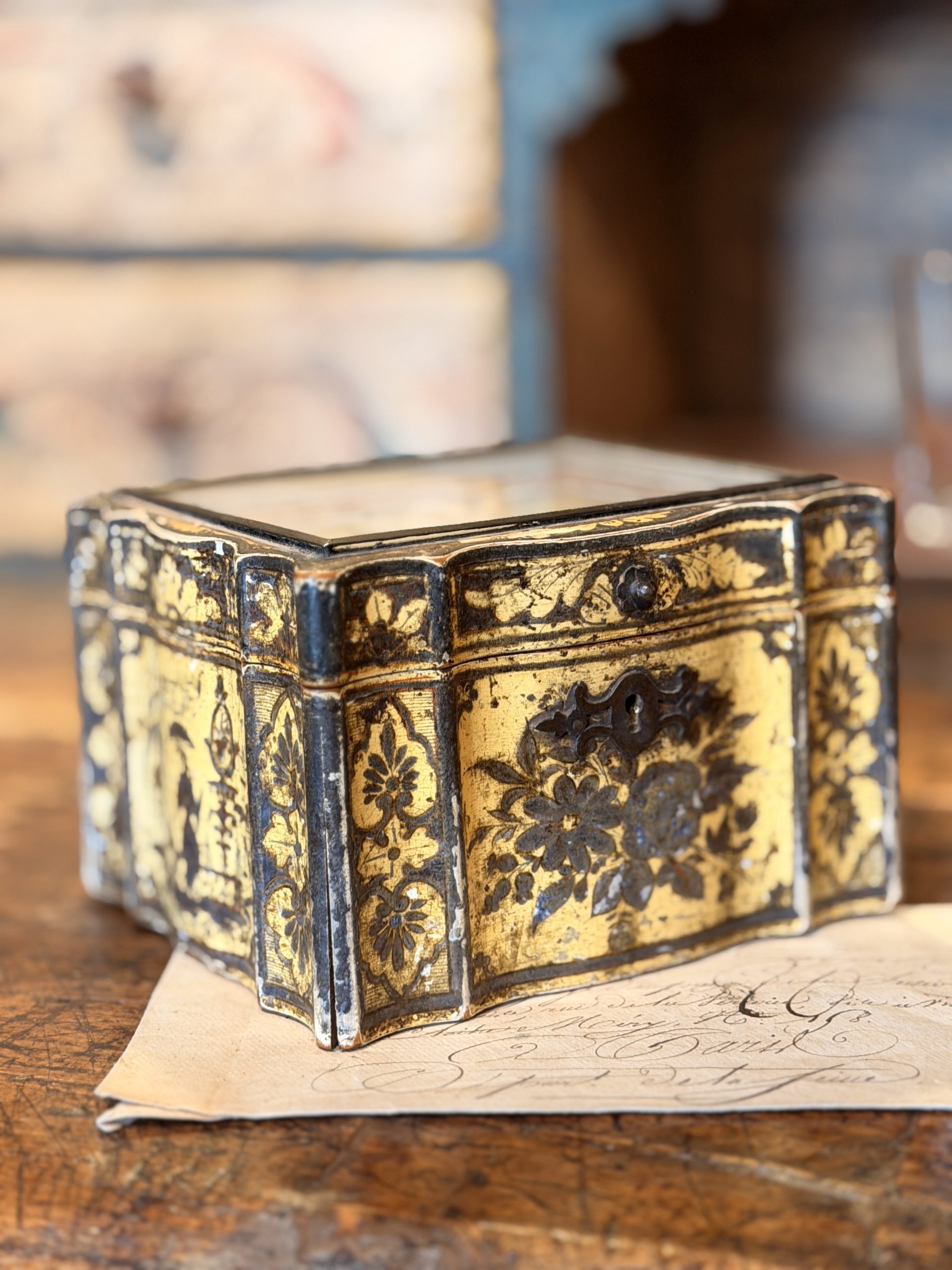
This delicate and charming wooden jewelry box features a graceful, canted-cornered shape typical of the Napoleon III style. It is distinguished by its rich Asian-inspired decoration, reflecting the Second Empire’s fascination with chinoiserie and Far Eastern lacquer.
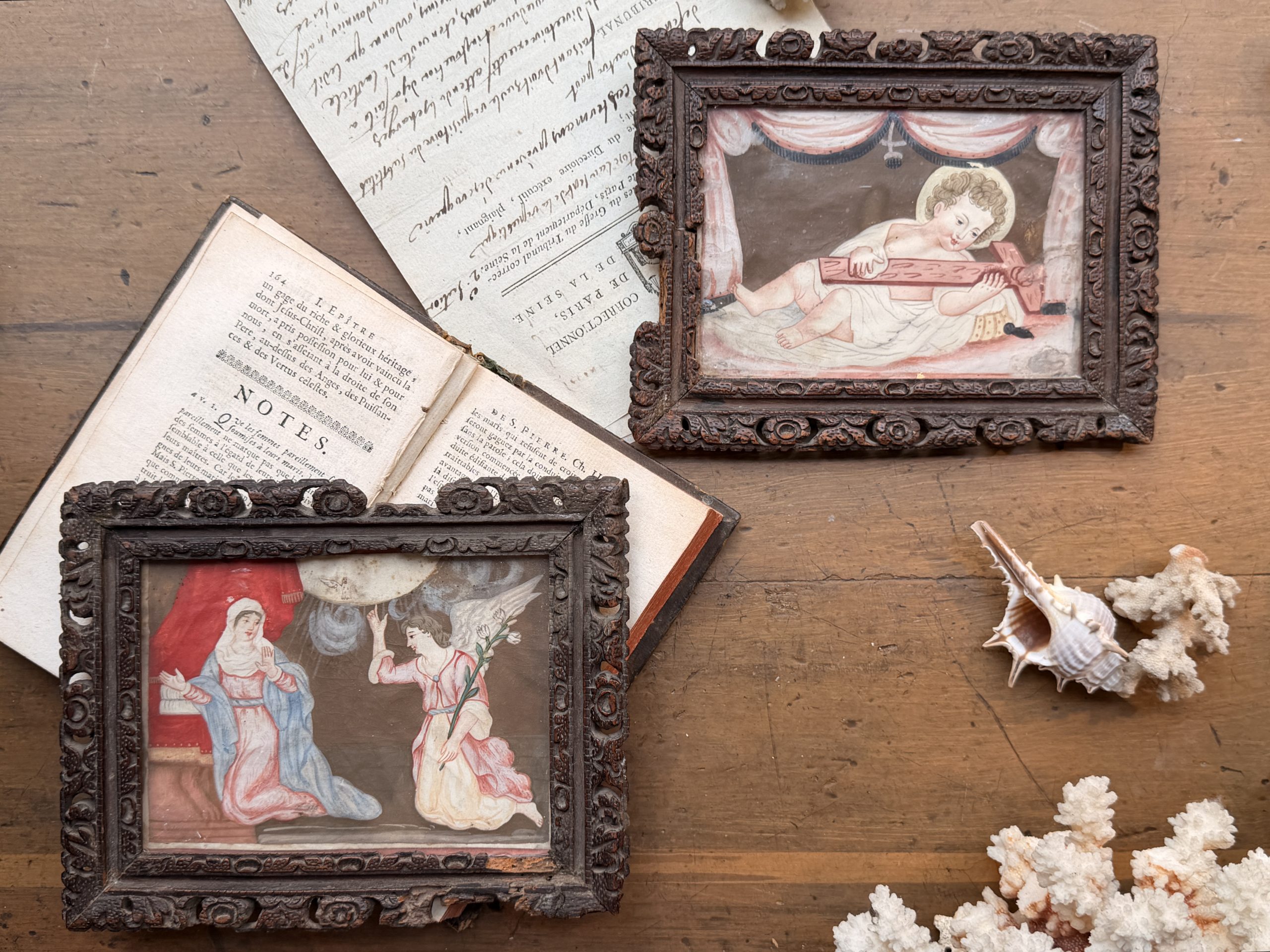
Rare Pair of Miniature Devotional Paintings on Vellum, 18th Century
This delicate pair of 18th-century miniature paintings beautifully illustrates the spirit and fervor of private devotion under the Ancien Régime. Presented in their original, richly carved wooden frames.
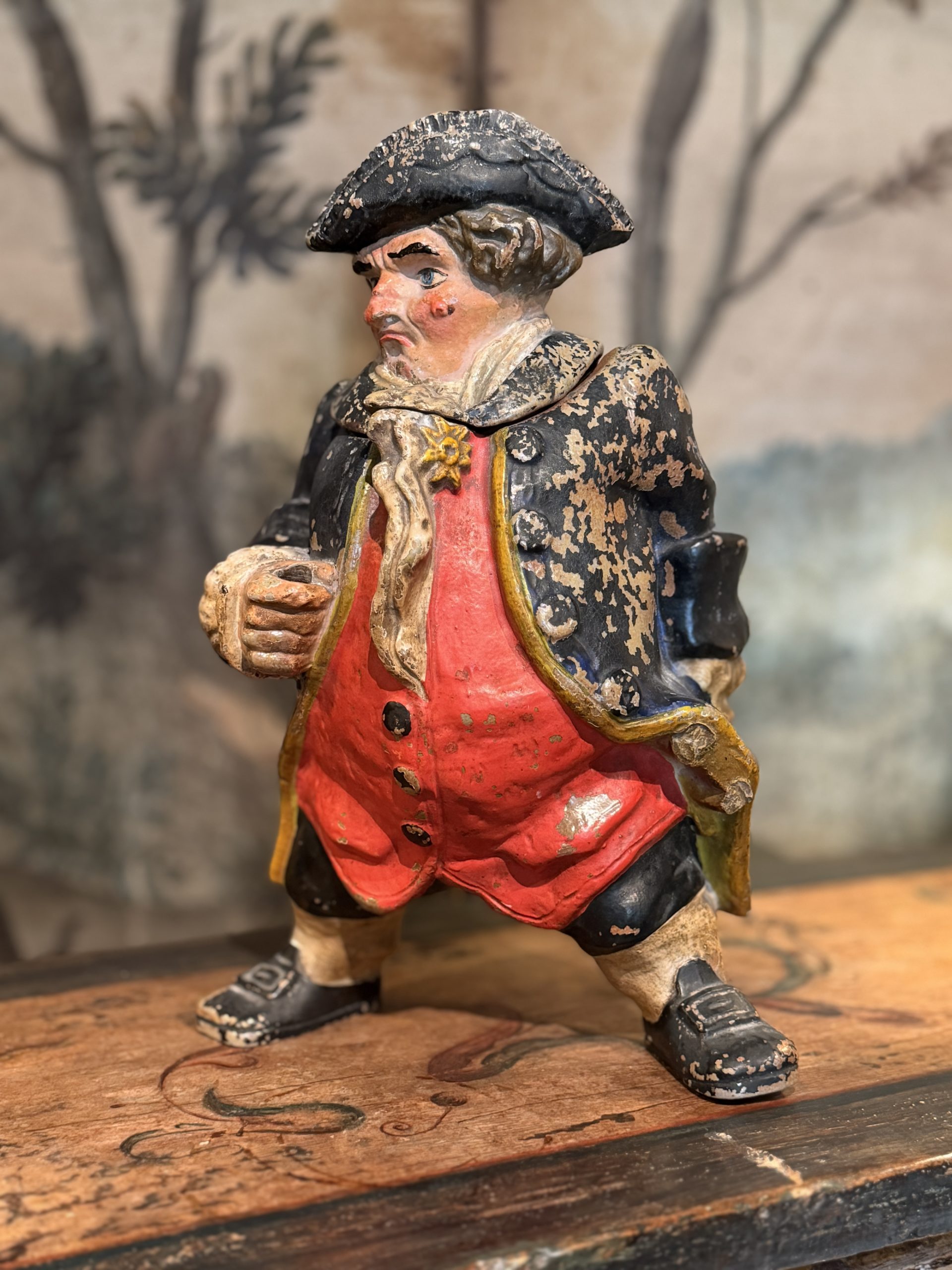
This charming painted terracotta snuffbox, suitable for a counter or parlor, depicts a portly and boisterous male figure, firmly rooted in the tradition of satirical and popular figures of the late 19th century.
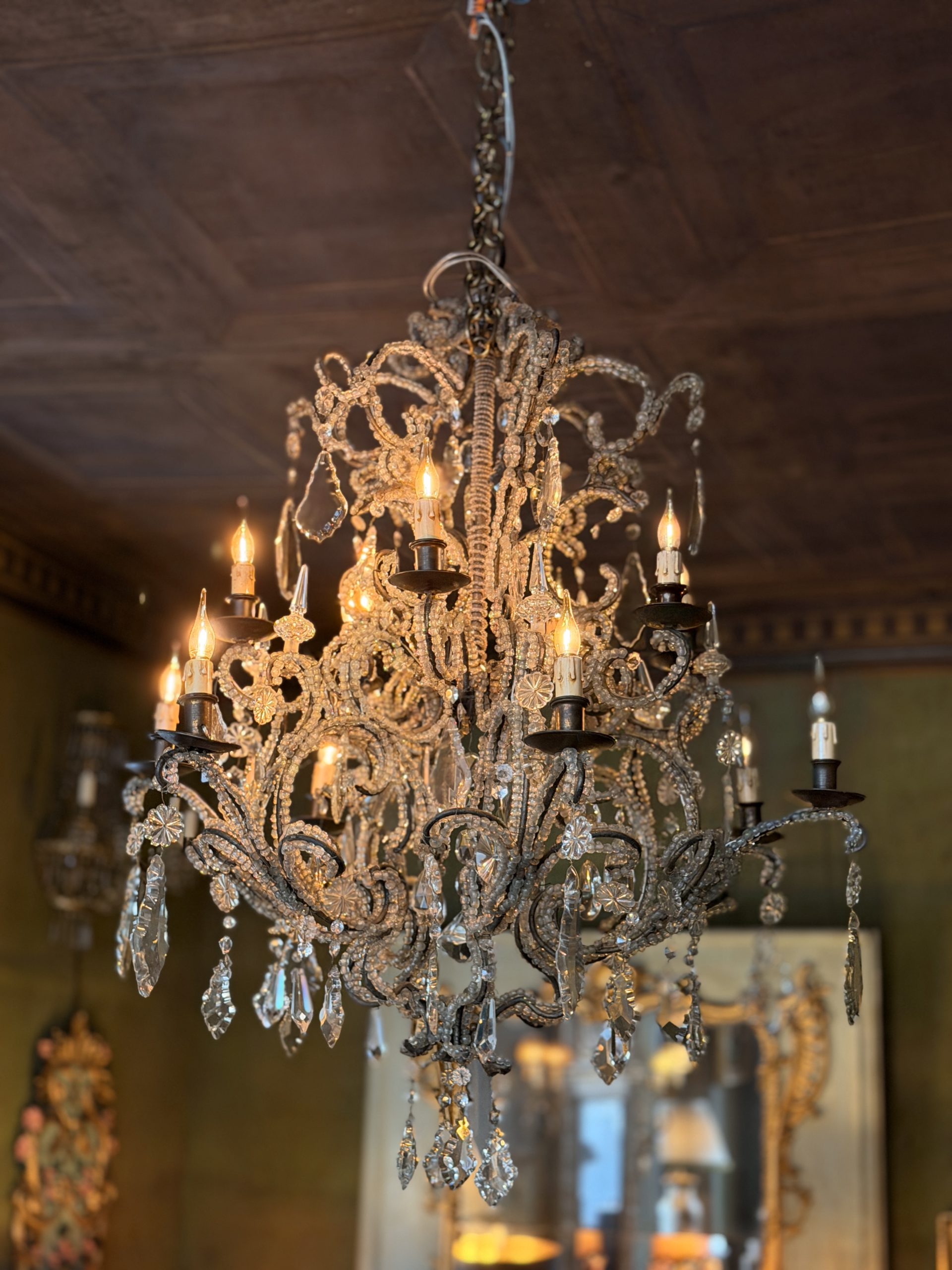
This fixture is distinguished by its wrought-iron structure, entirely and meticulously covered in an intricate web of blown-glass bead strands—a virtuoso technique characteristic of Venetian Murano craftsmanship.