
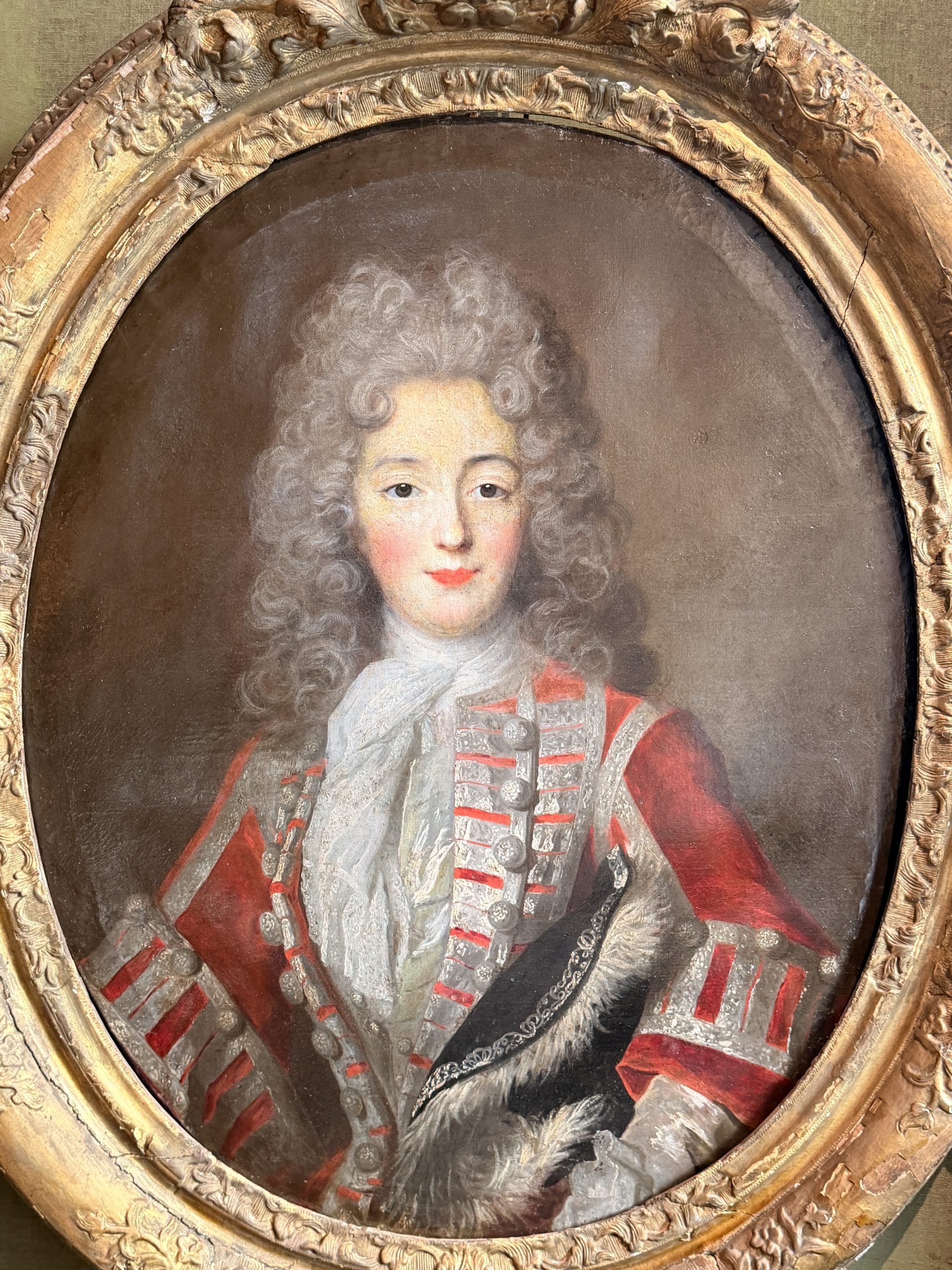
This magnificent three-quarter portrait captures the ideal of the “gentleman” and the nobility of the sword at the end of Louis XIV’s reign. The young aristocrat displays the ceremonial codes of the Court: powdered complexion, cheeks enhanced with rouge, and an imposing “in-folio” wig.

Small pendant in the form of a Provençal “butterfly cross,” composed of four rhinestones and a movable drop-shaped element surrounded by silver scrolling foliage.

The smiling faces and finely carved hair are rendered with great care and attention to detail. The sculptures are presented on their respective bases.

The iconography leaves no doubt as to the symbolic function of the work: the young woman firmly holds a large blank canvas in her hand, while her left hand supports a painter’s palette and brushes. Her face, with its delicate features, is imbued with a gentle melancholy, as if searching for inspiration.
France
Early 19th century

Large-scale folding screen depicting hunters and their dog in the midst of action. The scene unfolds within a lush green landscape, with a château visible on the horizon. The four central panels are framed by arabesque and scrolling motifs set against a blue background. The reverse, more understated in style, features turquoise chamfered rectangles.

Painted polychrome papier-mâché marotte with applied printed paper, depicting a female figure with black hair and a scalloped bodice.
Marked on the base: PAINDEBLED, as well as “Cork padding, patented SCDG”, Paris.
Marottes appeared in the second half of the 18th century and were used as supports for headpieces when they were not being worn. As the marotte was shaped like a real head, it helped keep the headdress properly pressed and in shape; milliners and bonnet ironers therefore frequently used marottes in their work.
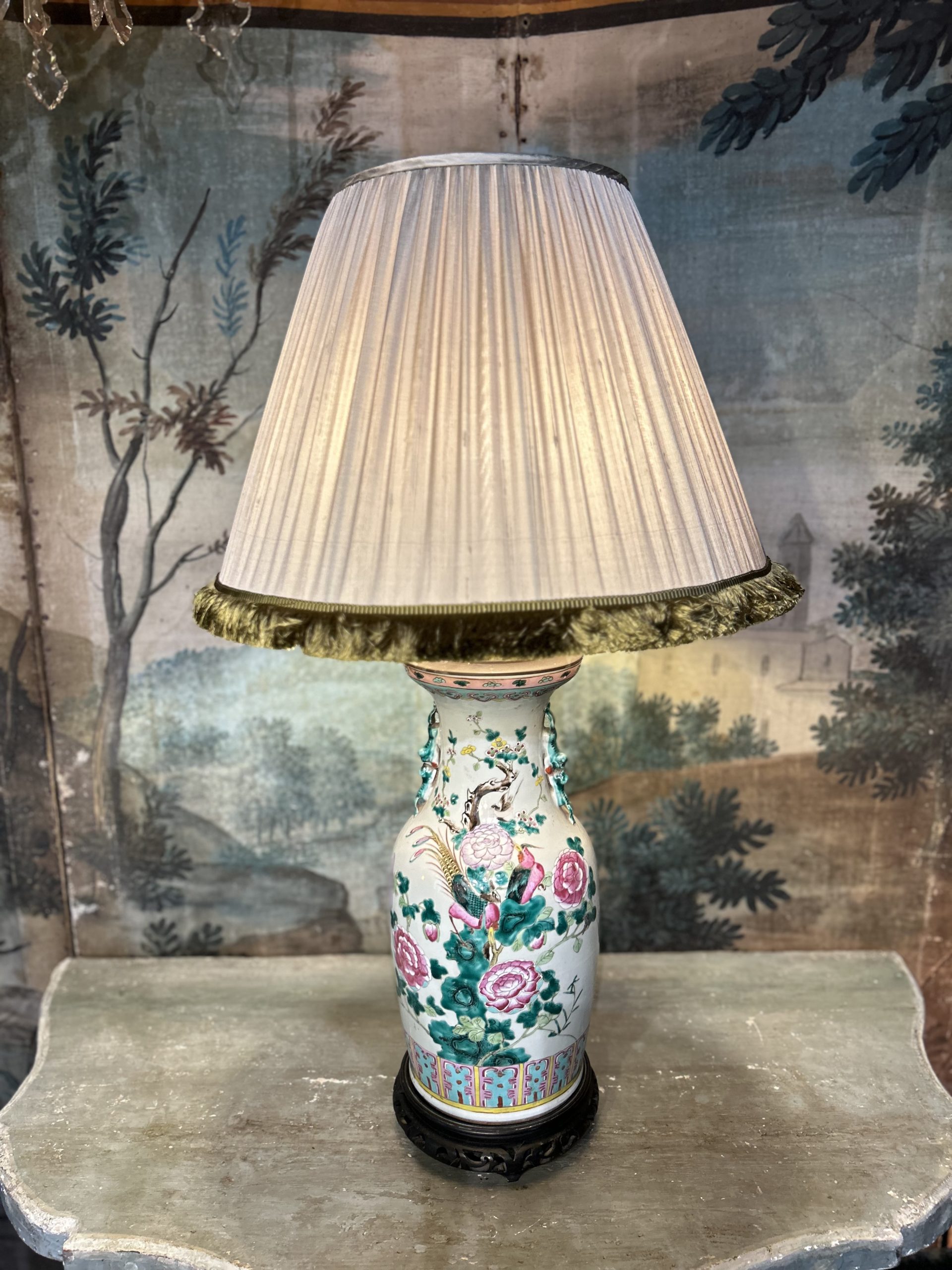
The vase’s body displays a rich naturalistic decoration in polychrome enamels, depicting birds of paradise (Fohang) among blooming peonies and flowering branches, traditional symbols of prosperity and beauty. The flared neck, adorned with small stylized handles in relief, is highlighted by geometric friezes in turquoise and pink tones that harmoniously frame the central scene.
China
Late 19th Century
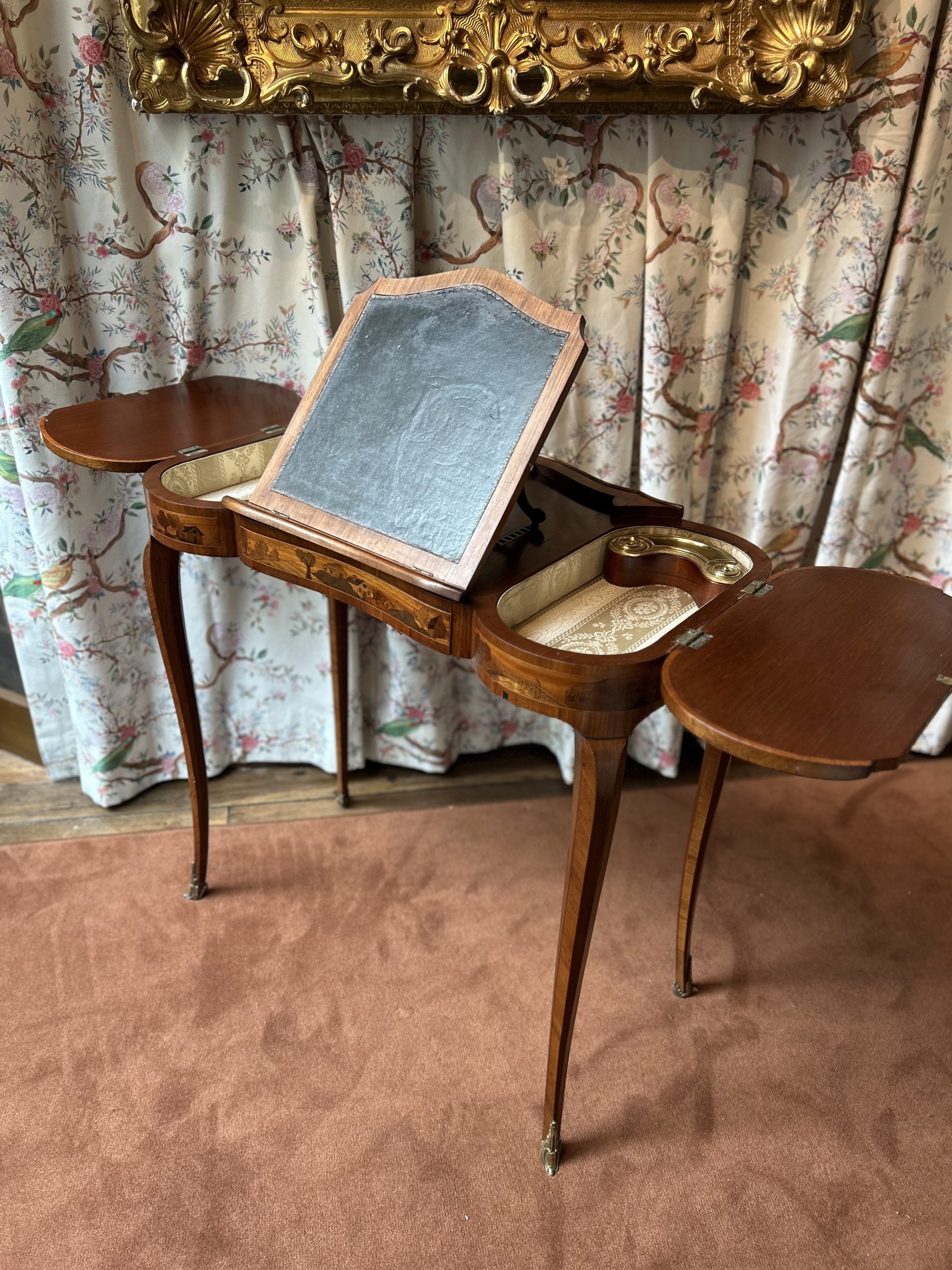
A magnificent kidney-shaped table from the Napoléon III period, perfectly embodying the Louis XV tradition through the elegance of its lines and the refinement of its craftsmanship. The ingenuity of Maison Gouffé lies in the practicality of this charming piece of furniture. The central section, fitted with a leather writing surface, is hinged and can be used either as a writing desk or a reading stand. On either side, two small compartments provide storage space, one of which contains a complete writing set.
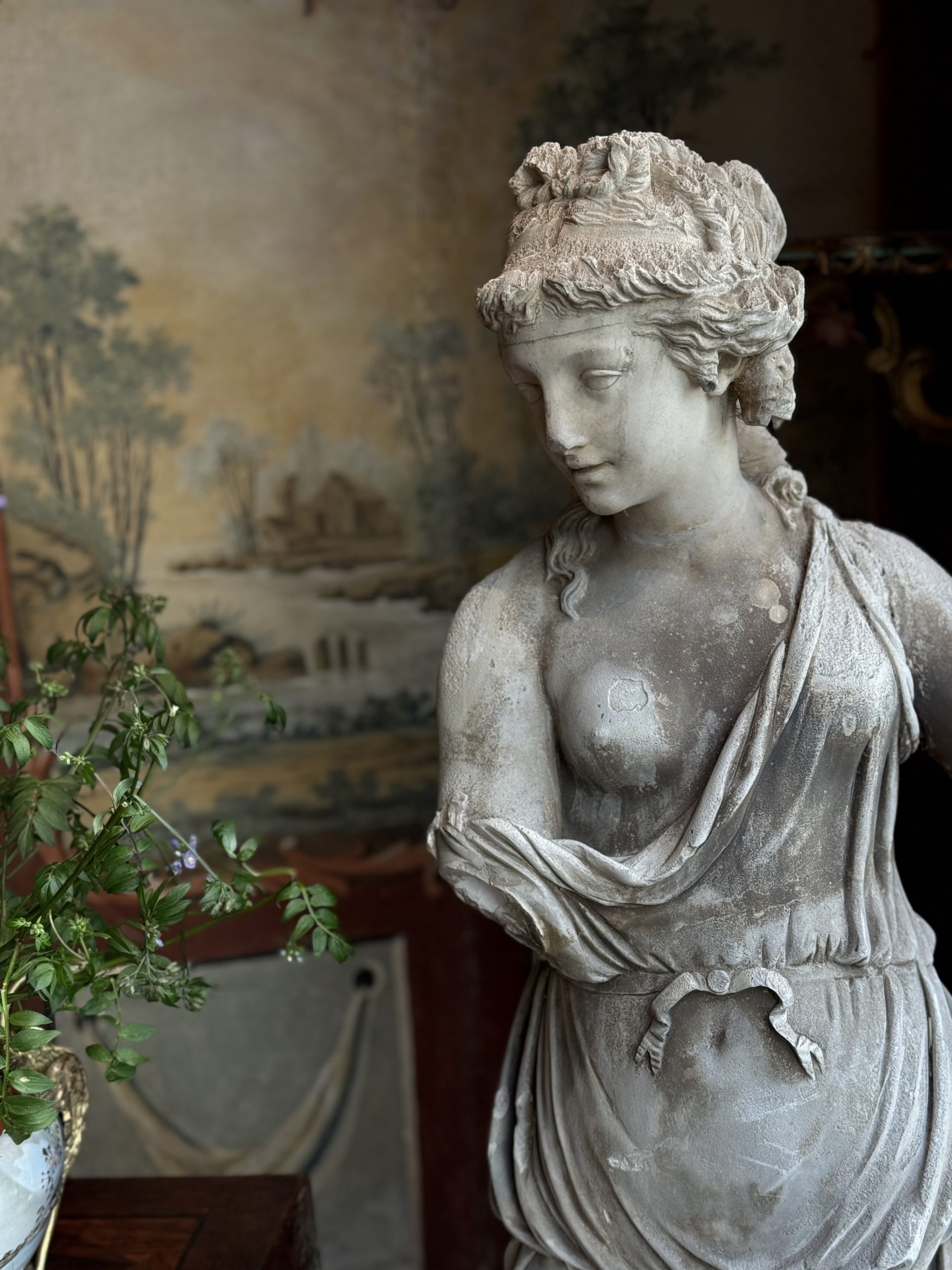
The work is distinguished by its craftsmanship, notably the use of Panneggio Bagnato, or “wet draping.” This technique, attributed to the great Phidias, consists of sculpting the garment as if it had been soaked in water. Venus’s delicate tunic then becomes a second skin: it flows over the body, embracing every curve and revealing its anatomical form with a sensuality of rare elegance. The garment no longer conceals, but magnifies, creating a play of light and shadow between the prominent folds and the softness of the suggested flesh.

The identification of Joan of Arc, known as the “Maid of Orléans,” is first supported by the Latin inscription: “Virago Aurelianensis, profligatis debellatisque Anglis, ad sexus sui miraculum ovans.” This translates literally as: “The warrior woman of Orléans, having routed and defeated the English, triumphing to the astonishment of her own sex.”