

Double-sided folding screen composed of six lacquered and finely carved panels, inspired by the productions of the Qing dynasty and the Coromandel style.

Japanese table with a fully foldable top and base, forming a compact and functional ensemble. This type of furniture is characteristic of early 19th-century production in the Kiso region, renowned for the quality of its woodworking. The tabletop features a refined decoration, enhanced with delicate marquetry that reflects highly skilled craftsmanship. With the elegance of its proportions and the finesse of its ornamentation, this table is both a practical and decorative piece.
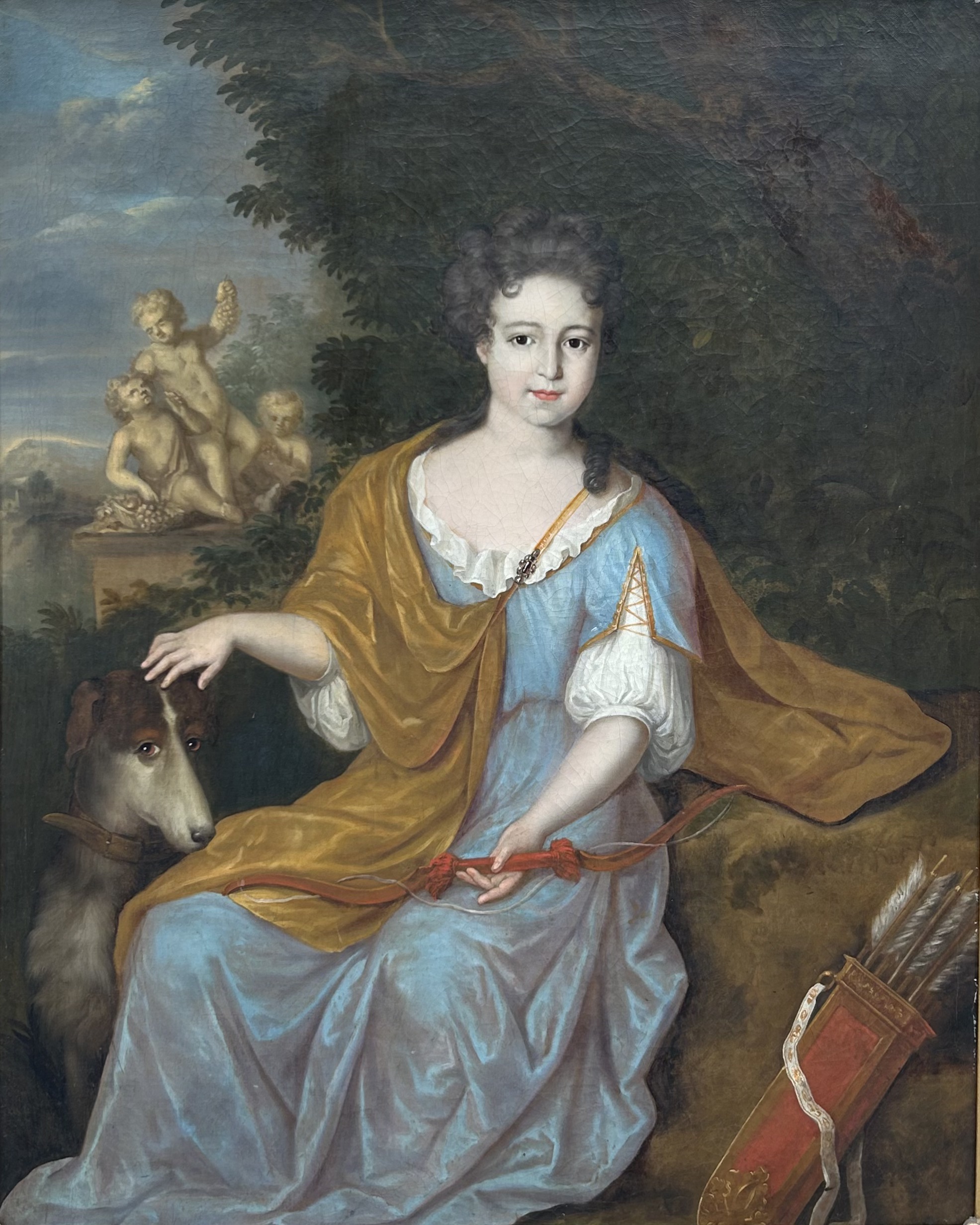
This magnificent portrait of a lady of quality dates from the 18th century. A young woman is dressed in a sumptuous azure gown enhanced by a wide gold cloak, while sporting a Fontange hairstyle, very fashionable at court.

The piece is a delightful example of the taste for Orientalism and fine furniture during the Second Empire.
France
19th Century
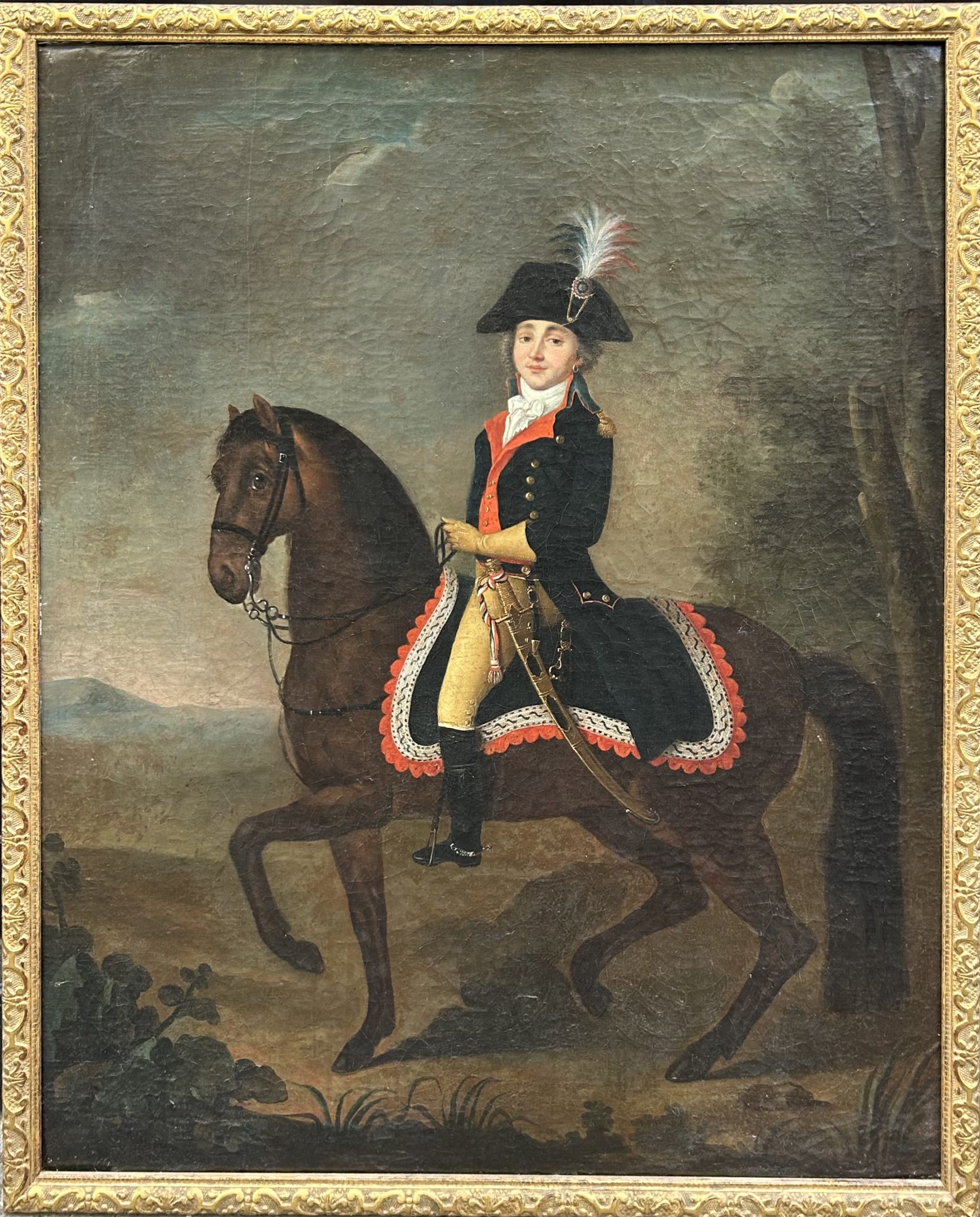
This portrait is firmly rooted in the equestrian portrait tradition, whose conventions date back to classical antiquity, notably with the famous statue of Marcus Aurelius on the Capitoline Hill. By choosing to depict Kléber on a rearing horse or at a measured pace, the painter reinterprets this allegory of the “war leader” capable of taming not only his mount but also human passions and the tumult of battle.

A pair of porcelain parrot lamps by Wong Lee. These depict parrots in light colours, perched on a tree trunk and holding a gilded bronze scroll in their beaks. The lamps are mounted on gilded bronze bases. The lamps are fitted with new lined silk lampshades in a powder pink colour, adorned with Declercq trimmings.

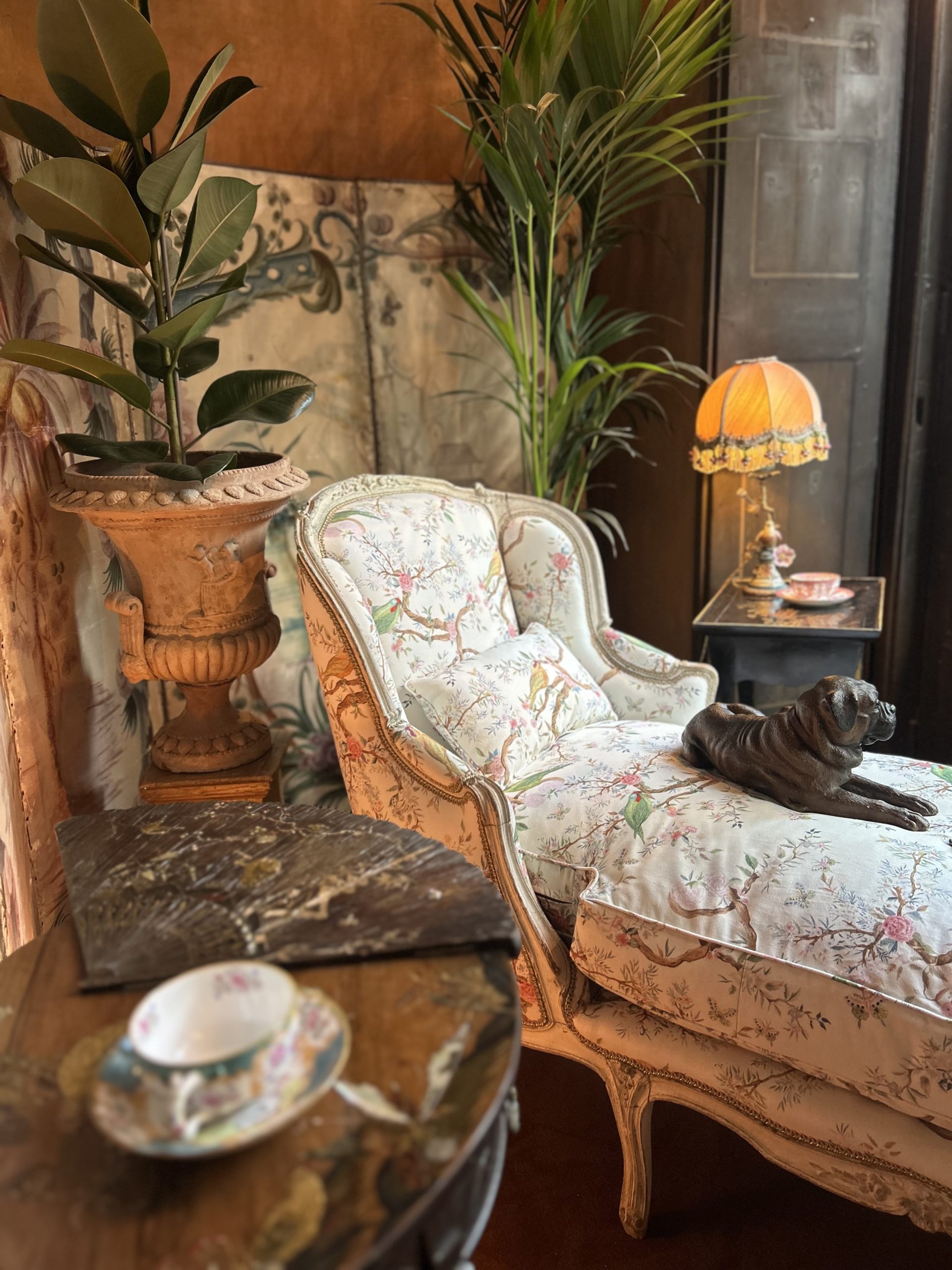
Completely restored according to traditional methods, this chaise longue has been reupholstered in a fabric designed by Tatiana de Nicolay for the Tevenon company, adding a touch of timeless elegance to the piece.
France, 19th Century

The princess is shown in a silk dressing gown, an informal yet exquisitely refined indoor outfit that perfectly exemplifies the elegance of 18th-century French fashion.
Far from being careless, this sartorial choice underscores the sitter’s high rank through its studied simplicity. Her bodice is delicately adorned with a diamond brooch, while a pink veil rests upon powdered hair, in accordance with the aristocratic beauty standards of the time.

A true masterpiece of 18th-century Venetian art, this bench embodies all the theatricality and refinement of the palaces of the Serenissima. Its carved and gilded wooden frame, with its sinuous curves, reflects elegance in an exotic style typical of the Rococo taste.